Don’t Move to the Cloud Arrive There

Azure CAF & Cloud Migration 8th Jan 2026 Martin-Peter Lambert
Don’t Move to the Cloud Arrive There

Stop searching, Start Finding

The cloud is not a destination; it’s a new way of operating. Yet too many organizations treat cloud migration like a frantic relocation. They pack up their old problems and race to a new address. Unfortunately, they find themselves in a more expensive and complex mess than the one they left behind. Utilizing the Cloud Adoption Framework in Practice (CAF-Roadmap) can prevent them from falling victim to the “Implement to Fail” trap—a costly, chaotic cycle born from a single, critical mistake. They skip the pre-work. Thus, the Cloud Adoption Framework in Practice (CAF-Roadmap) becomes vital in managing this transition effectively.
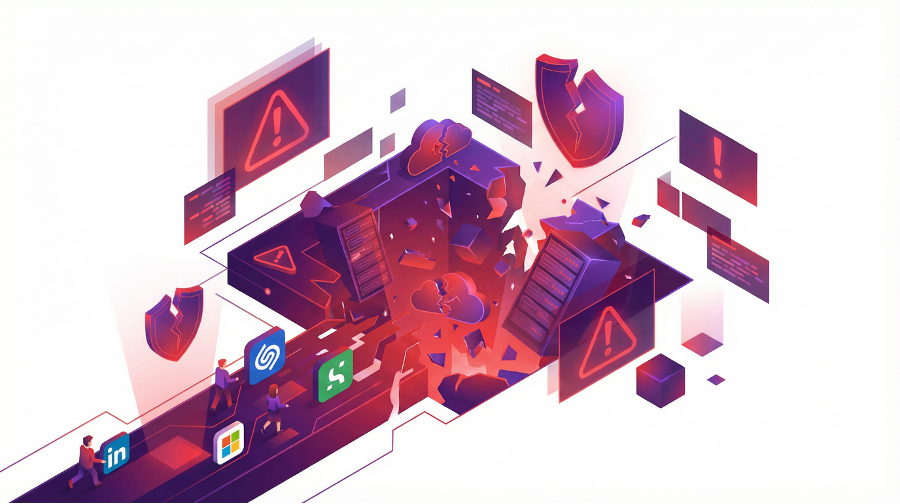
According to Gartner, the leading cause of migration failure isn’t technology; it’s a lack of strategy. Rushing into the cloud without a clear plan is like setting sail without a map. You also need a compass or a crew. Otherwise, you’re adrift in a sea of complexity. This leaves you vulnerable to budget overruns, security breaches, and a disconnect between technical effort and business value. Utilizing the Cloud Adoption Framework in Practice (CAF-Roadmap) is essential to navigate these challenges.

The Antidote: A Disciplined, Five-Wave Framework

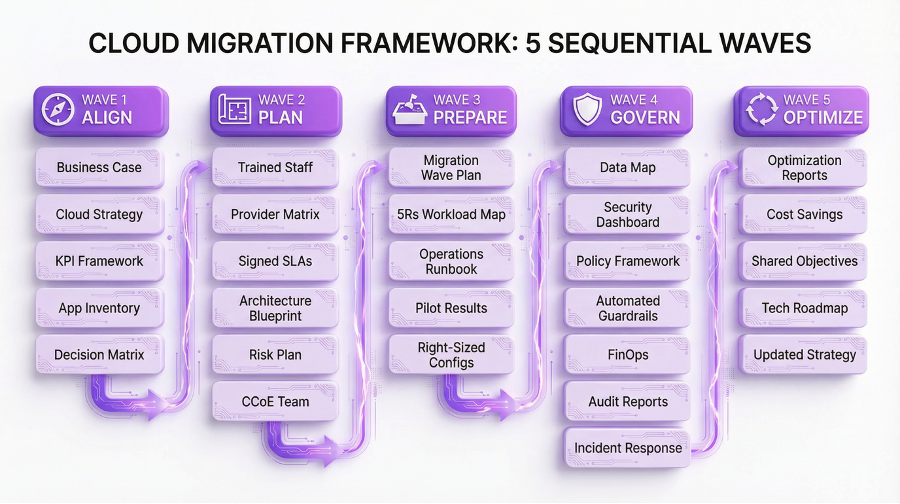
There is a better way. A successful cloud journey is not a mad dash; it’s a disciplined, strategic progression. It’s about building a solid foundation before you lay the first brick. To demystify this process, we’ve structured the entire journey into a Five-Wave Framework. This is a proven methodology that transforms a complex migration into manageable, value-driven stages, as outlined in the Cloud Adoption Framework in Practice (CAF-Roadmap) to ensure seamless progress.

This framework is your roadmap to success. Each wave builds upon the last, creating a chain of outputs. These outputs become the inputs for the next stage. This ensures that every action is deliberate. Every decision is informed, and every dollar spent is tied to a measurable business outcome, as guided by the Cloud Adoption Framework in Practice (CAF-Roadmap).

Why This Framework Matters

In our upcoming five-part series, we will dive deep into each of these waves, providing a detailed blueprint for you to follow. You will learn:

  • Wave 2:
    Plan – How to choose the right partners, design your architecture, and train your team.

By investing the time upfront in Waves 1 and 2, you don’t just avoid failure; you build the foundation for profound success. You ensure that when you move to the cloud, you don’t just show up—you arrive prepared, confident, and ready to win, utilizing the Cloud Adoption Framework in Practice (CAF-Roadmap).

Join us as we unpack this framework, wave by wave, and learn how to make your cloud migration a strategic triumph with the Cloud Adoption Framework in Practice (CAF-Roadmap).

Cloud Migration Strategy, Cloud Adoption Framework, IT Strategy, Digital Transformation, Cloud Governance, FinOps, Cloud Center of Excellence (CCoE), Gartner Cloud, Migration Planning, Cloud ROI, Application Portfolio Management, Cloud Best Practices

#CloudMigration #DigitalTransformation #ITStrategy #CloudAdoption #CloudGovernance #FinOps #CCoE #CloudStrategy #TechLeadership #EnterpriseIT #CloudAdoptionFramework #CAFRoadmap #CloudMigration #FiveWaveFramework #CloudStrategy #AzureCAF #CloudGovernance #FinOps #CCoE #MigrationPlanning #CloudROI #DigitalTransformation #EnterpriseCloud #CloudArchitecture #CloudBestPractices
Microsoft Fabric: A Deep Dive into the Future of Cloud Data Platforms

Microsoft Fabric: 2nd Jan 2026 Martin-Peter Lambert
Microsoft Fabric: A Deep Dive into the Future of Cloud Data Platforms

Microsoft Fabric – Comprehensive

Discover Microsoft Fabric – Comprehensive insights in our 5-Part Technical Series by insight 42

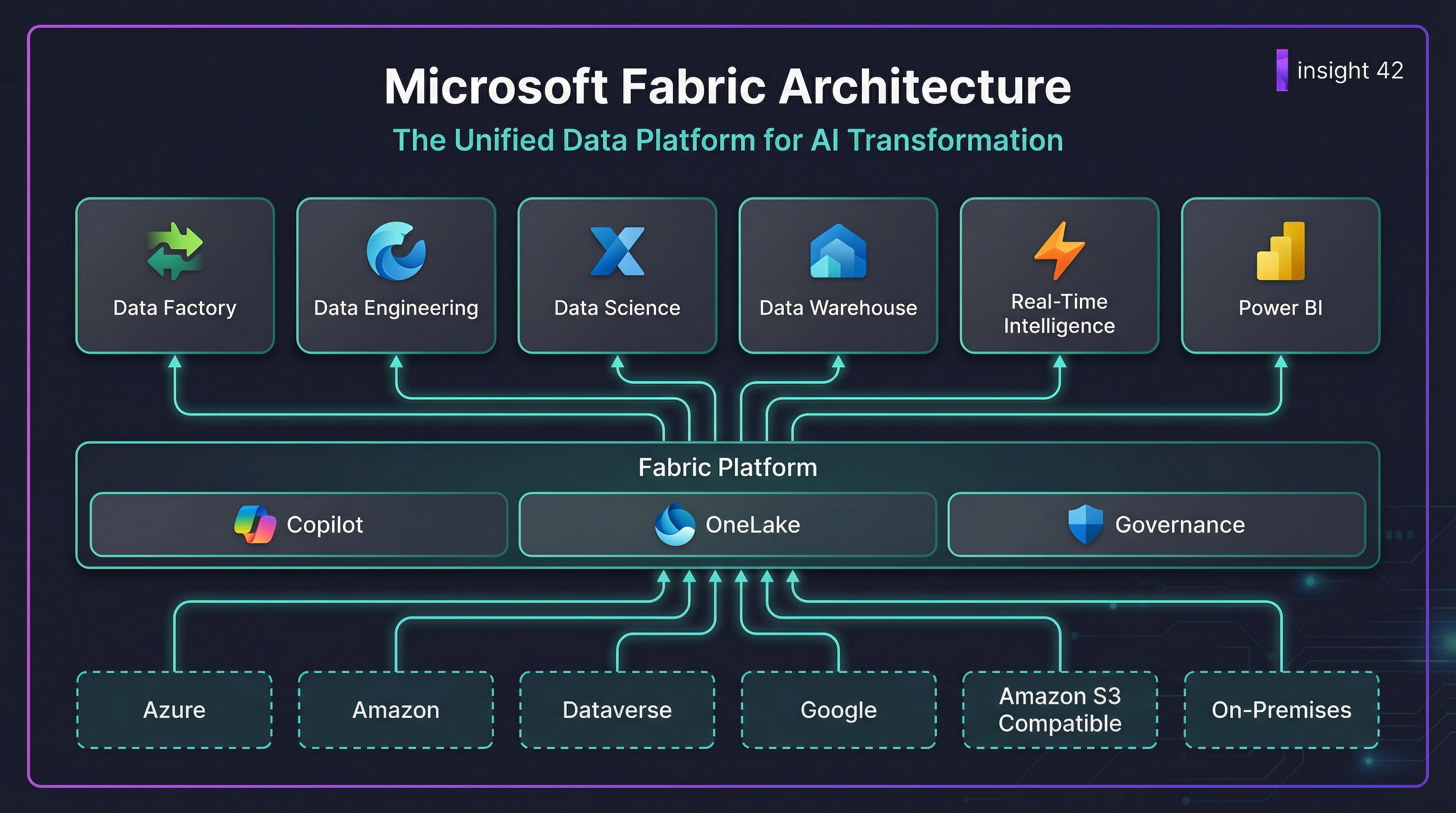
Microsoft Fabric Architecture

Series Overview

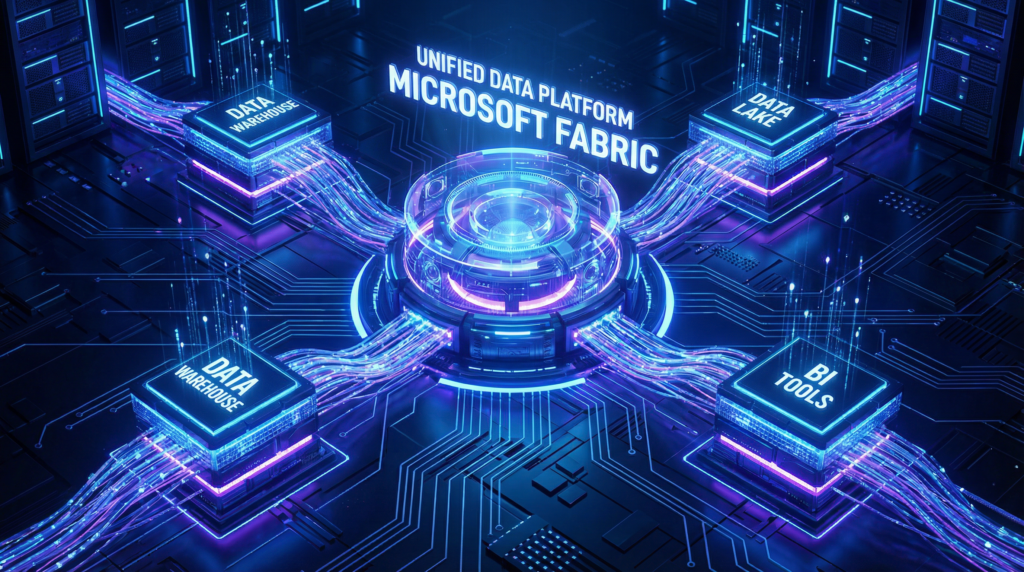
This comprehensive blog series provides an in-depth, critical analysis of Microsoft Fabric—the latest and most ambitious attempt to unify the modern data estate. From its evolutionary roots to its future trajectory, we explore the architecture, promises, shortcomings, and practical realities of adopting Fabric in enterprise environments.

Whether you’re a data architect evaluating Fabric for your organization, an ISV building multi-tenant solutions, or a data professional seeking to understand the future of cloud data platforms, this series provides the insights you need.

Quick Navigation

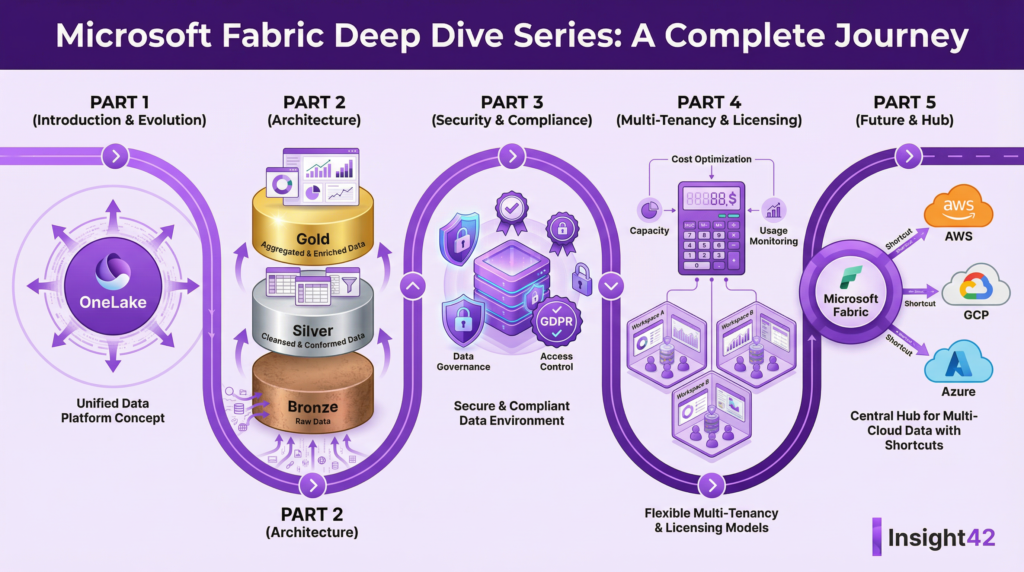
PartTitleFocus Areas
Part 1Introduction to Fabric and the Evolution of Cloud Data PlatformsHistory, evolution, Fabric overview, core principles
Part 2Data Lakes and DWH Architecture in the Fabric EraMedallion architecture, lakehouse patterns, OneLake
Part 3Security, Compliance, and Network Separation ChallengesSecurity layers, compliance, network isolation, GDPR
Part 4Multi-Tenant Architecture, Licensing, and Practical SolutionsWorkspace patterns, F SKU licensing, cost optimization
Part 5Future Trajectory, Shortcuts to Hyperscalers, and the Hub VisionCross-cloud integration, roadmap, universal hub concept

Key Diagrams

This series includes 10 professionally designed architectural diagrams that illustrate key concepts:

Platform Architecture

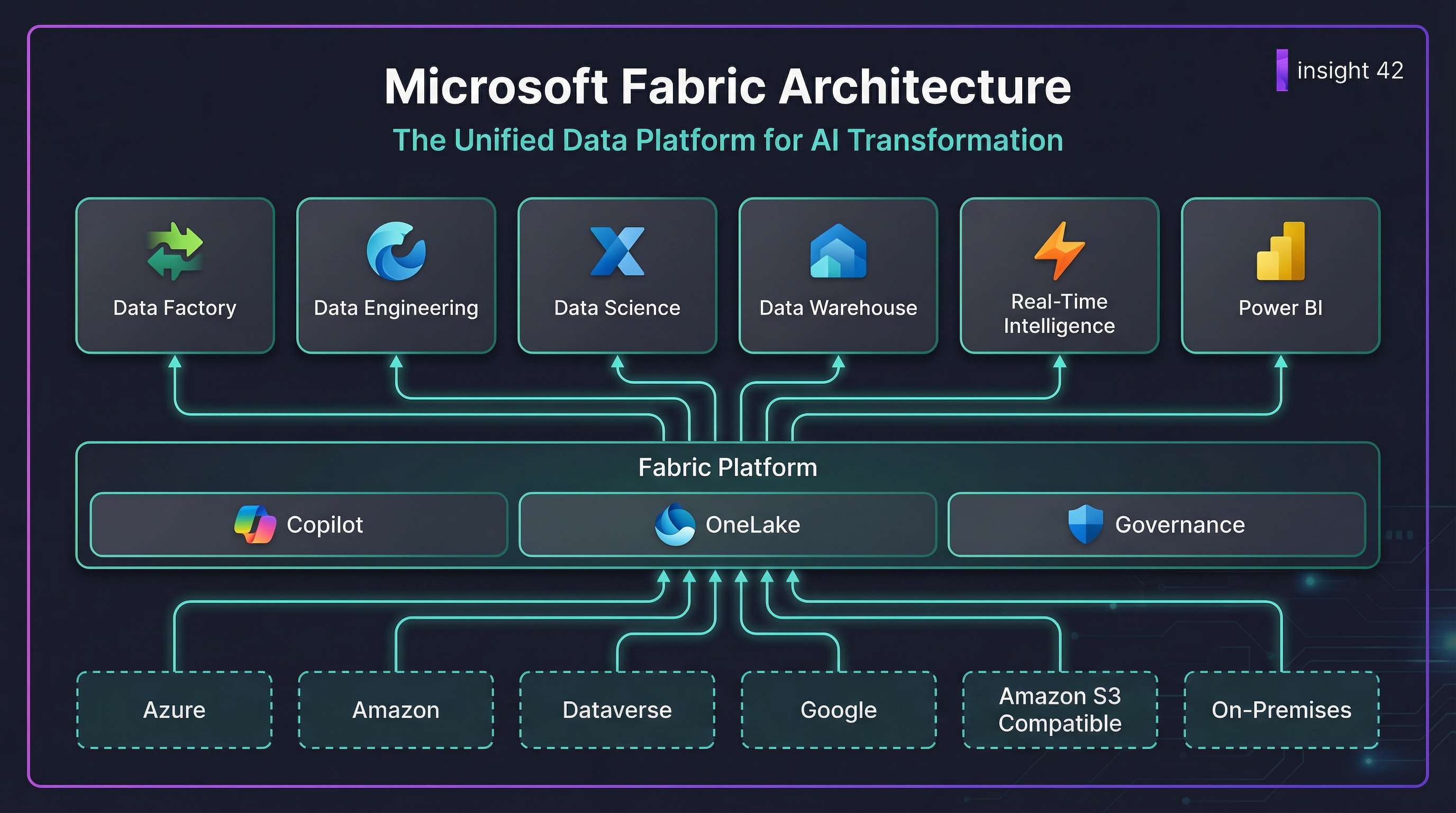
Microsoft Fabric Architecture – Complete platform overview with workloads, Fabric Platform, and cloud sourcesPart 1
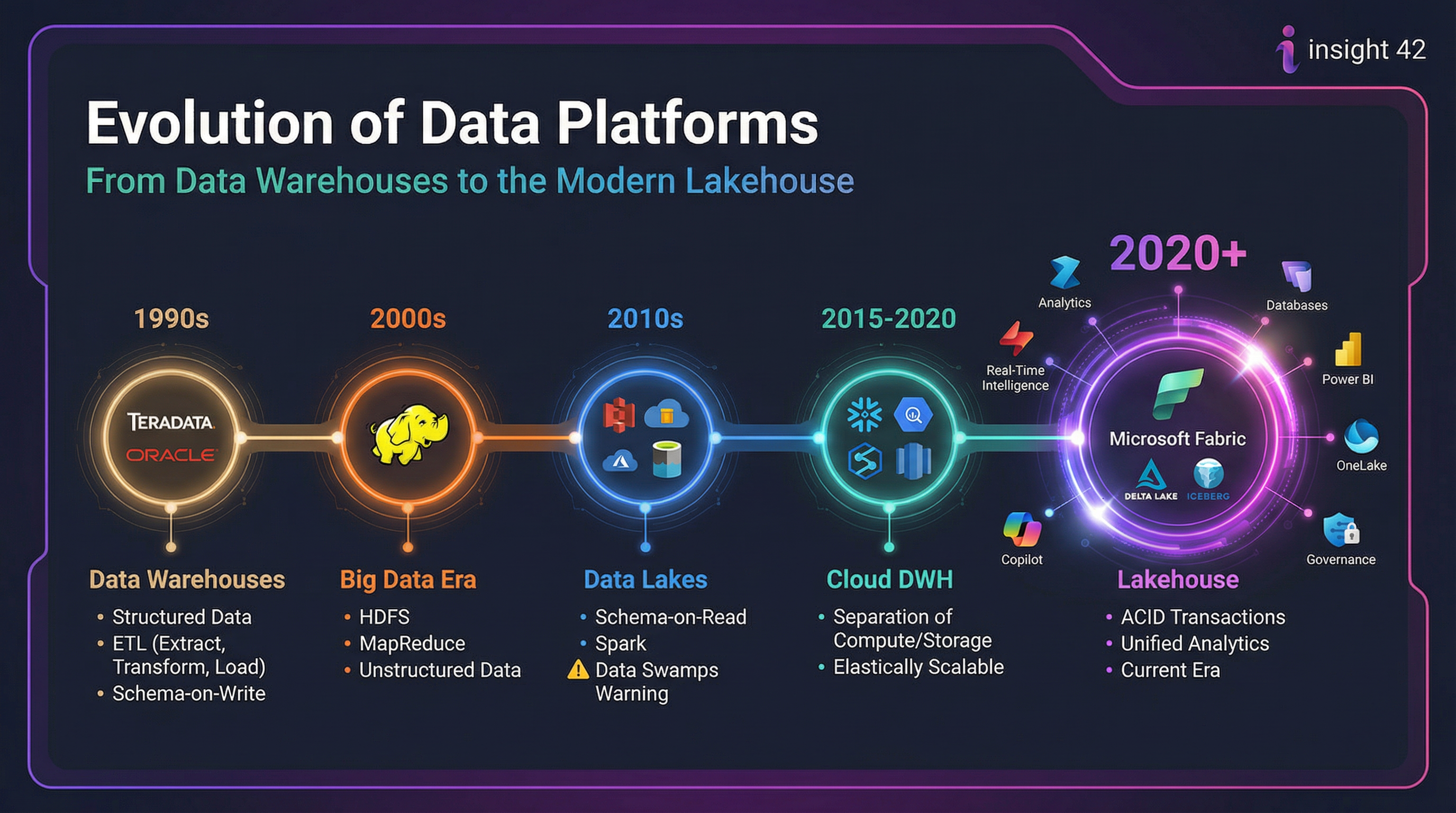
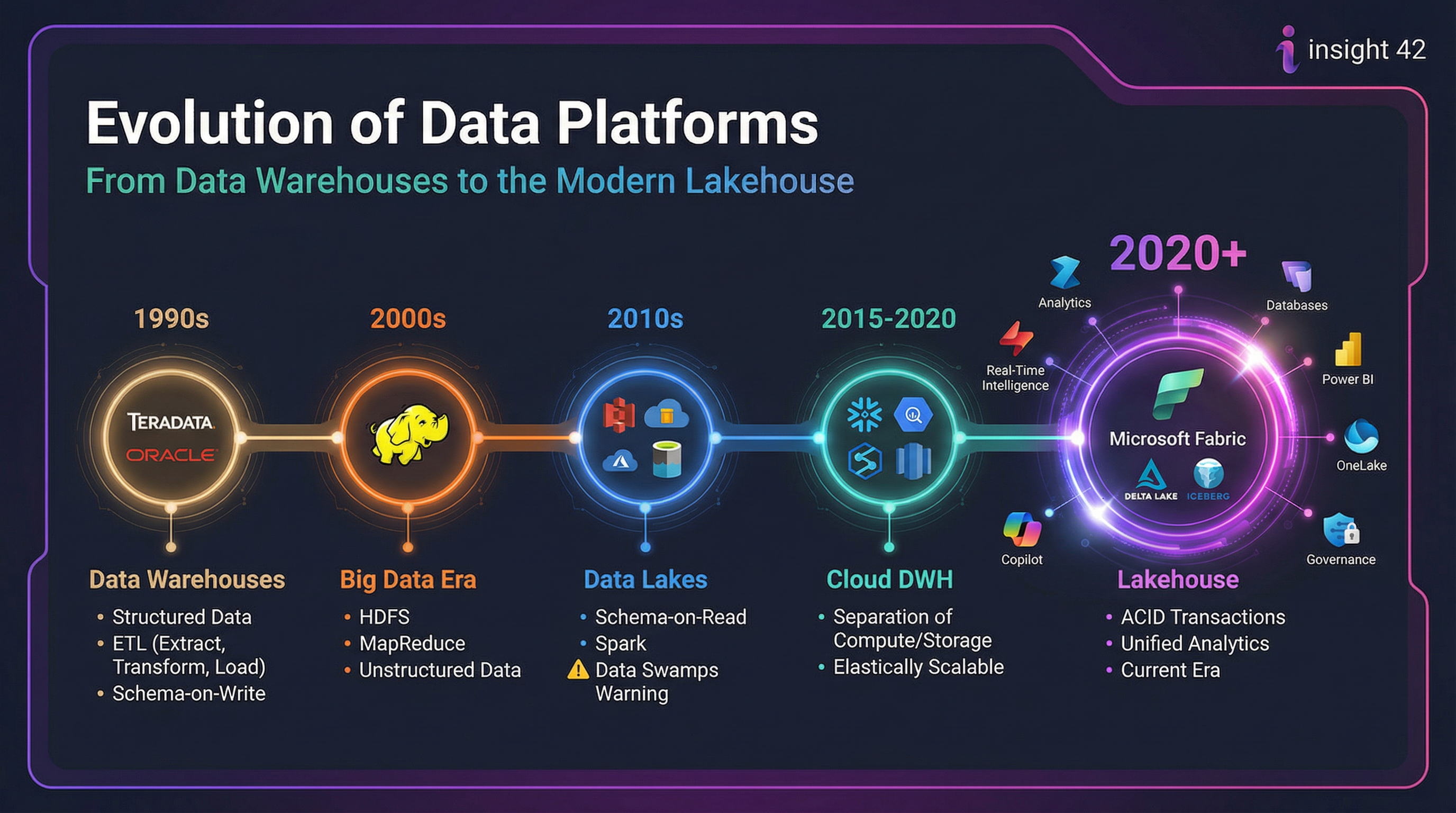
Evolution of Data Platforms – Timeline from 1990s DWH to 2020+ LakehousePart 1

Data Architecture

DiagramDescriptionUsed In
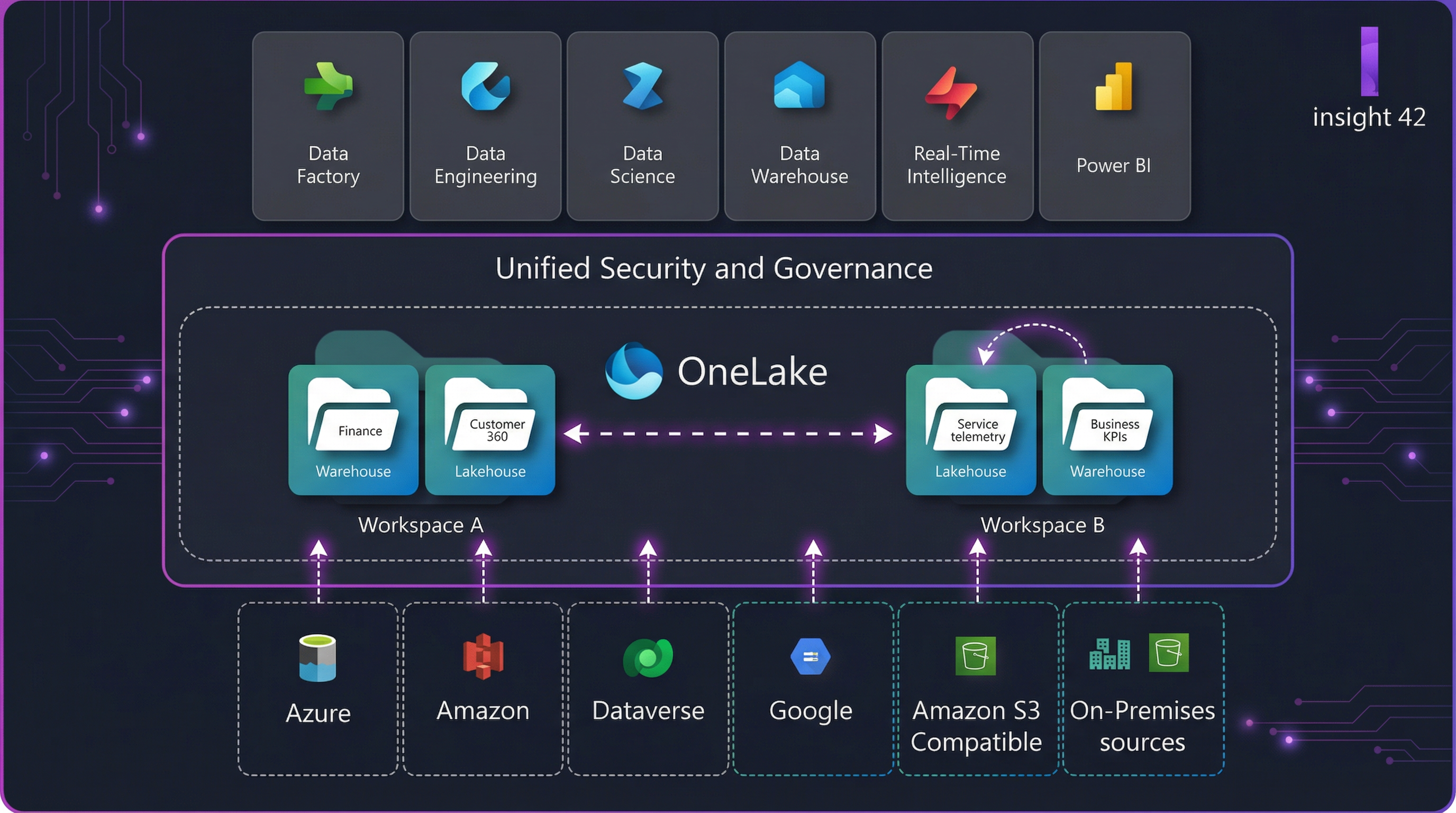
OneLake & Workspaces – Unified Security & Governance with workspace isolationPart 2
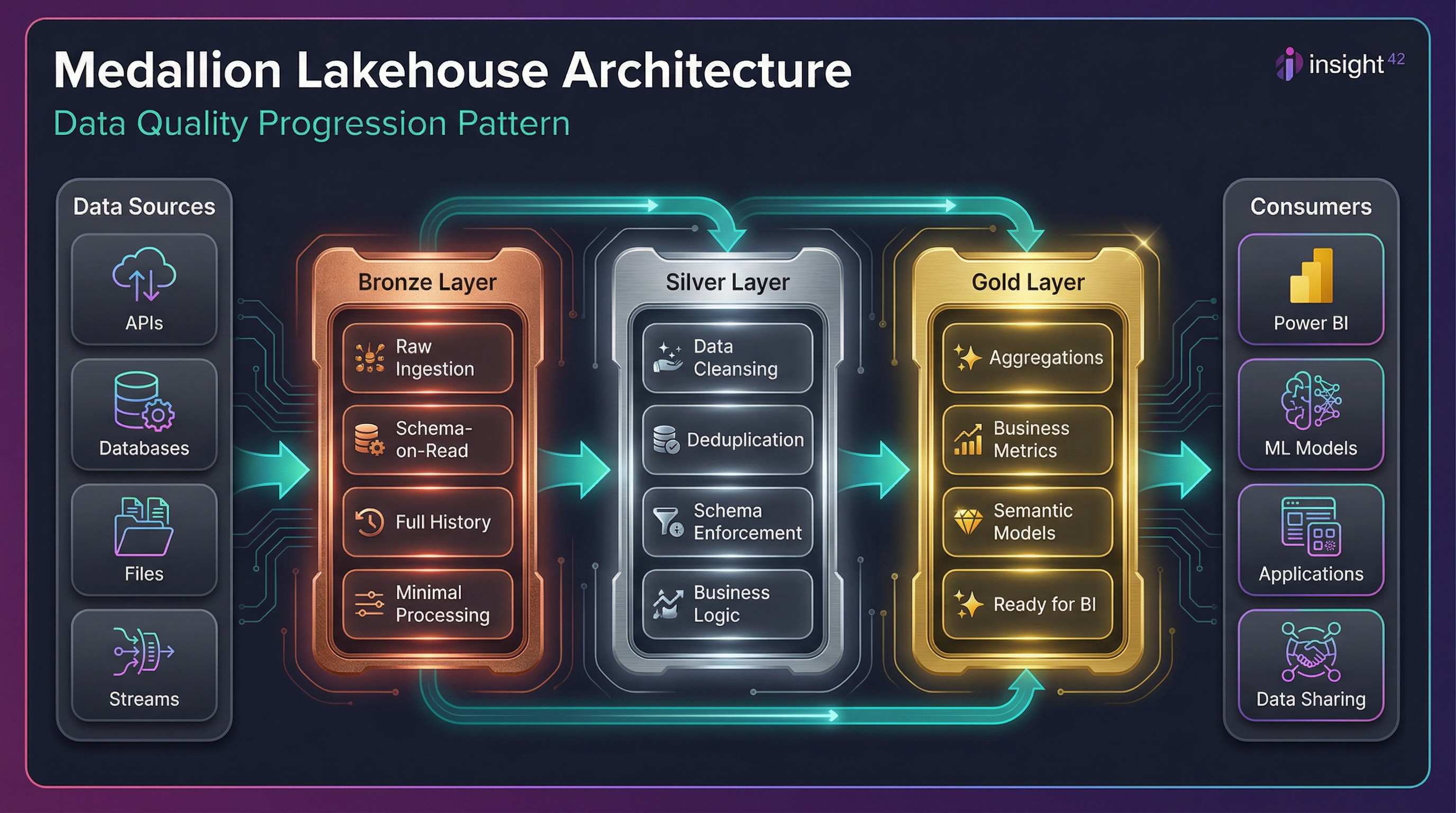
Medallion Architecture – Bronze/Silver/Gold data quality progressionPart 2

Security & Compliance

DiagramDescriptionUsed In
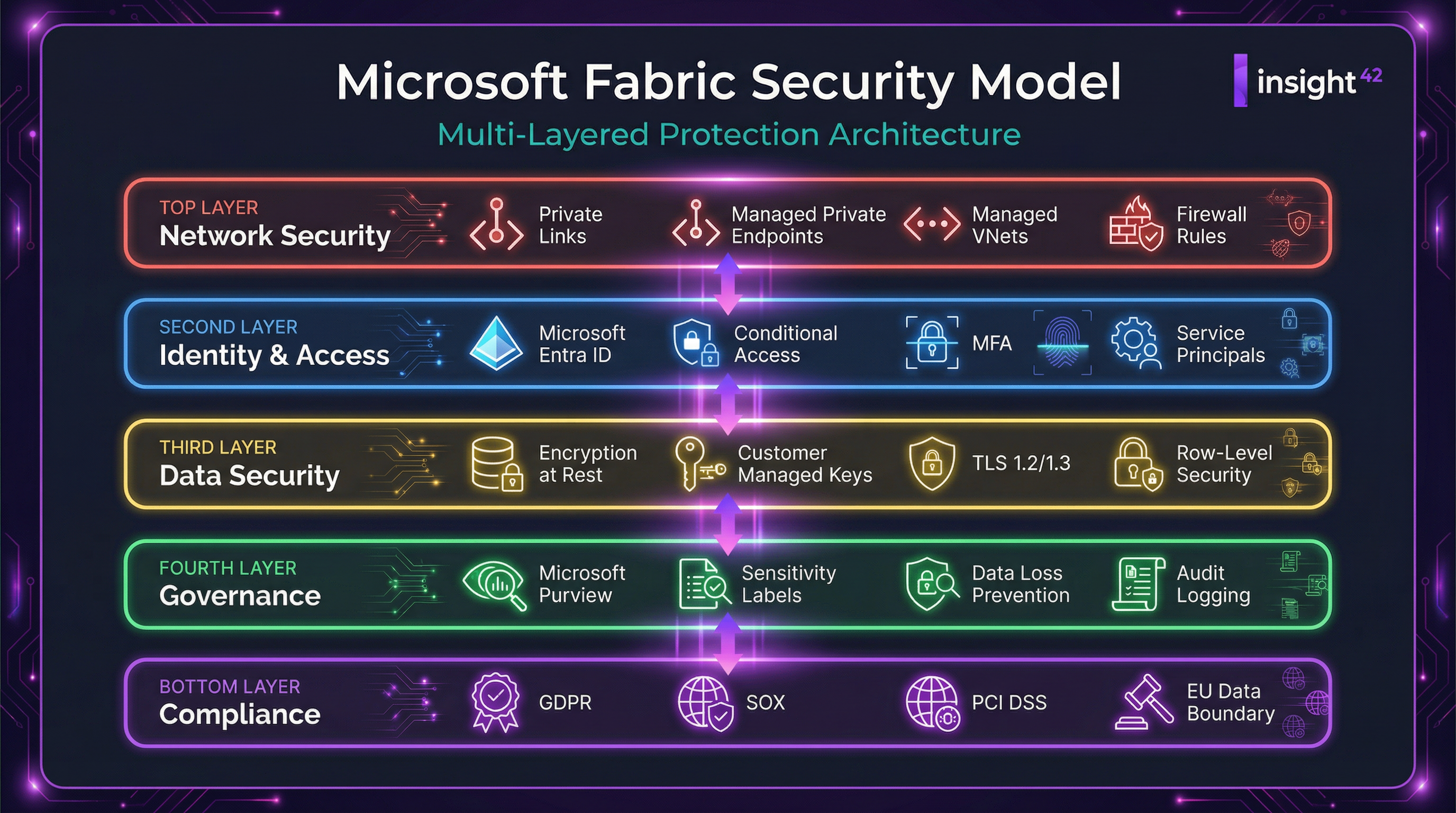
Security Layers Model – 5-layer protection architecturePart 3
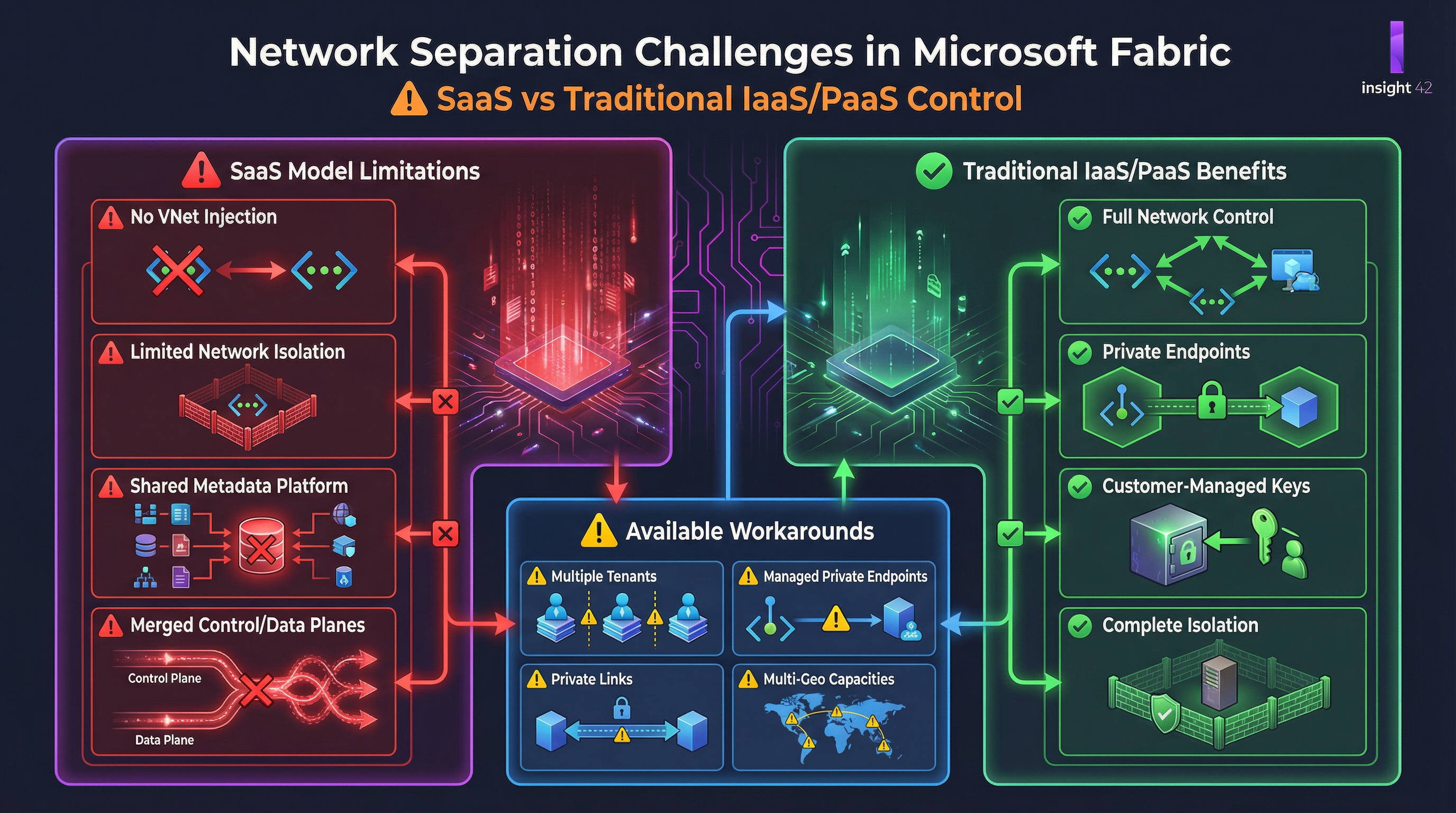
Network Separation Challenges – SaaS vs IaaS/PaaS comparisonPart 3

Multi-Tenancy & Licensing

DiagramDescriptionUsed In
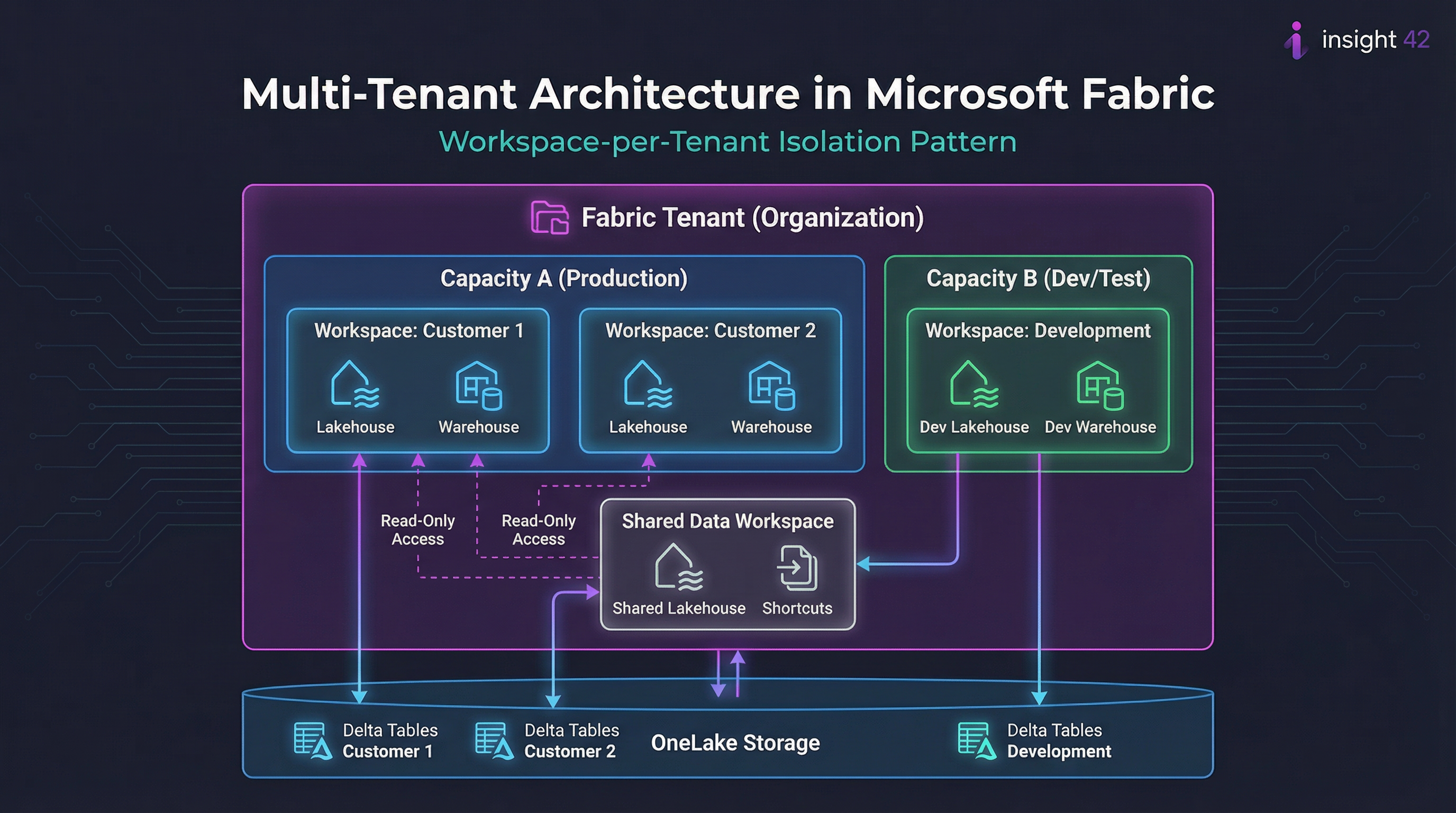
Multi-Tenant Architecture – Workspace-per-tenant isolation patternPart 4
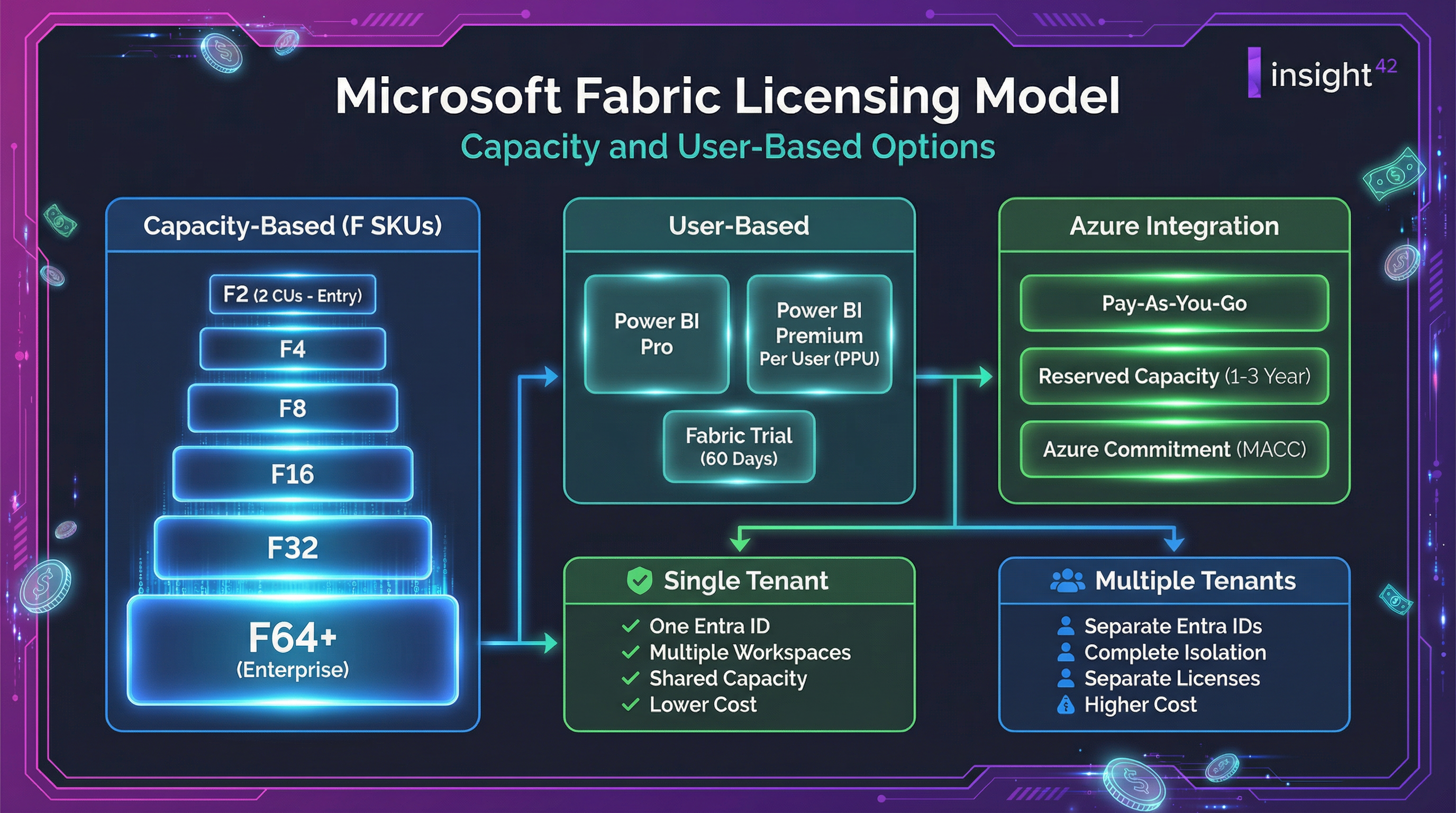
Licensing Model – F SKUs, user-based options, Azure integrationPart 4

Future Vision

DiagramDescriptionUsed In
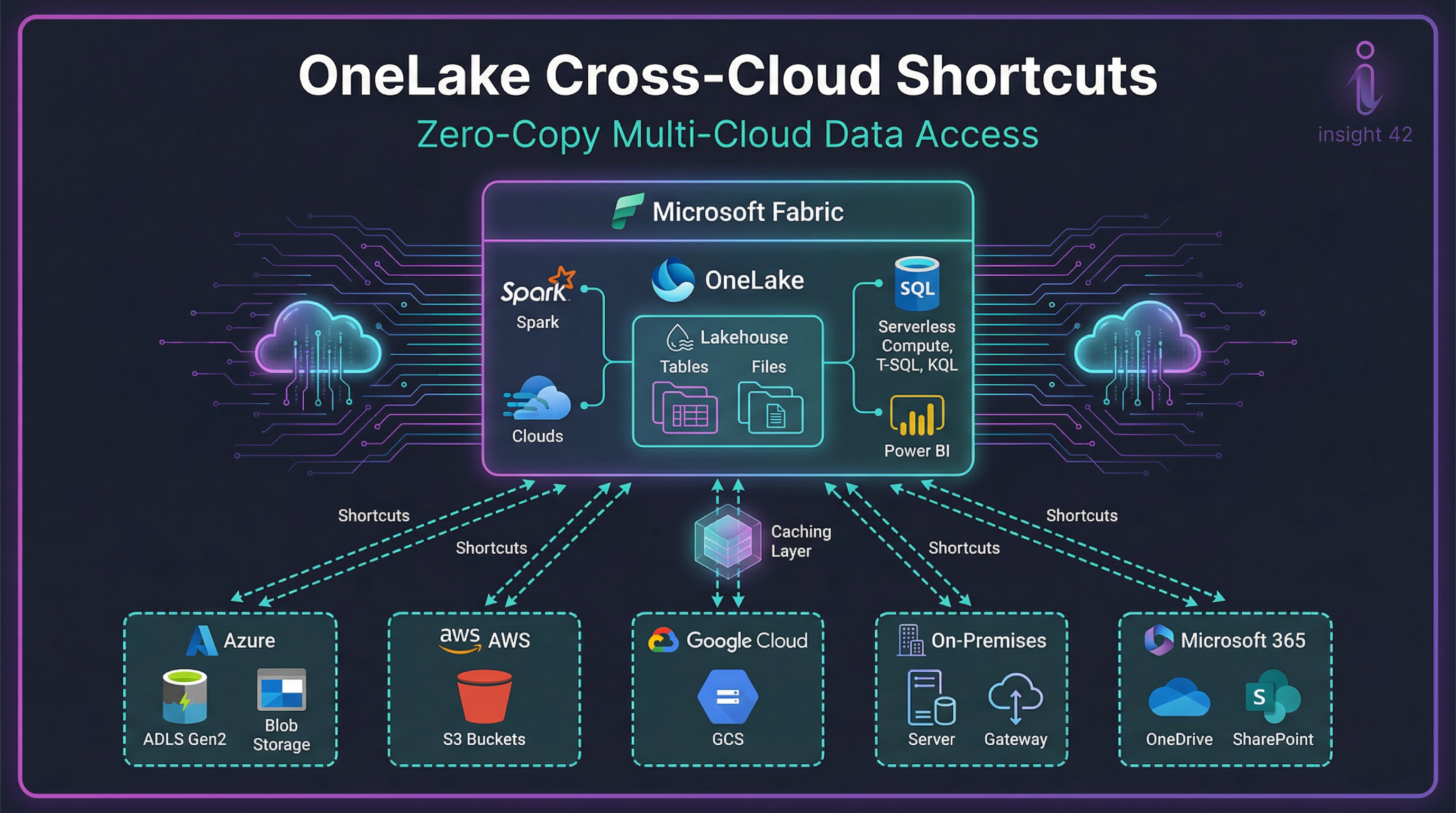
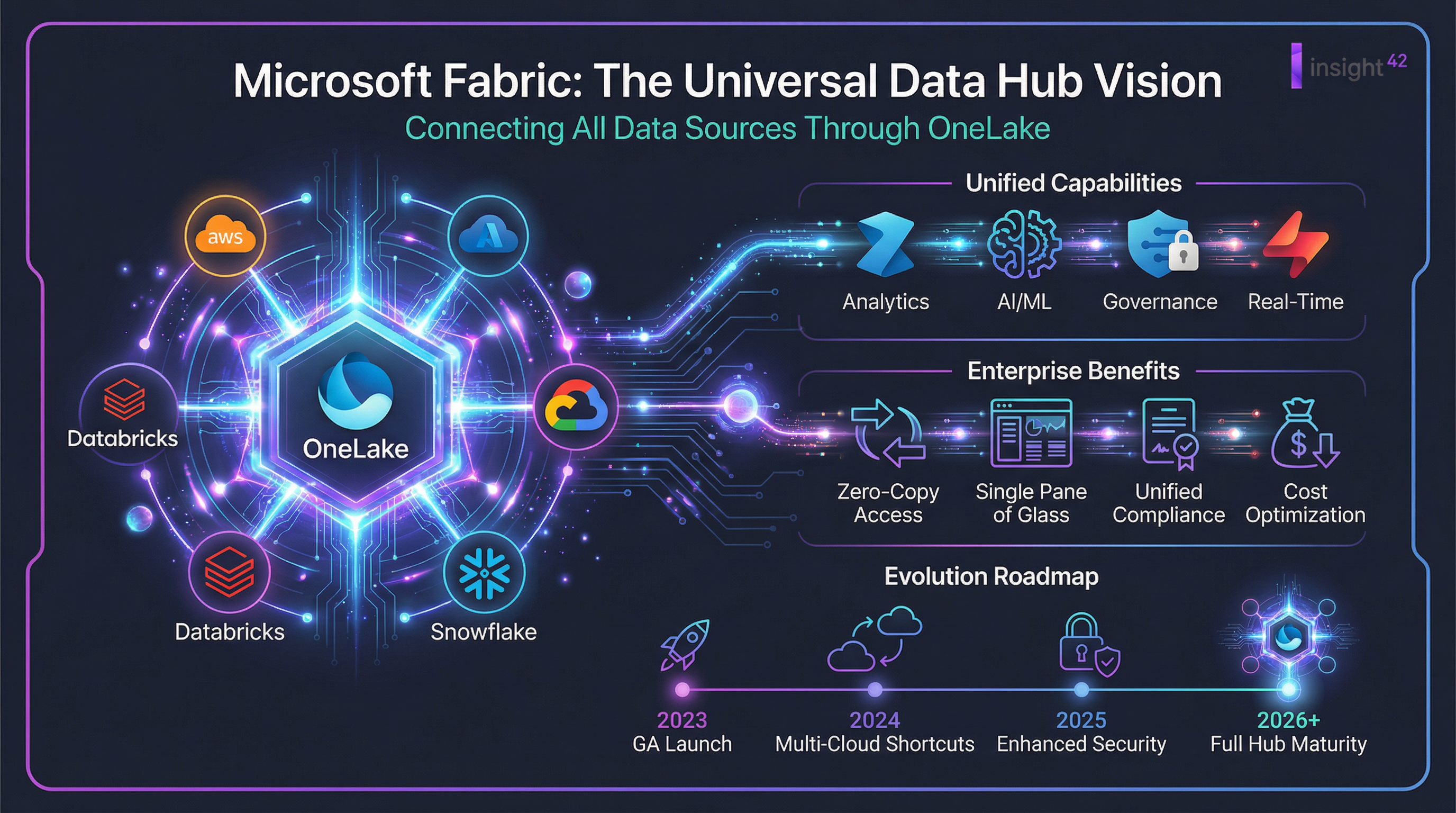
Cross-Cloud Shortcuts – Zero-copy multi-cloud data accessPart 5
Universal Data Hub Vision – Future roadmap and hub conceptPart 5

Key Takeaways

What Fabric Gets Right

  • Unified Experience: Single platform for all data and analytics workloads
  • OneLake: Central data lake eliminating silos and reducing data movement
  • Open Formats: Delta and Parquet ensure no vendor lock-in
  • Cross-Cloud Shortcuts: Revolutionary zero-copy multi-cloud integration

What Needs Improvement

  • Network Isolation: SaaS model limits enterprise-grade network control
  • Multi-Tenancy: Licensing and cost management complexity
  • Compliance: Proving isolation in shared infrastructure environments
  • Maturity: Some features still evolving and not production-ready

Who Should Consider Fabric

  • Organizations already invested in the Microsoft ecosystem
  • Teams seeking to simplify their data platform architecture
  • ISVs building multi-tenant analytics solutions
  • Enterprises ready to embrace a SaaS-first approach

Who Should Wait

  • Organizations with strict network isolation requirements
  • Highly regulated industries requiring physical data separation
  • Teams not ready for the SaaS trade-offs
  • Organizations requiring mature, battle-tested features
#MicrosoftFabric #UnifiedDataPlatform #CloudDataPlatforms #DataLakehouse #FabricDeepDive #DataArchitecture #OneLake #DataPlatform #DataEngineering #BusinessIntelligence #SaaSData #DataSilos #FabricImplementation #CloudDataStrategy #DataAnalytics

A Deep Dive into Azures’ Future of Cloud Data Platforms

Microsoft Fabric: 27th Dec 2025 Martin-Peter Lambert
A Deep Dive into Azures’ Future of Cloud Data Platforms

Microsoft Fabric: (Part 1 of 5)

An insight 42 Technical Deep Dive Series presents A Deep Dive into Azure’s Future of Cloud Data Platforms.

The Unending Quest for a Unified Data Platform

In the world of data, the only constant is change. For decades, organizations have been on a quest to find the perfect data architecture—a single, unified platform. It should handle everything from traditional business intelligence to the most demanding AI workloads. This journey has taken us from rigid, on-premises data warehouses to the flexible, but often chaotic, world of cloud data lakes. Each step in this evolution has solved old problems while introducing new ones. It leaves many to wonder if a truly unified platform was even possible.

This 5-part blog series will provide a deep and critical analysis of Microsoft Fabric, the latest and most ambitious attempt to solve this long-standing challenge. We will explore its architecture, its promises, its shortcomings, and its potential to reshape the future of data and analytics. In this first post, we will set the stage by examining the evolution of data platforms. Additionally, we will introduce the core concepts behind Microsoft Fabric.

A Brief History of Data Platforms: From Warehouses to Lakehouses

To understand the significance of Microsoft Fabric, we must first understand the history that led to its creation. The evolution of data platforms can be broadly categorized into distinct eras. Each era has its own set of technologies and architectural patterns.

Evolution of Data Platforms

Figure 1: The evolution of data platforms, from traditional data warehouses to the modern lakehouse architecture.

The Era of the Data Warehouse

In the 1990s, the data warehouse emerged as the dominant architecture for business intelligence and reporting [1]. These systems, pioneered by companies like Teradata and Oracle, were designed to store and analyze large volumes of structured data. The core principle was schema-on-write, where data was cleaned, transformed, and loaded into a predefined schema before it could be queried. This approach provided excellent performance and data quality but was inflexible and expensive. This was especially true when dealing with the explosion of unstructured and semi-structured data from the web.

The Rise of the Data Lake

The 2010s saw the rise of the data lake, a new architectural pattern designed to handle massive volumes and variety of data. Modern applications generated this data. Built on cloud storage services like Amazon S3 and Azure Data Lake Storage (ADLS), data lakes embraced a schema-on-read approach. This allowed raw data to be stored in its native format and processed on demand [2]. This provided immense flexibility but often led to “data swamps.” These are poorly managed data lakes with little to no governance. They make it difficult to find, trust, and use the data within them.

The Lakehouse: The Best of Both Worlds?

In recent years, the lakehouse architecture has emerged as a hybrid approach. It aims to combine the best of both worlds. It takes the performance and data management capabilities of the data warehouse with the flexibility and low-cost storage of the data lake [3]. Technologies like Delta Lake and Apache Iceberg bring ACID transactions and schema enforcement. Other data warehousing features are added to the data lake. This makes it possible to build reliable and performant analytics platforms on open data formats.

Introducing Microsoft Fabric: The Next Step in the Evolution

Microsoft Fabric represents the next logical step. In this evolutionary journey, it is not just another data platform. It is a complete, end-to-end analytics solution delivered as a software-as-a-service (SaaS) offering. Fabric integrates a suite of familiar and new tools into a single, unified experience. These tools include Data Factory, Synapse Analytics, and Power BI. All are built around a central data lake called OneLake [4].

Microsoft Fabric Architecture

Figure 2: The high-level architecture of Microsoft Fabric, showing the unified experiences, platform layer, and OneLake storage.

The Core Principles of Fabric

Microsoft Fabric is built on several key principles that differentiate it from previous generations of data platforms:

PrincipleDescription
Unified ExperienceFabric provides a single, integrated environment for all data and analytics workloads. It supports data engineering, data science, business intelligence, and real-time analytics.
OneLakeAt the heart of Fabric is OneLake, a single, unified data lake for the entire organization. All Fabric workloads and experiences are natively integrated with OneLake, eliminating data silos. This reduces data movement.
Open Data FormatsOneLake is built on top of Azure Data Lake Storage Gen2. It uses open data formats like Delta and Parquet, ensuring that you are not locked into a proprietary format.
SaaS FoundationFabric is a fully managed SaaS offering. This means that Microsoft handles infrastructure, maintenance, and updates, allowing you to focus on delivering data value.

The Promise of Fabric

The vision behind Microsoft Fabric is to create a single, cohesive platform serving all the data and analytics needs of an organization. By unifying the various tools and services that were previously separate, Fabric aims to:

  • Simplify the data landscape: Reduce the complexity of building and managing modern data platforms.
  • Break down data silos: Provide a single source of truth for all data in the organization.
  • Empower all users: Enable everyone from data engineers to business analysts to collaborate and innovate on a single platform.
  • Accelerate time to value: Reduce the time and effort required to build and deploy new data and analytics solutions.

What’s Next in This Series

While the vision for Microsoft Fabric is compelling, the reality of implementing and using it in a complex enterprise environment is far from simple. In the upcoming posts in this series, we will take a critical look at various aspects of Fabric. This includes:

PartTitleFocus
Part 2Data Lakes and DWH Architecture in the Fabric EraMedallion architecture, lakehouse patterns, data modeling
Part 3Security, Compliance, and Network Separation ChallengesSecurity layers, compliance, network isolation limitations
Part 4Multi-Tenant Architecture, Licensing, and Practical SolutionsWorkspace patterns, F SKU licensing, cost optimization
Part 5Future Trajectory, Shortcuts to Hyperscalers, and the Hub VisionCross-cloud integration, future roadmap, universal hub concept

Join us as we continue this deep dive into Microsoft Fabric. We will separate the hype from the reality. Our goal is to provide you with the insights needed to navigate the future of cloud data platforms.

References

This article is part of the Microsoft Fabric Deep Dive series by insight 42. Continue to Part 2: Data Lakes and DWH Architecture

#MicrosoftFabric #UnifiedDataPlatform #CloudDataPlatforms #DataLakehouse #FabricDeepDive #DataArchitecture #OneLake #DataPlatform #DataEngineering #BusinessIntelligence #SaaSData #DataSilos #FabricImplementation #CloudDataStrategy #DataAnalytics