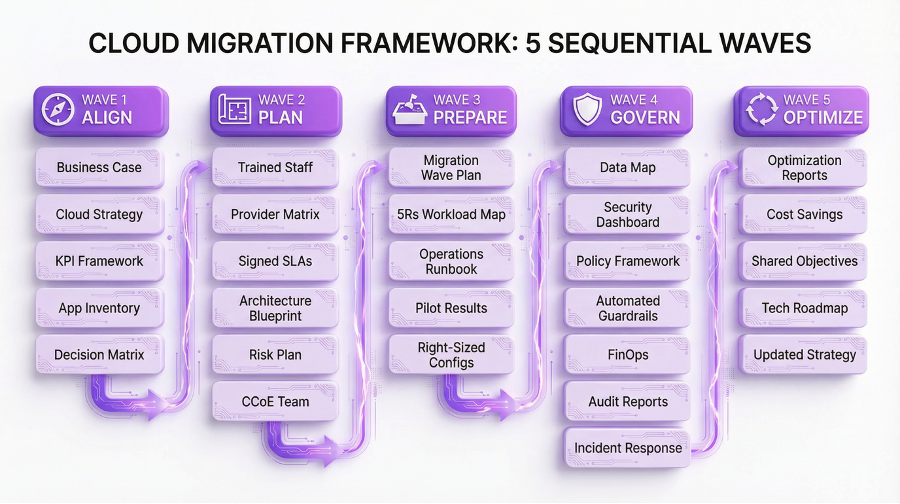
Wave 3: Prepare for Execution – De-Risking the Migration
After meticulous planning in the first two waves, Wave 3: Prepare for Execution – De-Risking the Migration is where the rubber meets the road. This is the final stage of preparation before the full-scale migration begins. The primary goal of this wave is to de-risk the process by testing your assumptions, refining your methods, and ensuring your team and environment are fully prepared for the transition.
Think of this as the final dress rehearsal. Wave 3: Prepare for Execution – De-Risking the Migration offers your opportunity to identify and resolve potential issues in a controlled environment, rather than in the middle of a critical production migration. This wave is all about building confidence and momentum.
Step 1: Establish the Landing Zone
The first and most critical step is to build out the Landing Zone designed in Wave 2. This is your secure, compliant, and production-ready cloud environment. It’s a pre-configured space with all the necessary accounts, networking, security policies, and identity management controls in place. Deploying a well-architected landing zone from the start prevents costly and complex rework later on. It ensures that all future workloads are deployed into an environment that is secure and governed by default, all vital for Wave 3: Prepare for Execution – De-Risking the Migration.
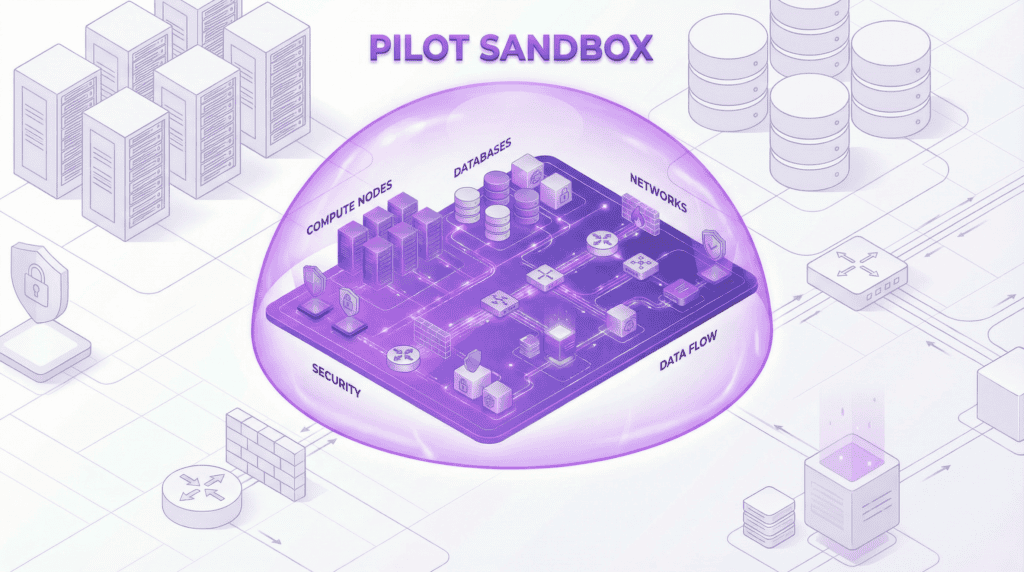
Step 2: Select and Execute a Pilot Migration
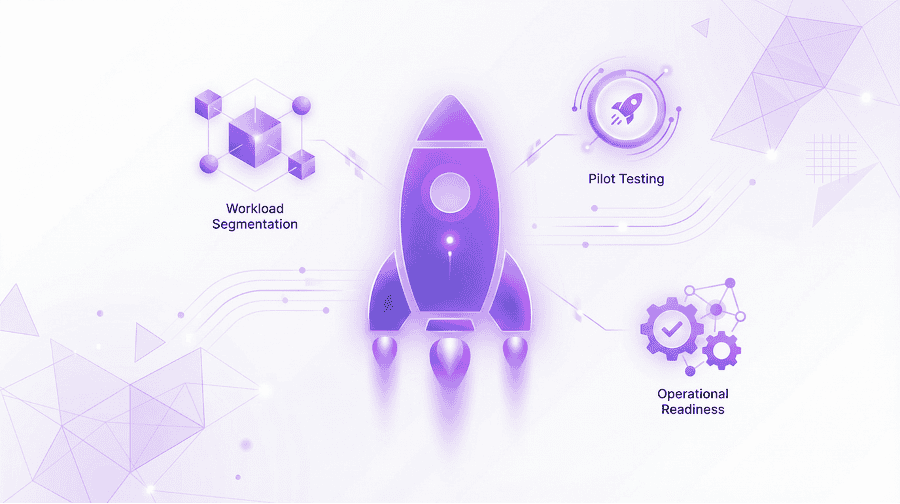
With the landing zone in place, it’s time to test your migration process with a Pilot Migration. The pilot should involve a small number of low-risk, non-critical applications. The goal is not just to move the applications, but to validate the entire process, including:
- Migration Tools: Are the selected tools performing as expected?
- Team Skills: Can the team execute the migration playbook effectively?
- Operational Readiness: Are your monitoring, logging, and incident response procedures working in the new environment?
The lessons learned from the pilot are captured in a Pilot Retrospective Report, which is used to refine the migration plan before proceeding.
Step 3: Refine the Migration Plan with the 5Rs
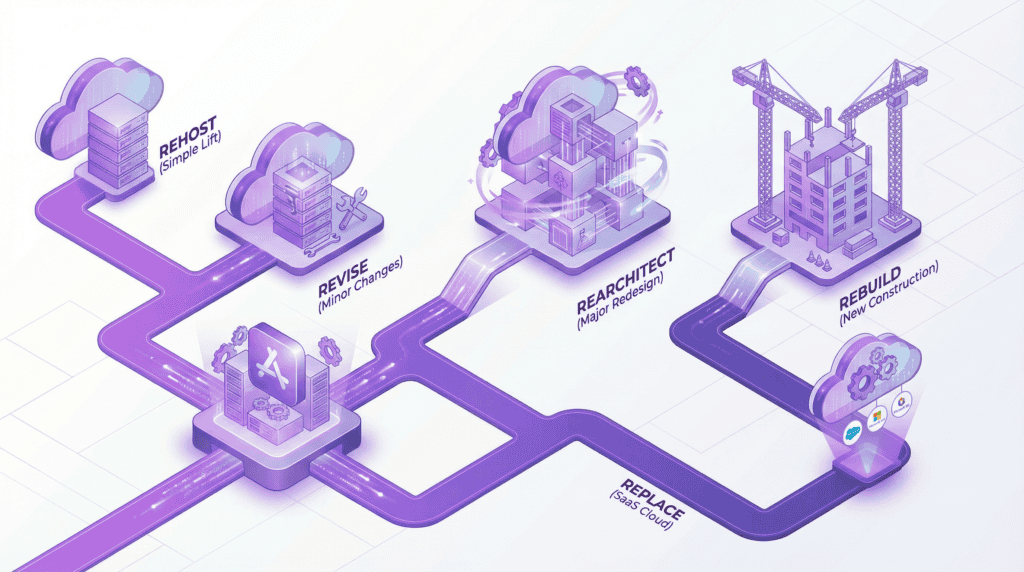
The application inventory from Wave 1 provides the list of what to move, but the 5Rs framework (also known as the 6Rs, including Retire) dictates how each application will move. Based on the pilot results and a deeper analysis, you will now finalize the migration strategy for each application:
- Rehost (Lift and Shift): Move the application as-is to an Infrastructure-as-a-Service (IaaS) platform. Fastest, but least optimized.
- Revise (Re-platform): Make minor modifications to take advantage of cloud services, like moving from a self-managed database to a managed database service (PaaS).
- Rearchitect: Fundamentally change the application’s architecture to be cloud-native, often by moving to microservices.
- Rebuild: Decommission the existing application and build a new one from scratch on a cloud-native platform.
- Replace: Discard the application entirely and move to a Software-as-a-Service (SaaS) solution.
This Finalized Migration Plan details the chosen “R” for each application and the justification for the decision. Integral to this is understanding Wave 3: Prepare for Execution – De-Risking the Migration requirements.
Step 4: Finalize the Business & Operational Readiness Plan
Technical readiness is only half the battle. This step ensures the business is prepared for the change. The Operational Readiness Plan confirms that support teams are trained, runbooks are updated, and communication plans are in place to manage any potential disruption. It ensures that once an application is migrated, the business knows how to support it, and users know what to expect.
By completing Wave 3, you have replaced uncertainty with proven experience. You have a battle-tested migration process, a team that has successfully executed it, and a production-ready environment. You are now prepared to begin the full-scale migration with the highest possible chance of success, entirely aligned with Wave 3: Prepare for Execution – De-Risking the Migration.
#CloudMigrationPilot #LandingZone #RiskManagement #OperationalReadiness #5RsMigration #MigrationTesting #ApplicationMigration #EnvironmentPreparation #ProcessValidation #PilotProject #DeRiskingMigration #Runbooks #ReadinessPlan #LessonsLearned #MigrationExecution