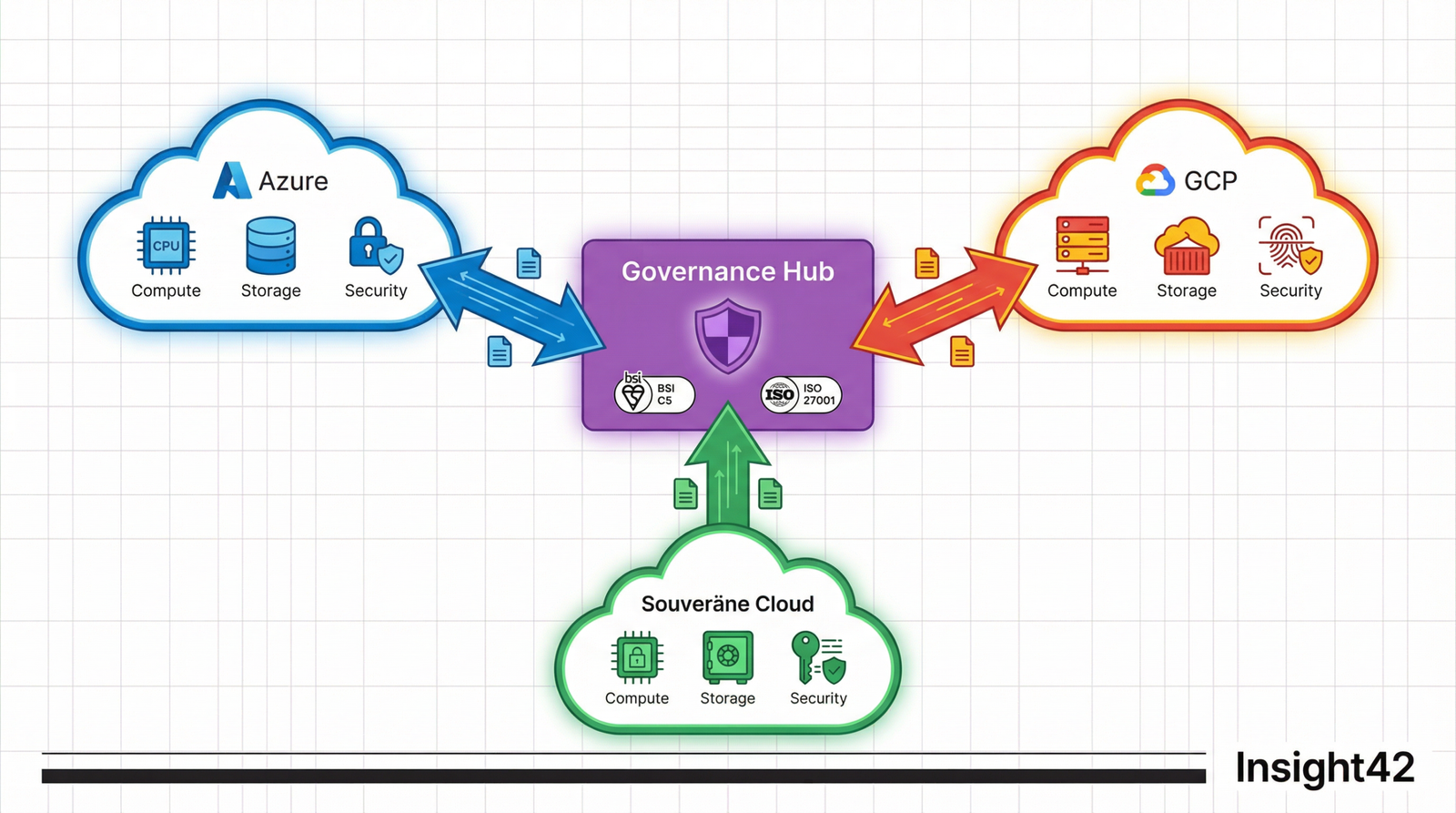
Sovereign Cloud Germany

Azure CAF & Cloud Migration, Resilience, SECURITY 25th Feb 2026 Martin-Peter Lambert
Sovereign Cloud Germany

Digital Sovereignty for the Public Sector

Meta Description: Sovereign Cloud Germany: What does digital sovereignty mean for public authorities? Data residency, key management, and BSI C5 compliance.

What Does Digital Sovereignty Mean?

Digital sovereignty is the ability to control one’s own IT infrastructure and data with self-determination. For the public sector, this is not a luxury but a necessity. It is about controlling citizen data, independence from individual providers, and compliance with German and European legal norms (GDPR, Schrems II).

A sovereign cloud in Germany provides the technical and organizational framework to ensure this control. It combines the innovative power of global hyperscalers (like Azure and GCP) with the strict requirements of German and European law.

The Three Pillars of Digital Sovereignty
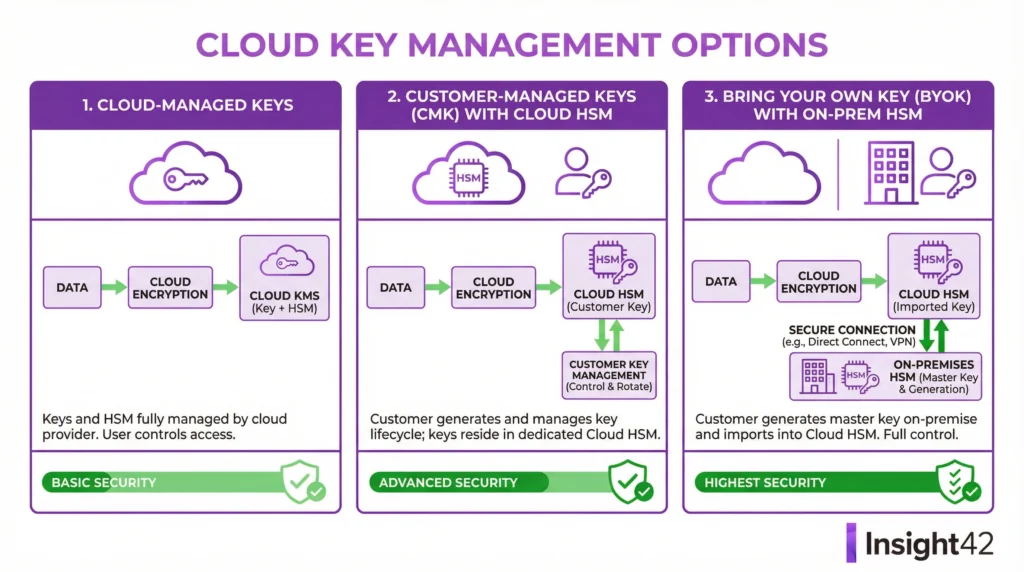
1. Data Residency

  • What it is: The guarantee that data and metadata are stored and processed exclusively within a defined geographical area (e.g., Germany).
  • Why it matters: Prevents access by foreign authorities based on laws like the US CLOUD Act. Ensures compliance with GDPR.
  • Implementation: Use of cloud regions in Germany (e.g., Frankfurt, Berlin). Contractual assurances from the provider.

2. Control & Transparency

  • What it is: The ability to seamlessly control and log access to data and systems, including access by the cloud provider itself.
  • Why it matters: Creates trust. Enables proof of compliance (BSI C5, GDPR).
  • Implementation: Strict access controls (Zero Trust, MFA), comprehensive logging, use of external control bodies (e.g., data trustees).

3. Key Management

  • What it is: Control over the cryptographic keys used to encrypt data. Whoever holds the key, controls the data.
  • Why it matters: It is the ultimate lever for data sovereignty. Even if a provider could access the encrypted data, they cannot read it without the key.
  • Implementation: Bring Your Own Key (BYOK) or Hold Your Own Key (HYOK), where the keys remain within your own infrastructure.

Quick Checklist: Digital Sovereignty

PillarKey QuestionImplemented?
Data ResidencyIs all data guaranteed to be in Germany/EU?
ControlDo we have full control over all access?
TransparencyIs all access logged completely?
Key ManagementDo we control the cryptographic keys?
ComplianceAre the requirements of GDPR, BSI C5, etc., met?

To-Do List for a Sovereign Cloud Strategy

  1. Immediately: Classify the protection needs of the data.
  2. Week 1: Define the requirements for digital sovereignty.
  3. Week 2: Evaluate the market for sovereign cloud offerings (e.g., Azure, GCP, T-Systems Sovereign Cloud).
  4. Month 1: Establish a strategy for data residency and key management.
  5. Month 2: Adapt the BSI-compliant cloud security concept accordingly.
  6. Month 3: Start a pilot project in a sovereign cloud environment.

Sovereign Offerings from Hyperscalers
The major providers have recognized the need and offer special solutions:

  • Microsoft Cloud for Sovereignty: Offers data residency, enhanced controls, and transparency. Partners like T-Systems provide additional data trustee models.
  • Google Cloud Sovereign Solutions: Provides similar guarantees for data location and control, often in partnership with local providers.

These offerings are an important step but require careful examination. Cloud consulting for public authorities helps to validate the providers’ promises and find the right solution for your needs.

The Role of BSI C5 and IT Baseline Protection

Digital sovereignty and compliance go hand in hand. Being BSI C5 compliant is a basic requirement for a sovereign cloud. The controls in the C5 catalog cover many aspects of sovereignty, especially in the areas of transparency and operational security.

IT Baseline Protection consulting helps to integrate the BSI’s requirements into the cloud architecture. An ISO 27001 certification based on IT Baseline Protection demonstrates the effectiveness of the implemented measures.

Insight42: Your Guide to Digital Sovereignty

The path to a sovereign cloud is complex. We navigate you safely through the technological, legal, and organizational challenges. We know the offerings, the pitfalls, and the success factors.

We help you develop a strategy tailored to your specific protection needs—from data residency to external key management. Secure, BSI C5 compliant, and future-proof.

Take control. Contact us.

Figure: The Three Pillars of Digital Sovereignty in the Cloud

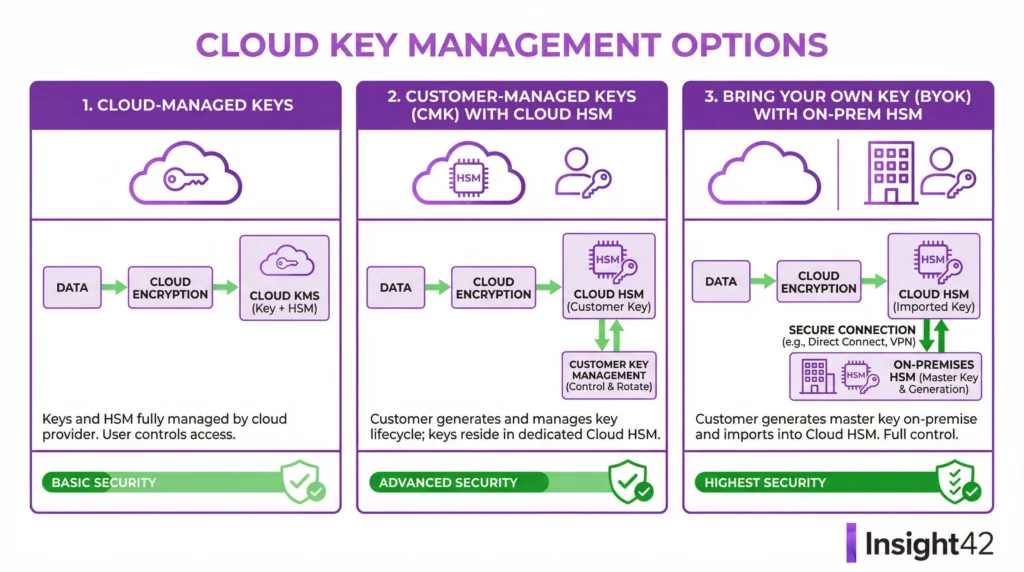
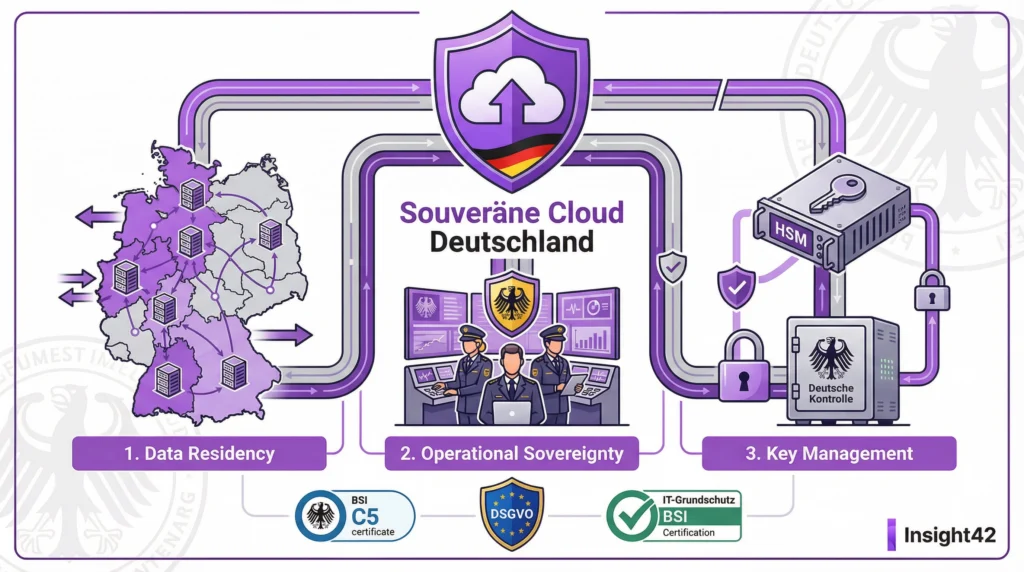
Blog Post 2: Cloud Key Management – BYOK vs. HYOK in Azure and GCP

Meta Description: Cloud Key Management: The ultimate lever for data sovereignty. A comparison of BYOK (Bring Your Own Key) and HYOK (Hold Your Own Key) in Azure and GCP.

Whoever Holds the Key, Holds the Power

Encryption is the foundation of cloud security. But who controls the keys? By default, the cloud provider does. This is convenient, but often not sufficient for sensitive government data. Because whoever controls the key can decrypt the data. This includes the provider itself and potentially foreign authorities.

The solution: Take control of your keys yourself. The two most important models for this are Bring Your Own Key (BYOK) and Hold Your Own Key (HYOK).

Bring Your Own Key (BYOK)

  • The Principle: You create your keys in your own environment (e.g., with an on-premises Hardware Security Module – HSM) and securely import them into the cloud provider’s key management system (e.g., Azure Key Vault, GCP Cloud KMS).
  • Advantages:
  • Full control over the creation and lifecycle of the key.
  • The key can be revoked (deleted) at any time, rendering the data unusable.
  • Relatively simple integration with most cloud services.
  • Disadvantages:
  • The key is physically located in the provider’s cloud. Access by the provider, though unlikely, is not 100% technically impossible.
  • Provider Services: Azure Key Vault (Premium Tier), GCP Cloud KMS with imported keys.

Hold Your Own Key (HYOK) / External Key Management

  • The Principle: The key never leaves your own controlled environment. The cloud services send the data to be encrypted or decrypted to your external key manager. The key itself is never transferred.
  • Advantages:
  • Maximum control and sovereignty. The key is physically and logically separate from the cloud.
  • Access by the cloud provider or third parties is technically impossible.
  • Disadvantages:
  • Higher complexity and potentially higher latency.
  • Requires a highly available own key management infrastructure.
  • Not supported by all cloud services.
  • Provider Services: Azure Key Vault Managed HSM, GCP External Key Manager (EKM).

Quick Checklist: Which Model is Right?

CriterionBYOKHYOK/EKM
Sovereignty LevelHighVery High
ComplexityMediumHigh
PerformanceHighMedium
CostMediumHigh
Service CompatibilityBroadLimited
Recommendation forStandard for sensitive dataHighest protection needs (KRITIS, classified information)

To-Do List for Sovereign Key Management

  • Week 1: Analyze the protection needs of the data requiring key control.
  • Week 2: Evaluate the BYOK and HYOK offerings of the cloud providers in detail.
  • Month 1: Decide on a model (or a combination).
  • Month 2: Create a concept for the on-premises HSM infrastructure (if necessary).
  • Month 3: Configure the key management service in the cloud.
  • Month 4: Define processes for key lifecycle management (creation, rotation, deletion).

Integration into the Security Architecture

External key management is not an isolated topic. It must be integrated into the overall BSI-compliant cloud security concept. It is a central measure for meeting the requirements of BSI C5, IT Baseline Protection, and GDPR.

The processes surrounding key management must be clearly defined and documented. Who can create keys? Who approves their use? What happens in an emergency? IT Baseline Protection consulting helps to design these processes robustly.

Insight42: Experts in Cloud Key Management

We help you regain control over your keys and thus your data. We analyze your needs, compare the solutions, and implement the model that is right for you.

Whether it’s BYOK with Azure Key Vault or HYOK with external HSMs – we have the expertise to technically implement your sovereign cloud strategy. Secure, compliant, and manageable.

Lock your data securely. Talk to us.

Figure: Comparison of Key Management Models BYOK and HYOK

#DigitalSovereignty #SovereignCloud #DataResidency #KeyManagement #BYOK #HYOK #CloudSecurity #PublicSector #GovTech #GDPR #SchremsII #BSIC5 #ITBaselineProtection #Azure #GCP #DataSecurity #Encryption #CloudMigration #Insight42
Cloud Strategy & Migration Roadmap (Multi-Cloud)

AI In The Public Sector, Resilience, Sovereignty Series 9th Feb 2026 Martin-Peter Lambert
Cloud Strategy & Migration Roadmap (Multi-Cloud)

Cloud Migration Roadmap for the Public Sector – The Path to Digital Sovereignty

Meta Description: Learn how public authorities can develop a successful Cloud Strategy & Migration Roadmap (Multi-Cloud). Achieve BSI C5 compliance with a sovereign cloud and a federal multi-cloud strategy.

Why Public Authorities Need a Cloud Strategy Now

The digital transformation of public administration is at a turning point. A cloud-first approach is no longer an option; it is a necessity. German authorities must act, and time is of the essence.

A well-designed Cloud Migration Roadmap provides the foundation. It connects technical requirements with regulatory mandates, placing BSI C5 compliance at the core. The ultimate goal is to achieve digital sovereignty in the cloud.

Understanding the Challenge

Public institutions face unique hurdles. A Data Protection Impact Assessment (DPIA) for the cloud is mandatory. IT baseline protection consulting (IT-Grundschutz) must be involved from the start. The procurement of cloud service providers follows strict regulations.

A federal multi-cloud strategy offers flexibility. Azure migration and GCP migration can proceed in parallel. The Cloud Adoption Framework for Azure provides proven methodologies, while Google Cloud migration partners complete the ecosystem.

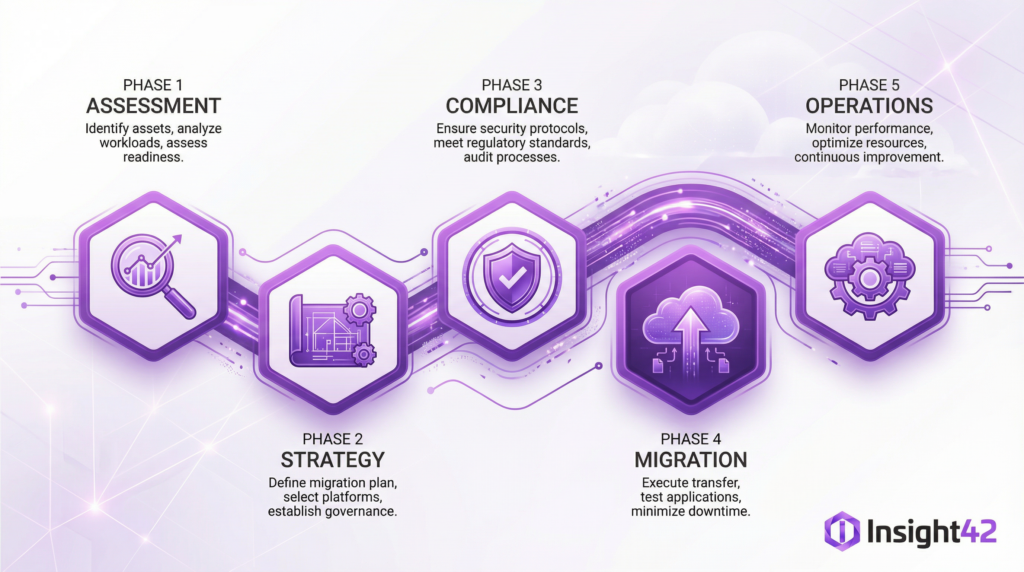
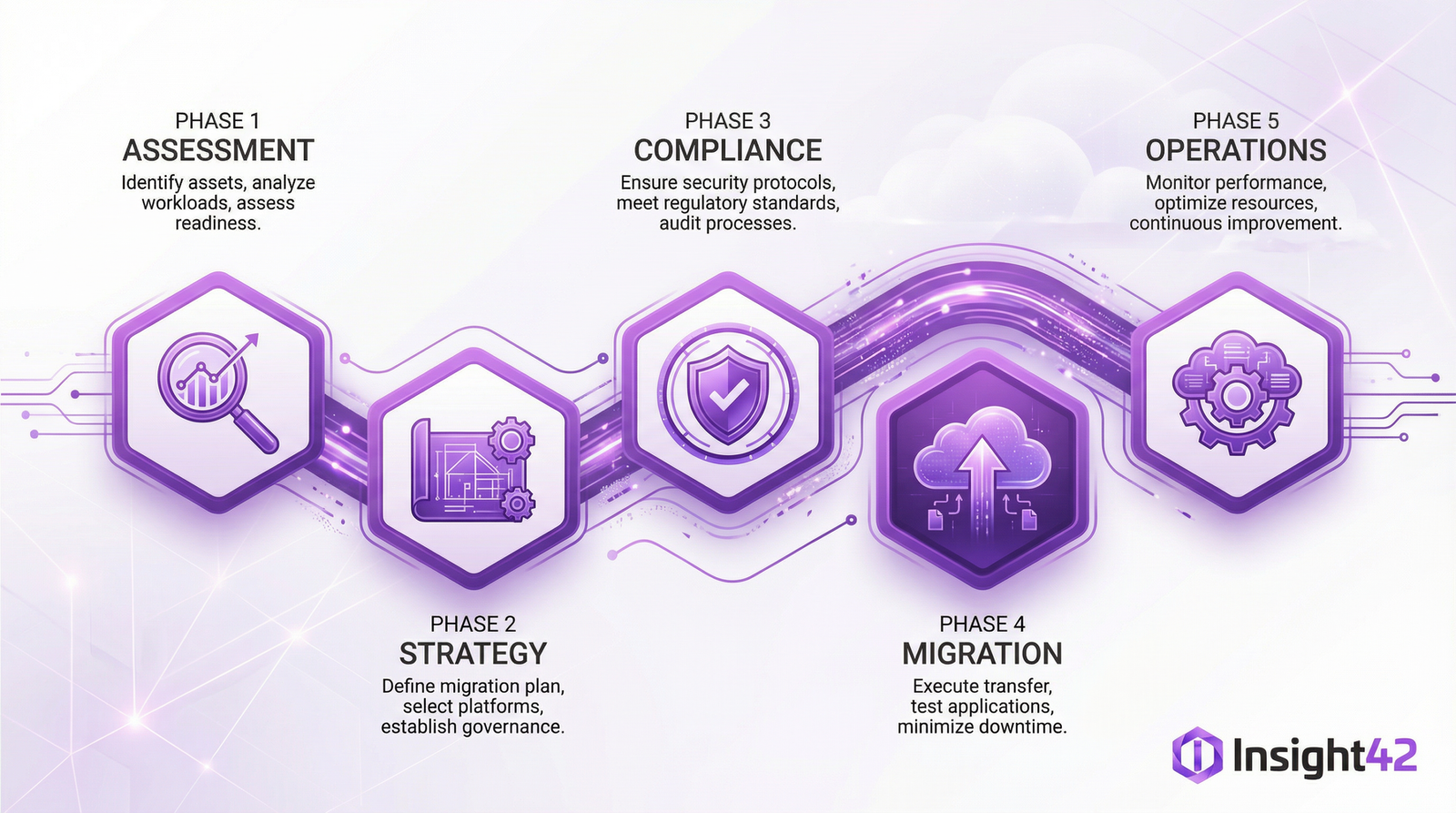
The 5-Phase Approach to Cloud Migration

Phase 1: Assessment and Analysis

Every successful migration begins with an inventory. What workloads exist? What are the dependencies? Cloud migration consulting provides clarity.

Phase 2: Strategy and Architecture

This is where the actual roadmap is developed. Azure Landing Zone or GCP Landing Zone? Often, the answer is both. Multi-cloud migration enables freedom of choice.

Phase 3: Compliance and Security

BSI C5 cloud requirements are defined. A BSI-compliant cloud security concept is created. ISO 27001 based on IT-Grundschutz forms the basis.

Phase 4: Migration and Implementation

A datacenter migration to Azure is performed step-by-step. A VMware to Azure migration utilizes proven tools. A fixed-price cloud migration offer provides planning security.

Phase 5: Operations and Optimization

Cloud managed services for authorities take over routine operations. Azure managed services ensure availability. Continuous improvement becomes the standard.

Quick Checklist: Cloud Migration Roadmap

StepActionTimeline
1Create Workload InventoryWeek 1-2
2Document Compliance RequirementsWeek 2-3
3Evaluate Cloud ProvidersWeek 3-4
4Plan Landing ZoneWeek 4-6
5Launch Pilot ProjectWeek 6-8
6Finalize Rollout PlanWeek 8-10

To-Do List for Decision-Makers

  1. Today: Appoint an internal cloud champion.
  2. This Week: Initiate an IT landscape assessment.
  3. This Month: Commission cloud consulting for public authorities.
  4. Quarter 1: Conduct a BSI C5 gap analysis.
  5. Quarter 2: Prepare the cloud migration tender.

Why Multi-Cloud Makes Sense for Public Authorities

A sovereign cloud in Germany alone is often not enough. Specialized services require flexibility. The German Administration Cloud (Deutsche Verwaltungscloud) can be combined with Azure and GCP.

The advantages are clear: no vendor lock-in and the best solution for every use case. A cloud framework agreement enables rapid procurement.

Cloud migration costs remain predictable. Cloud migration offers can be compared. IT service providers for the public sector understand the requirements.

The Next Step

A professional Cloud Migration Roadmap is complex. It requires expertise in technology and procurement law. Azure migration partners and Google Cloud migration partners bring both.

Insight42 supports public authorities on this journey, from the initial analysis to ongoing operations. BSI C5 compliant, KRITIS cloud security included, and NIS2 compliance consulting as standard.

Ready for the first step? Contact us for a non-binding initial consultation.

Cloud Migration Roadmap Visualization

Figure: The 5 Phases of Cloud Migration for the Public Sector

Blog Post 2: Multi-Cloud Strategy for the Federal Government – Flexibility Meets Compliance

Meta Description: Federal Multi-Cloud Strategy: Combine Azure and GCP. Implement a cloud-first administration with BSI C5, digital sovereignty, and a cloud framework agreement.

Multi-Cloud is the Future of Public Sector IT

Single cloud providers have their limits. A federal multi-cloud strategy overcomes them. Azure migration and GCP migration complement each other. The result: maximum flexibility with full compliance.

The public sector benefits particularly. Cloud migration for public administration becomes simpler. Specialized workloads find their optimal platform. Digital sovereignty in the cloud is maintained.

What Multi-Cloud Really Means

Multi-cloud is more than just using two providers. It is a strategy, an architecture, and an operating model. The Cloud Adoption Framework for Azure provides the methodology; a GCP Landing Zone provides the structure.

Each workload is analyzed. Where does it run best? Azure? GCP? A sovereign cloud in Germany? The answer is often: it depends.

The Building Blocks of a Multi-Cloud Architecture

Governance Layer

Centralized control is essential. An Azure Landing Zone and a GCP Landing Zone follow common principles: uniform policies, consistent monitoring, and end-to-end security.

Connectivity Layer

An Azure ExpressRoute setup connects data centers. Google Cloud Interconnect complements it. Hybrid scenarios become possible. A datacenter migration to Azure proceeds without interruption.

Security Layer

The BSI C5 cloud standard applies across the board. The BSI-compliant cloud security concept is uniform. IT baseline protection consulting considers all platforms. ISO 27001 based on IT-Grundschutz remains the standard.

Application Layer

This is where multi-cloud shows its strength. Kubernetes runs on both AKS and GKE. Containers are portable. Vendor lock-in is avoided.

Quick Checklist: Multi-Cloud Readiness

AreaCheckpointStatus
GovernanceCentral Policy Engine Defined
NetworkConnectivity Concept Created
SecurityBSI C5 Mapping for All Clouds
IdentityCentralized IAM Planned
CostsFinOps Process Established
OperationsMulti-Cloud Monitoring Active

To-Do List for Multi-Cloud Success

  1. Immediately: Conduct a cloud strategy workshop.
  2. Week 1: Start workload classification.
  3. Week 2: Create a compliance matrix.
  4. Month 1: Build landing zones in parallel.
  5. Month 2: Migrate pilot workloads.
  6. Month 3: Establish governance processes.

Structuring Tenders and Procurement Correctly

A cloud migration tender requires expertise. The procurement of cloud service providers follows public procurement law. A cloud framework agreement accelerates procurement.

IT service providers for the public sector know these processes. Cloud consulting for authorities begins before the tender. Cloud migration offers are designed to be comparable.

Cloud migration costs vary widely. A fixed-price for cloud migration creates certainty. Azure migration consulting and GCP migration partners work hand in hand.

Compliance as an Enabler

Being BSI C5 compliant is not an obstacle; it is a mark of quality. KRITIS cloud security becomes the standard. NIS2 compliance consulting integrates European requirements.

A Data Protection Impact Assessment (DPIA) for the cloud is mandatory. It protects citizens and the authority. The German Administration Cloud (Deutsche Verwaltungscloud) meets the highest standards.

The Insight42 Approach

We understand multi-cloud. We understand public authorities. We understand procurement law. This combination makes the difference.

From strategy to operations, we offer cloud managed services for authorities as a complete package. Azure managed services and GCP operations from a single source.

Start now. The cloud is not waiting. Neither are your citizens.


Multi-Cloud Architecture Visualization

Figure: Multi-Cloud Architecture for the Public Sector


#CloudMigration #PublicSector #MultiCloud #BSIC5 #DigitalSovereignty #AzureMigration #GCPMigration #CloudFirst #ITBaselineProtection #GovTech #DigitalTransformation #CloudStrategy #GermanCloud #NIS2 #Compliance #CloudConsulting #LandingZone 

2. https://insight42.com/multi-cloud-security/

3. https://insight42.com/part-1-a-guide-to-sovereign-ai-in-the-public-sector-the-revolution-will-be-sovereign/