Cloud Adoption Framework in Practice WAVE 2

Azure CAF & Cloud Migration 12th Jan 2026 Martin-Peter Lambert
Cloud Adoption Framework in Practice WAVE 2

Wave 2: Develop Plan of Action – From Strategy to Blueprint

With the strategic foundation set in Wave 1, it’s time to translate your “why” into a concrete “how.” Wave 2: Develop Plan of Action – From Strategy to Blueprint is where the high-level vision transforms into an actionable blueprint. This is the master plan for your migration, detailing the partners, skills, and architecture required for a successful journey. Skipping this wave is like starting a cross-country road trip with no map, no driver, and no car.

This wave is about making critical decisions that will shape the technical and financial realities of your cloud environment for years to come. It ensures you have the right team, the right partners, and the right design before you begin the heavy lifting of migration.

Step 1: Select Cloud Vendors & Partners

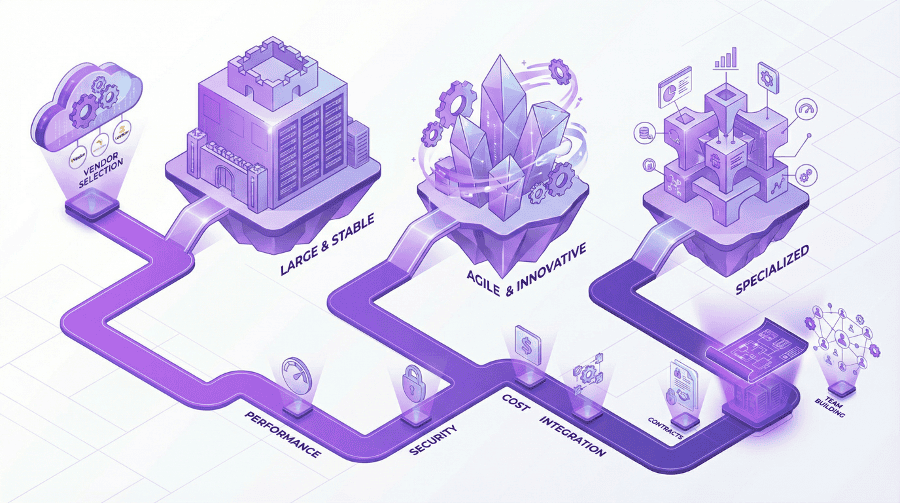
Choosing a cloud provider is one of the most significant decisions in the entire process. This step leverages the Decision Matrix from Wave 1 to objectively evaluate the major cloud platforms (like AWS, Azure, and Google Cloud) against your specific business and technical requirements. Key evaluation criteria include:

  • Service Offerings: Do their services match your needs for compute, data, AI/ML, etc.?
  • Cost Model: How does their pricing structure align with your financial projections?
  • Compliance & Security: Can they meet your industry-specific regulatory requirements?
  • Ecosystem & Support: How strong is their partner network and enterprise support?

The output is a Vendor Selection Document that justifies your choice and outlines the partnership model.
Step 2: Build a Cloud Center of Excellence (CCoE)

A successful cloud program is not an IT-only initiative; it’s a company-wide transformation. The Cloud Center of Excellence (CCoE) is the cross-functional team responsible for leading this change. This is your core team of cloud champions, comprised of individuals from:

  • IT/Operations: To manage infrastructure and reliability.
  • Security: To embed security into every stage.
  • Finance (FinOps): To ensure financial accountability and cost optimization.
  • Application Development: To guide cloud-native development practices.

This team will create the CCoE Charter, defining their roles, responsibilities, and governance model.

Step 3: Design the Target Architecture

This is where the architectural vision comes to life. Based on the application portfolio analysis and vendor selection, your team will design the high-level Target Architecture. This blueprint defines how your applications will run in the cloud. It includes designing the landing zone—a pre-configured, secure, and scalable environment where you can deploy your workloads. This design must account for networking, identity and access management, security controls, and operational monitoring.

Step 4: Develop the Migration Roadmap

With the architecture defined, you can now create a detailed Migration Roadmap. This isn’t a simple list of applications; it’s a strategic plan that sequences the migration in logical waves or phases. The roadmap prioritizes applications based on business impact, technical feasibility, and dependencies. It outlines which applications will be migrated when, using which of the 5Rs strategies, and defines the expected timeline and resource requirements for each phase.

Step 5: Create the Skills Development Plan

Your existing team may not have all the skills required to operate effectively in the cloud. This step involves conducting a skills gap analysis and creating a comprehensive Skills Development Plan. This plan outlines the training, certification, and hiring strategies needed to build the necessary cloud competencies within your organization. Investing in your people is just as critical as investing in the technology.

By the end of Wave 2, you have a complete flight plan. You know who your partners are, who is on the team, what the destination looks like, how you’re going to get there, and that your crew is trained for the journey. This detailed preparation is what separates a smooth, predictable migration from a turbulent, costly one.

#CloudVendorSelection #CCoE #CloudMigrationRoadmap #CloudArchitecture #CloudPartners #LandingZone #SkillsDevelopment #CloudTeam #MigrationPlanning #VendorComparison #CloudServices #CloudOperatingModel #EnterpriseCloud #CloudStrategy #CloudDeployment

Cloud Adoption Framework in Practice WAVE 1

Azure CAF & Cloud Migration 9th Jan 2026 Martin-Peter Lambert
Cloud Adoption Framework in Practice WAVE 1

Wave 1: Align Objectives – The Foundation of Cloud Success

In the race to the cloud, many organizations stumble before they even start. Wave 1: Align Objectives – The Foundation of Cloud Success is crucial in avoiding the “Implement to Fail” trap. They fall into this trap, mesmerized by the promise of new technology without a clear understanding of the business value they aim to achieve. According to Gartner, migrations that skip the crucial pre-work of strategy and planning are far more likely to fail, resulting in budget overruns, security vulnerabilities, and a solution that doesn’t meet business needs [1].

Wave 1: Align Objectives is the antidote to this common pitfall. It’s a disciplined, five-step process designed to build a rock-solid business case and a unified vision for your cloud journey. This foundational wave ensures that every subsequent action is tied to a measurable business outcome.

Step 1: Assess Business Drivers & Create the Business Case

Before a single server is provisioned, you must answer the fundamental question: “Why are we doing this?” Is it to increase agility, reduce operational costs, accelerate innovation, or enhance security? The answer is rarely just one of these. This step involves engaging with stakeholders across the business—from finance to marketing to operations—to build a comprehensive Business Case Document.

This isn’t about technology for technology’s sake. It’s about translating technical capabilities into tangible business value. A strong business case becomes your North Star, guiding decisions throughout the migration.

Step 2: Define the Cloud Vision & Strategy

With a clear “why,” you can now define the “what.” The Cloud Strategy Document outlines the high-level vision for your cloud adoption. Will you be cloud-first? Multi-cloud? Hybrid? This document sets the guiding principles for your entire program. It defines the desired end-state and articulates how the cloud will function as an enabler of your broader business strategy.

Step 3: Establish Success Metrics (KPIs)

How will you know if you’ve succeeded? A vision without metrics is just a dream. This step is about defining the Key Performance Indicators (KPIs) that will measure the success of your migration against the business drivers identified in Step 1. A robust KPI Framework should include metrics across several domains:

  • Financial: Cloud spend vs. budget, Total Cost of Ownership (TCO) reduction.
  • Operational: Uptime/availability, deployment frequency, performance improvements.
  • Business: Time-to-market for new features, customer satisfaction scores.

Step 4: Analyze the Application Portfolio

Not all applications are created equal, and not all of them belong in the cloud. This step involves a thorough analysis of your existing applications to determine their suitability for migration. The result is a detailed Application Inventory that categorizes applications based on their business value, technical complexity, and interdependencies. This inventory is the primary input for the 5Rs analysis (Rehost, Revise, Rearchitect, Rebuild, Replace) that occurs in Wave 3.

Step 5: Craft Decision Principles

Finally, to ensure consistency and speed in decision-making, Wave 1 concludes with the creation of a Decision Matrix. This framework provides a clear, agreed-upon set of principles for making key choices throughout the migration. It answers questions like:

  • How will we select a primary cloud vendor?
  • What are our security and compliance non-negotiables?
  • How do we prioritize which applications to migrate first?

By the end of Wave 1, you don’t just have a plan; you have a coalition. You have a shared understanding of the value, a clear vision for the future, and a framework for making sound decisions. This alignment is the single most important factor in de-risking your cloud migration and ensuring it delivers lasting value.

References

[1] Gartner, “IT Roadmap for Cloud Migration,” Gartner, Accessed Jan 08, 2026.

#CloudMigrationStrategy #BusinessCase #CloudROI #CloudAlignment #ApplicationPortfolio #CloudKPIs #DigitalTransformation #CloudCostReduction #CloudGovernance #EnterpriseCloud #CloudPlanning #CloudValueRealization #StrategyFirst #CloudSuccess #BusinessValue

Get a Quote