CAF Governance – Speed with Safety

Azure CAF & Cloud Migration 14th Jan 2026 Martin-Peter Lambert
CAF Governance – Speed with Safety

Wave 4: Establish Governance – Enabling Speed with Safety

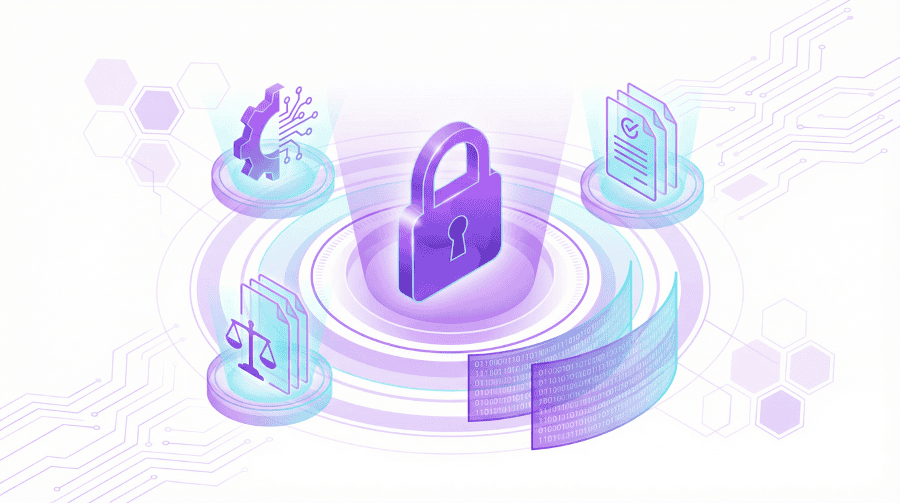
As you begin to scale your cloud presence, the complexity of managing it grows exponentially. Without a strong governance framework, organizations often face a difficult choice: move fast and break things, or move slow and miss opportunities. Wave 4: Establish Governance – Enabling Speed with Safety is designed to eliminate this trade-off, allowing you to establish governance which ensures both speed and safety. It’s about creating a system of automated controls and clear policies that allow your teams to innovate with speed, while ensuring the entire environment remains secure, compliant, and cost-effective.

Effective governance is not about restricting access; it’s about providing a safe and efficient path forward, establishing governance while enabling speed and safety simultaneously. It’s the digital guardrails that keep your cloud journey on track.

Step 1: Implement Automated Guardrails

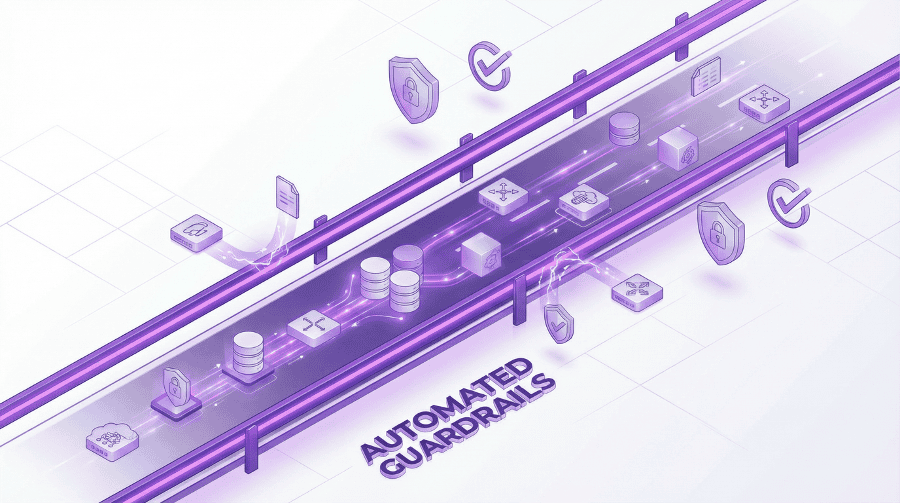
The cornerstone of modern cloud governance is automation. Instead of relying on manual reviews and approvals, you can codify your policies and enforce them automatically. These Automated Guardrails, often implemented using Infrastructure as Code (IaC) tools like Terraform or native cloud services, can:

  • Prevent the creation of non-compliant resources (e.g., publicly exposed storage buckets).
  • Ensure all resources are tagged correctly for cost allocation.
  • Automatically remediate common security misconfigurations.

This approach, known as Governance as Code, aligns with Wave 4’s focus on enabling speed without compromising safety.
Step 2: Define and Enforce Security Policies

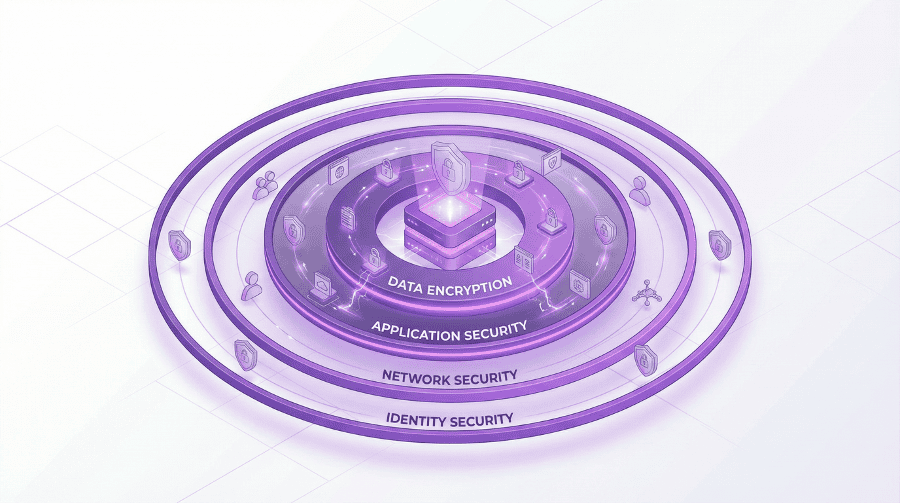
Your security posture is only as strong as the policies that define it. This step involves creating a comprehensive set of Cloud Security Policies that cover every layer of the environment. This is not a one-size-fits-all exercise; policies must be tailored to your organization’s risk appetite and regulatory requirements. Key areas to cover include:

  • Identity and Access Management (IAM): Who can access what, and under what conditions?
  • Data Encryption: Ensuring data is encrypted both at rest and in transit.
  • Network Security: Defining firewall rules, network segmentation, and threat detection.
  • Incident Response: A clear plan for how to respond to a security event.

These policies should be centrally managed and automatically enforced by the guardrails you’ve built, enabling the governance wave to drive both speed and safety without missing opportunities.
Step 3: Establish Financial Governance (FinOps)

Cloud costs can spiral out of control without disciplined financial management. FinOps, or Cloud Financial Operations, is the practice of bringing financial accountability to the variable spend model of the cloud. This involves:

  • Cost Visibility: Creating dashboards that give teams real-time insight into their cloud spend.
  • Cost Allocation: Using a robust tagging strategy to allocate costs back to the appropriate business units or projects.
  • Cost Optimization: Continuously identifying and eliminating waste, such as idle resources or oversized instances.

A mature FinOps practice ensures financial governance that maximizes business value while enabling speed and ensuring safety.

Step 4: Automate Compliance and Auditing

For many organizations, especially those in regulated industries, proving compliance is a constant challenge. The cloud offers the opportunity to automate much of this process. By using specialized tools, you can continuously monitor your environment against hundreds of compliance controls (like CIS, NIST, PCI DSS, or HIPAA). This Automated Compliance Auditing provides real-time visibility into your compliance posture and dramatically simplifies the audit process, turning a weeks-long manual effort into an on-demand report.

By the end of Wave 4, you have built a well-governed cloud factory. You have the systems in place to manage risk, control costs, and ensure compliance without slowing down your developers. This robust governance framework naturally establishes speed with safety, providing confidence in cloud adoption.

#CloudGovernance #FinOps #CloudSecurity #ComplianceAutomation #IaC #CostOptimization #FinancialOperations #SecurityPolicies #GovernanceAsCode #ComplianceAutomation #CloudGuardrails #IAMPolicies #CostAllocation #RiskManagement #EnterpriseGovernance

Multi Cloud Security

Resilience 26th Dec 2025 Martin-Peter Lambert
Multi Cloud Security

Secure Your Multi-Cloud Infrastructure with absecure

Why this matters (and what it costs if you don’t)

Multi-cloud is awesome… right up until it isn’t.

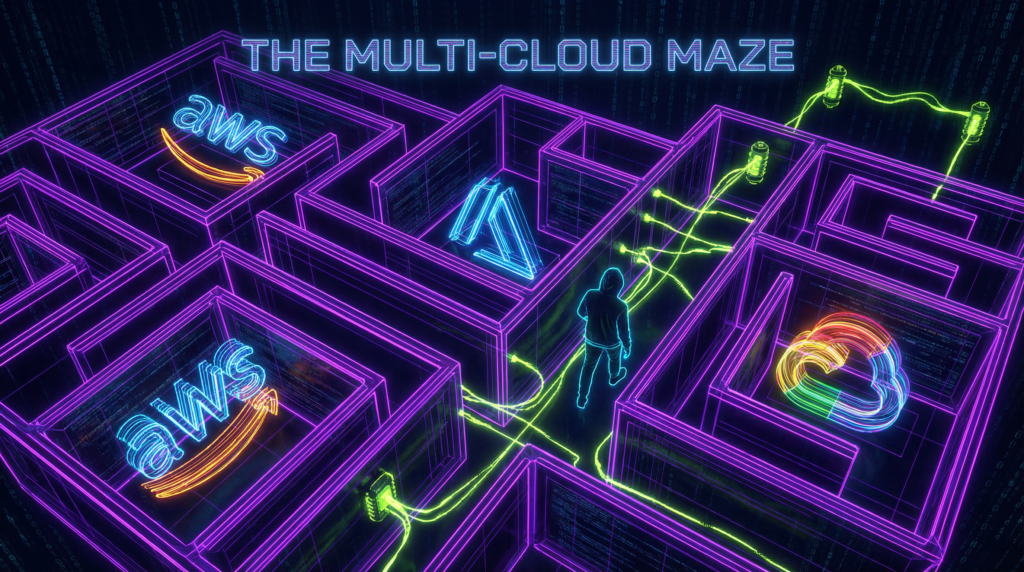
One minute you’re enjoying flexibility across AWS, Azure, and GCP. The next minute you’re juggling different IAM models, different logging systems, different defaults, different dashboards, and a growing fear that somewhere there’s a “public bucket” waiting to ruin your week.

And here’s the part nobody wants to hear (but everybody needs to): cloud security is a shared responsibility. Your cloud provider secures the underlying infrastructure, but you’re responsible for securely configuring identities, access, data, and services.

So let’s talk about why this matters — in plain language — and how absecure helps you fix it without turning your team into full-time spreadsheet archaeologists.

Why this matters: multi-cloud multiplies risk (quietly)

Multi-cloud doesn’t just add more places to run workloads. It adds more places to:

  • misconfigure access
  • forget a setting
  • miss a log pipeline
  • keep secrets around too long
  • fall out of compliance without noticing

And most teams are already running multi-cloud whether they planned to or not. A 2025 recap of Flexera’s State of the Cloud survey reports organizations use 2.4 public cloud providers on average. SoftwareOne

More clouds = more moving parts = more ways to accidentally ship risk.

What it costs if you don’t fix it (the “ouch” section)

This is the part that makes CFOs stop scrolling.

1) Breaches are expensive (even when nobody “meant to”)

IBM’s Cost of a Data Breach Report 2025 reports a global average breach cost of $4.44M. bakerdonelson.com

That’s not “security budget” money. That’s “we didn’t plan for this” money.

2) Secrets stay exposed for months

Verizon’s 2025 DBIR reports the median time to remediate leaked secrets discovered in a GitHub repository was 94 days. Verizon

That’s three months of “hope nobody finds it.”

3) Public cloud storage exposure is still a real thing

An IT Pro write-up referencing Tenable’s 2025 research reports 9% of publicly accessible cloud storage contains sensitive data, and 97% of that is classified as restricted/confidential. IT Pro

So yes — “just one misconfiguration” can be the whole story.

4) The hidden cost: your team’s time and momentum

Even without a breach, the daily tax is brutal:

  • alert fatigue
  • manual reviews
  • chasing evidence for audits
  • Slack firefighting instead of shipping product

Security becomes the speed bump… and everyone resents it.

Enter absecure: the complete security team (not just a tool)

absecure is built to make multi-cloud security feel less like herding cats and more like running a clean system.

Think of absecure as:

  • visibility (what you have, where it is, what’s risky)
  • prioritization (what matters most right now)
  • remediation workflows (fixes with approvals + rollback + audit trail)
  • compliance automation (evidence without panic)

In other words: less “we have 700 findings” … more “here are the 12 fixes that cut the most risk this week.”

What you get (in customer language)

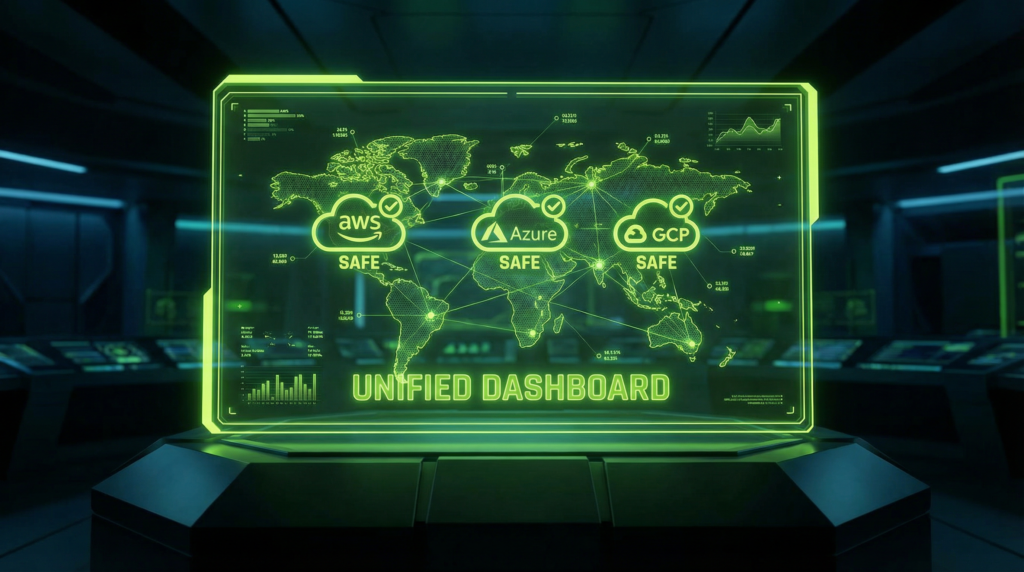
1) One view across all your clouds

A unified console for AWS/Azure/GCP (+ OCI / Alibaba Cloud if you use them).

2) Agentless scanning (less hassle, faster rollout)

No “install this everywhere” marathon before you see value.

3) Coverage where breaches actually start

  • misconfigurations (public storage, risky network rules, missing encryption)
  • IAM risk (excess permissions, unused roles, dangerous policies)
  • vulnerabilities (VMs/hosts/packages + container image risks)
  • secrets exposure (hardcoded keys/tokens)

4) Compliance without the migraine

CIS Benchmarks are a common baseline for cloud hardening and are widely referenced in security programs.
absecure helps you track posture, map controls, and generate audit-ready reports.

How it works (simple version)

1) Connect your cloud accounts (read-only first)

This keeps onboarding safe and frictionless while you build confidence.

2) Scan continuously (so you catch drift)

Because cloud changes constantly — and drift is where “secure yesterday” becomes “exposed today.”

3) Fix fast (with approvals + rollback)

Turn findings into outcomes:

  • one-click fixes for common misconfigurations
  • approval workflows for higher-risk changes
  • audit logs so you can prove what happened (and when)

How to set it up (practical steps you can follow today)

Here’s a clean “day 1 → day 7” plan that works in real teams.

Day 1: Get the foundations right

Turn on centralized audit logs early. These are your “black box flight recorder” during incidents and audits.

  • AWS: Use CloudTrail (preferably org-wide)
  • Azure: Export Activity Logs / Log Analytics appropriately
  • GCP: Centralize logging with aggregated sinks

Day 2–3: Pick your baseline (so everyone plays the same game)

Start with CIS Foundations for your cloud(s).
This reduces “opinion debates” and replaces them with an agreed standard.

Day 4–5: Fix the “Top 10” highest-impact issues

A great first sprint list:

  • public storage exposure
  • overly permissive IAM / wildcard policies
  • missing encryption defaults
  • risky inbound firewall/security group rules
  • leaked/stale credentials
  • high severity vulnerabilities on internet-facing workloads
  • logging gaps in critical accounts/projects

Day 6–7: Automate what you can (safely)

Start automation with low-risk, high-confidence fixes first.
Then add approvals and rollback for anything that could disrupt production.

Optional (power-user mode): policy-as-code

If you want custom rules (regions, tags, naming, encryption requirements), policy-as-code is a proven approach, often implemented with OPA/Rego.

The “contact us” moment (aka: why teams reach out)

If you’re feeling any of these…

  • “We’re multi-cloud and visibility is fragmented.”
  • “We know we have misconfigs; we just can’t chase them all.”
  • “Audits take too long and evidence is painful.”
  • “We want automation, but we need guardrails.”
  • “Security is slowing delivery and everyone’s frustrated.”

…then this is exactly the kind of problem absecure is built to solve.

What you’ll get if you contact us

  • a fast posture review across your cloud(s)
  • the top risk areas ranked by impact
  • a realistic remediation plan your teams will actually follow
  • a path to continuous compliance evidence (without the chaos)

Contact us for our services (worldwide)

Resources you can cite inside your page (trust builders)

Use these throughout the article as credibility anchors:

  • Shared responsibility (AWS/Azure/GCP)
  • IBM breach cost benchmark bakerdonelson.com
  • Verizon DBIR secret remediation time Verizon
  • Tenable cloud storage exposure findings IT Pro
  • CIS Benchmarks (cloud hardening baseline)
  • Logging setup docs (AWS/Azure/GCP)


#absecure #CloudSecurity #MultiCloud #CSPM #CloudSecurityPostureManagement #DevSecOps #CyberSecurity #ZeroTrust #CloudCompliance #ComplianceAutomation #SecurityAutomation #CloudRisk #VulnerabilityManagement #ContainerSecurity #KubernetesSecurity #IAMSecurity #IdentitySecurity #LeastPrivilege #SecretsManagement #SecretsScanning #SBOM #SPDX #SupplyChainSecurity #CloudMonitoring #ThreatDetection #IncidentResponse #SecurityOperations #SecurityPostureManagement #CISBenchmarks #NIST #SOC2 #ISO27001 #PCIDSS #HIPAA #AWS #MicrosoftAzure #GoogleCloud #OCI #AlibabaCloud #AgentlessSecurity #SecurityTeam