A Deep Dive into Azures’ Future of Cloud Data Platforms

Microsoft Fabric: 31st Dec 2025 Martin-Peter Lambert
A Deep Dive into Azures’ Future of Cloud Data Platforms

Microsoft Fabric: (Part 4 of 5)

An insight 42 Technical Deep Dive Series

The Pragmatist’s Guide: Multi-Tenancy, Licensing, and Practical Solutions

In the previous part of our series, we confronted the significant security, compliance, and network separation challenges inherent in Microsoft Fabric’s SaaS architecture. While the vision of a unified data platform is compelling, the practical realities of enterprise adoption require navigating a complex landscape of trade-offs. For many organizations, especially Independent Software Vendors (ISVs) and large enterprises with diverse business units, multi-tenancy is not just a feature—it’s a fundamental requirement.

This post shifts from the theoretical to the practical. We will provide a deep dive into the world of multi-tenant architectures in Microsoft Fabric, dissect the often-confusing licensing model, and offer concrete, actionable solutions and workarounds for the challenges we’ve identified. This is the pragmatist’s guide to making Fabric work in the real world.

Architecting for Multi-Tenancy: Patterns and Best Practices

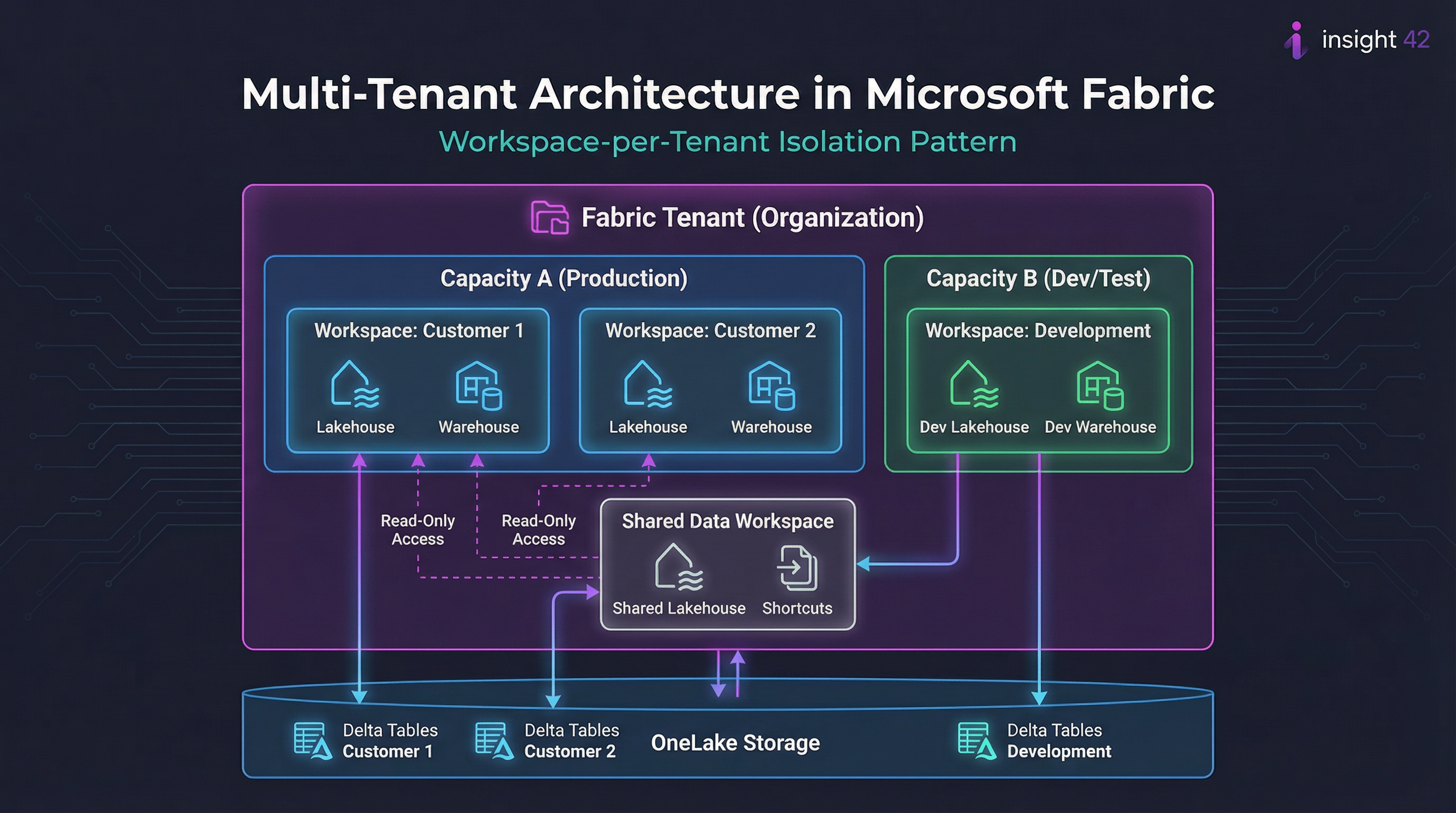
Achieving tenant isolation is one of the most critical aspects of a multi-tenant architecture. In Fabric, the primary mechanism for achieving this is through workspaces. The recommended approach is to use a workspace-per-tenant model, which provides a strong logical boundary for data and access control [1].
Multi-Tenant Architecture in Fabric

Figure 1: A workspace-per-tenant architecture in Microsoft Fabric, showing isolation within shared capacities and OneLake storage.

The Workspace-per-Tenant Model

This model offers several key advantages that make it the preferred approach for most multi-tenant scenarios:

BenefitDescription
SecuritySimplifies security management by isolating permissions at the workspace level. Each tenant’s data remains within their designated workspace.
ManageabilityAllows for easy onboarding, offboarding, and archiving of tenants without impacting others. Workspace lifecycle can be automated.
MonitoringEnables clear monitoring of resource usage and costs on a per-tenant basis through workspace-level metrics.
SLA ManagementProvides the flexibility to assign different capacities to different tenants, allowing for varied SLAs and performance tiers.
Data SharingShared Data Workspaces with shortcuts enable controlled, read-only data sharing between tenants when needed.

However, this model is not a silver bullet. While it provides logical isolation, the underlying compute and storage resources may still be shared, which may not be sufficient for all compliance scenarios. This leads to a critical decision point: a single Fabric tenant with multiple workspaces, or multiple Fabric tenants?

Single Tenant vs. Multiple Tenants: A Critical Decision

The choice between these approaches has significant implications for cost, complexity, and compliance:

ApproachProsCons
Single Fabric TenantLower licensing costs, easier data sharing between tenants, centralized administration, unified governance.Weaker isolation, shared fate (a platform issue can affect all tenants), complex compliance story.
Multiple Fabric TenantsComplete data and identity isolation, separate compliance boundaries, independent administration, no shared fate.Higher licensing costs, complex data sharing, increased management overhead, multiple Entra ID directories.

For most ISVs and enterprises, the single-tenant, multi-workspace approach provides the best balance of cost, manageability, and isolation. However, for organizations with the strictest security and compliance requirements, the multi-tenant approach may be the only viable option, despite its higher cost and complexity.

Decoding the Fabric Licensing Model

Microsoft Fabric’s licensing model is a significant departure from traditional Azure services and can be a source of confusion. It is a hybrid model that combines capacity-based licensing for the core platform with per-user licensing for certain features, primarily Power BI.
Fabric Licensing Model

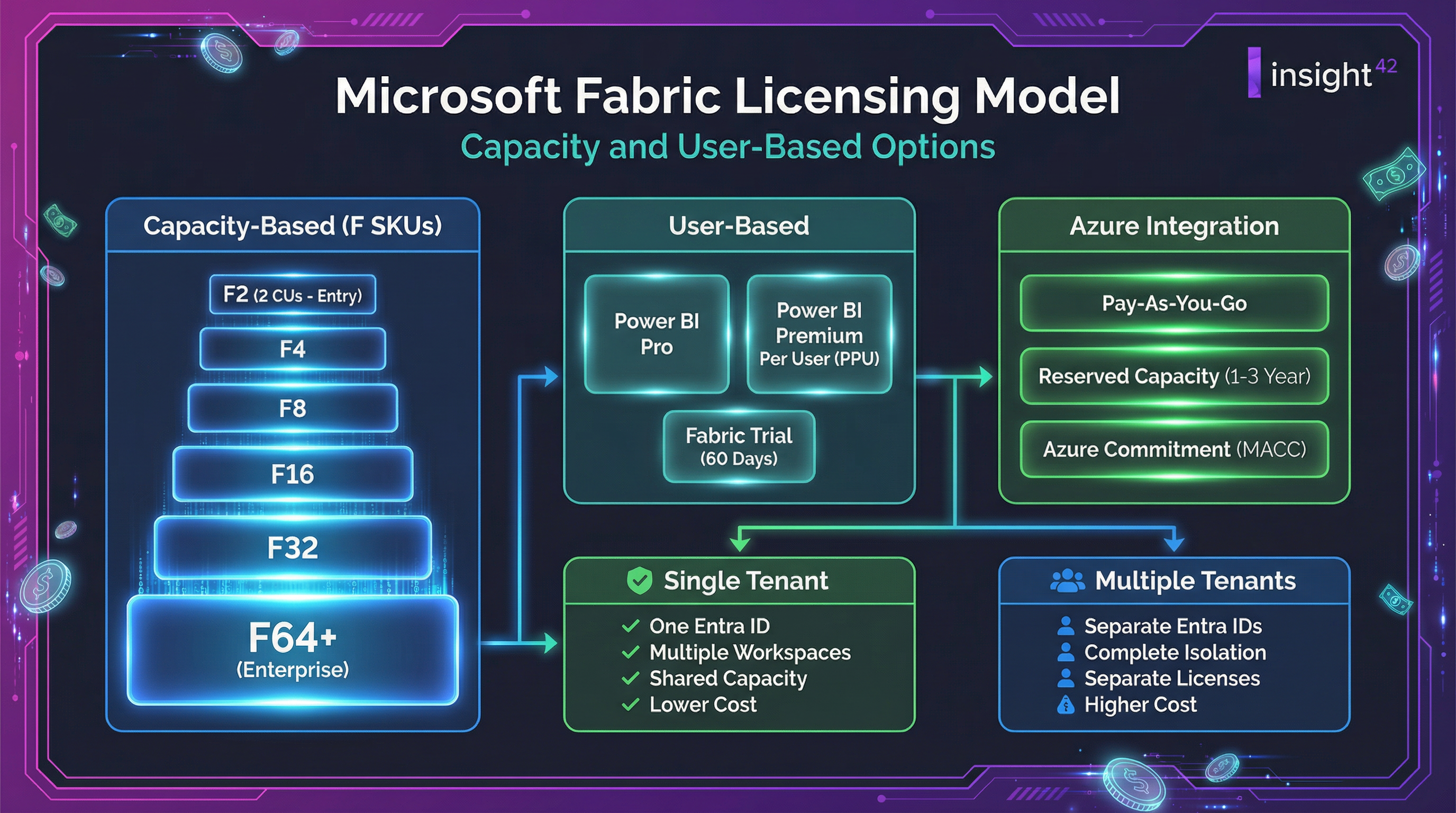
Figure 2: The Microsoft Fabric licensing model, showing capacity-based F SKUs, user-based options, and Azure integration paths.

Capacity-Based Licensing (F SKUs)

The core of Fabric’s licensing is the capacity unit (CU), a measure of compute power. You purchase Fabric capacity in the form of F SKUs, ranging from F2 (2 CUs) to F2048 (2048 CUs). This capacity is shared across all Fabric workloads and can be purchased on a pay-as-you-go basis or as a reserved instance for cost savings [2].

SKUCapacity UnitsTypical Use CaseApproximate Monthly Cost
F22 CUsDevelopment, small workloadsEntry level
F44 CUsSmall teams, POCsLow
F88 CUsDepartmental analyticsMedium
F1616 CUsBusiness unit analyticsMedium-High
F3232 CUsEnterprise workloadsHigh
F64+64+ CUsLarge-scale enterpriseEnterprise

User-Based Licensing

In addition to capacity, certain features require per-user licenses:

License TypeWhat It Enables
Power BI ProSharing and collaboration on Power BI content
Power BI Premium Per User (PPU)Premium features without capacity purchase
Fabric Trial60-day trial with limited capacity

The Multi-Tenant Licensing Challenge

This capacity-based model introduces a significant challenge for multi-tenant architectures: how do you allocate and charge back costs to individual tenants? While Fabric provides monitoring tools to track CU usage, there is no built-in mechanism for enforcing limits on a per-workspace basis. This can lead to a “noisy neighbor” problem, where one tenant consumes a disproportionate amount of resources, impacting the performance of others.

Practical Solutions and Workarounds

Given the limitations of the platform, organizations must adopt a combination of technical and administrative workarounds to manage multi-tenancy effectively:

1. Tiered Service Offerings

Create different service tiers and assign tenants to different capacities based on their tier. This provides a level of performance isolation and a basis for chargeback.

TierCapacityFeaturesSLA
BronzeShared F8Basic analytics, standard support99.5%
SilverShared F32Advanced analytics, priority support99.9%
GoldDedicated F64Full features, dedicated resources99.95%

2. Monitoring and Governance

Implement a robust monitoring and governance process to track CU usage per workspace and identify noisy neighbors. This may require building custom dashboards and alerting mechanisms on top of the Fabric monitoring APIs.

3. Automation

Use the Fabric REST APIs to automate the creation and management of workspaces, permissions, and other resources. This can help to reduce the administrative overhead of managing a large number of tenants.

4. Strategic Use of Multiple Tenants

For tenants with the most stringent security and compliance requirements, consider using a separate Fabric tenant. While this increases cost and complexity, it may be the only way to meet their needs.

Decision Framework

Use this framework to determine the right approach for each tenant:

RequirementSingle TenantMultiple Tenants
Cost sensitivity✅ Preferred⚠️ Higher cost
Data sharing needs✅ Easy⚠️ Complex
Compliance requirements⚠️ May be insufficient✅ Full isolation
Administrative simplicity✅ Centralized⚠️ Distributed
Performance isolation⚠️ Logical only✅ Physical

The Verdict: A Platform of Compromises

Microsoft Fabric is a platform of compromises. It offers a simplified, all-in-one experience at the cost of the granular control and isolation that many enterprises are used to. While the workspace-per-tenant model provides a viable path for multi-tenancy, it is not without its challenges, particularly when it comes to licensing and cost management.

Key Insight: Successfully implementing a multi-tenant solution on Fabric requires a deep understanding of its architecture, a pragmatic approach to its limitations, and a willingness to build custom solutions and workarounds to fill the gaps.

It is not a turnkey solution, but for those willing to invest the time and effort, it can be a powerful platform for building the next generation of data and analytics applications.

In the final part of our series, we will look to the future. We will explore Fabric’s long-term trajectory, its innovative “shortcut” feature for connecting to other hyperscalers, and its ultimate vision of becoming the central hub for the entire data estate.

References

[1] Microsoft Fabric – Multi-Tenant Architecture
[2] Microsoft Fabric licenses

← Previous: Part 3: Security, Compliance, and Network Separation | Next: Part 5: Future Trajectory and the Hub Vision

#FabricMultiTenancy #FabricLicensing #CostManagement #FabricCostControl #WorkspacePerTenant #FabricFSU #LicensingOptimization #MultiTenantArchitecture #FabricCapacity #EnterpriseFabric #FabricWorkarounds #DataPlatformCost #CloudCostManagement #FabricImplementation #DataAnalytics
A Deep Dive into Azures’ Future of Cloud Data Platforms

Microsoft Fabric: 30th Dec 2025 Martin-Peter Lambert
A Deep Dive into Azures’ Future of Cloud Data Platforms

Microsoft Fabric: (Part 3 of 5)

An insight 42 Technical Deep Dive Series

The Elephant in the Room: Security, Compliance, and Network Separation

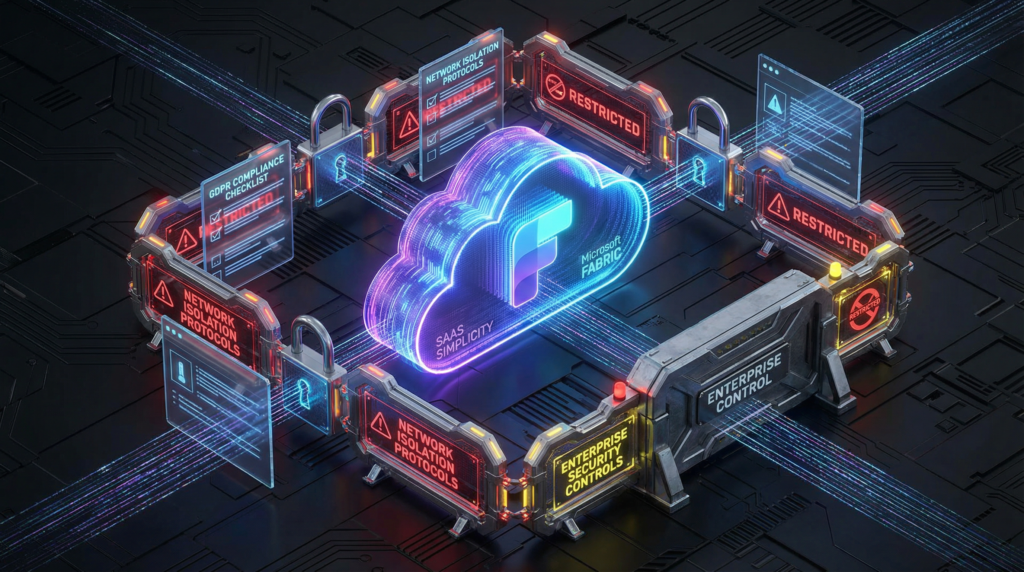
In the first two parts of this series, we explored the ambitious vision of Microsoft Fabric and its potential to unify the modern data estate. However, as with any powerful new technology, the devil is in the details. For enterprise organizations, particularly those in highly regulated industries, the most critical details are security, compliance, and the ability to isolate and control network traffic. While Fabric offers a compelling vision of a simplified, all-in-one data platform, its SaaS (Software-as-a-Service) nature introduces a new set of challenges that must be carefully considered.

This post will take a critical look at the security and compliance landscape of Microsoft Fabric. We will dissect its multi-layered security model, examine the challenges of achieving true network separation in a multi-tenant SaaS environment, and discuss the practical realities of meeting stringent compliance requirements like GDPR in 2025 and beyond.

Fabric’s Multi-Layered Security Model

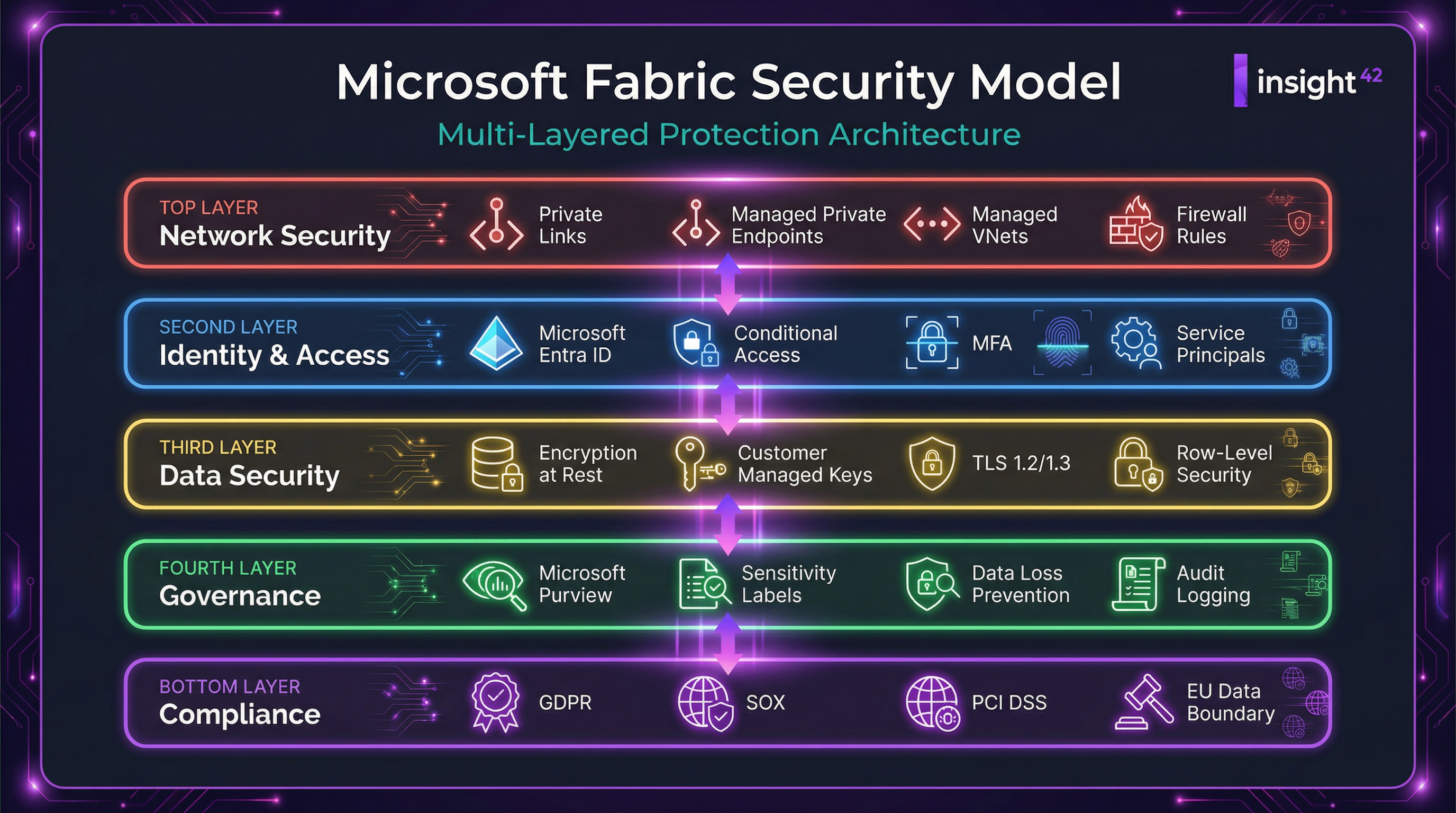
Microsoft has built a comprehensive, multi-layered security model for Fabric, leveraging the mature security capabilities of the Azure platform. This model can be broken down into several distinct layers, each providing a different level of protection.

Fabric Security Layers

Figure 1: The multi-layered security model of Microsoft Fabric, from network security to compliance.

A Layer-by-Layer Breakdown

The security model consists of five interconnected layers, each addressing a specific aspect of data protection:

LayerKey FeaturesDescription
Network SecurityPrivate Links, Managed Private Endpoints, Managed VNets, Firewall RulesProvides options for securing network traffic to and from the Fabric service, but with significant limitations compared to traditional IaaS/PaaS.
Identity & AccessMicrosoft Entra ID, Conditional Access, MFA, Service PrincipalsLeverages the robust identity and access management capabilities of Entra ID to control who can access the platform and what they can do.
Data SecurityEncryption at Rest (MS-managed & CMK), TLS 1.2/1.3, Row-Level SecurityProtects data both in transit and at rest, with options for customer-managed encryption keys for enhanced control.
GovernanceMicrosoft Purview, Sensitivity Labels, Data Loss Prevention (DLP), Audit LoggingIntegrates with Microsoft Purview to provide a unified governance and compliance solution across the entire data estate.
ComplianceGDPR, SOX, PCI DSS, EU Data BoundaryDesigned to meet a wide range of industry and regional compliance requirements, including the EU Data Boundary for data residency.

While this layered approach provides a strong security posture on paper, the reality of implementing and managing it in a complex enterprise environment can be challenging, especially when it comes to network separation.

The Challenge of Network Separation in a SaaS World

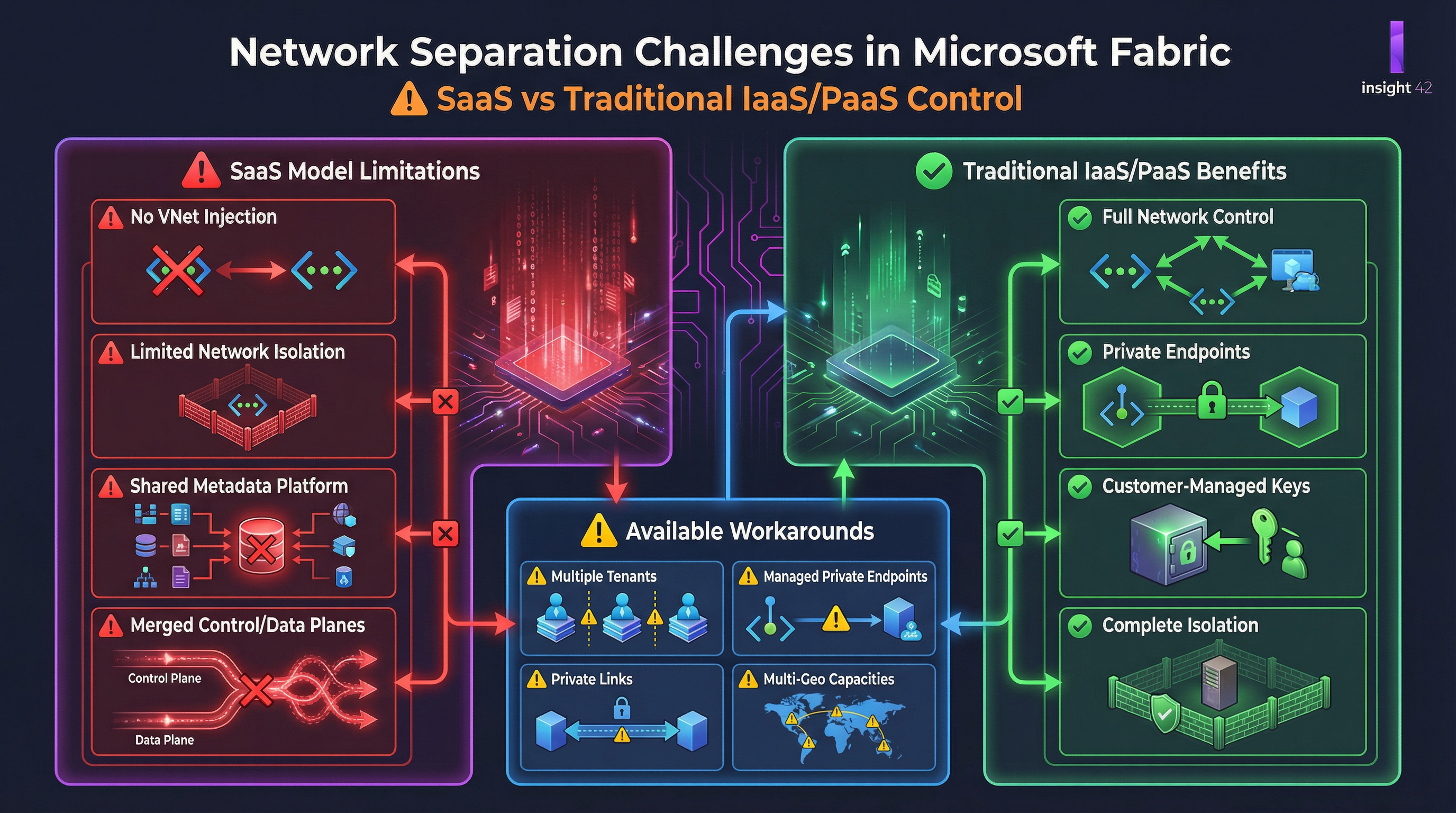
One of the biggest challenges with Microsoft Fabric is the inherent trade-off between the simplicity of a SaaS offering and the control of a traditional IaaS (Infrastructure-as-a-Service) or PaaS (Platform-as-a-Service) solution. In a traditional cloud environment, organizations have full control over their virtual network (VNet), allowing them to implement strict network isolation, custom routing, and fine-grained firewall rules. In Fabric, however, the control plane, storage layer, and compute layer are all managed by Microsoft in a multi-tenant environment, creating what many in the community have called an “amalgamated” and challenging architecture [1].

Network Separation Challenges

Figure 2: The network separation challenges in Microsoft Fabric compared to a traditional IaaS/PaaS approach, showing available workarounds.

Key Network Separation Shortcomings

The SaaS model introduces several limitations that enterprise architects must understand:

LimitationImpactRisk Level
No VNet InjectionCannot inject Fabric into your own virtual network. Loss of control over inbound/outbound traffic with NSGs and firewalls.High
Limited Network IsolationLogical isolation between tenants exists, but underlying infrastructure is shared. Concern for strict data sovereignty requirements.Medium-High
Shared Metadata PlatformMetadata platform storing permissions/authorization is shared. Logical isolation only, no physical isolation.Medium
Merged Control/Data PlanesControl and data planes amalgamated in SaaS model. Difficult to implement traditional separated architecture security.High

Workarounds and Their Limitations

To address these shortcomings, Microsoft has introduced several features, but each comes with its own set of limitations:

WorkaroundWhat It DoesLimitation
Managed Private EndpointsSecurely connect to data sources from within FabricOnly works for outbound traffic; no inbound protection
Private LinksPrivate, dedicated connection to the Fabric serviceConfigured at tenant level; complex to manage
Multi-Geo CapacitiesControl data residency of compute and storageTenant metadata remains in home region
Multiple TenantsComplete isolation through separate Entra ID tenantsRequires separate licenses; management overhead

Navigating the Compliance Maze in 2025

For organizations operating in the EU, the compliance landscape is becoming increasingly complex. Regulations like the General Data Protection Regulation (GDPR) and the upcoming AI Act place strict requirements on how data is stored, processed, and governed. While Microsoft has made significant investments in ensuring that Fabric is compliant with these regulations, including making it an EU Data Boundary service [2], the architectural challenges we’ve discussed can make it difficult to prove compliance to auditors.

The Multi-Tenant Conundrum

The multi-tenant nature of Fabric, combined with the lack of full network control, can create a compliance nightmare. How do you prove to an auditor that your data is truly isolated when it resides on a shared infrastructure? How do you manage encryption keys and access policies in a way that meets the stringent requirements of GDPR?

One potential workaround is to use multiple tenants, creating a separate Entra ID tenant for each business unit or data domain that requires strict isolation. However, this approach introduces its own set of challenges:

ChallengeDescription
Licensing ComplexityEach tenant requires its own set of licenses, which can significantly increase costs.
Management OverheadManaging multiple tenants, each with its own set of users, permissions, and configurations, can be a major administrative burden.
Data Sharing ChallengesSharing data between tenants can be complex, requiring the use of guest accounts and other workarounds.
Identity FederationUsers may need multiple identities or complex B2B guest configurations.

Compliance Checklist for 2025

For organizations planning to adopt Fabric in a regulated environment, consider the following:

RequirementFabric CapabilityGap/Consideration
Data ResidencyEU Data Boundary, Multi-GeoMetadata may still reside outside preferred region
Encryption at RestMicrosoft-managed keys, CMK optionCMK requires additional configuration and management
Access AuditMicrosoft Purview, Audit LoggingEnsure logs meet retention requirements
Data ClassificationSensitivity Labels, DLPRequires Microsoft 365 E5 or equivalent
Network IsolationPrivate Links, Managed EndpointsNot equivalent to VNet injection

The Road Ahead: A Balancing Act

Microsoft Fabric is a powerful and ambitious platform that has the potential to revolutionize the world of data and analytics. However, its SaaS nature introduces a new set of security and compliance challenges that cannot be ignored. For organizations that require the highest levels of security, control, and isolation, the current state of Fabric may not be sufficient.

Key Insight: The trade-off between SaaS simplicity and enterprise control is real. Organizations must carefully evaluate whether Fabric’s current security capabilities meet their specific compliance requirements, or whether workarounds like multi-tenant architectures are necessary.

In the next part of this series, we will delve deeper into the practical solutions and workarounds for these challenges. We will explore multi-tenant architecture patterns in more detail, provide a comprehensive guide to Fabric’s licensing model, and offer practical advice on how to navigate the complex trade-offs between simplicity and control.

References

[1] Fabric shortcomings : r/MicrosoftFabric
[2] What is the EU Data Boundary? – Microsoft Privacy

← Previous: Part 2: Data Lakes and DWH Architecture | Next: Part 4: Multi-Tenant Architecture and Licensing
#FabricSecurity #NetworkIsolation #SaaSSecurity #FabricCompliance #GDPR #MultiTenant #PrivateLinks #DataResidency #EUDataBoundary #FabricGovernance #CMKEncryption #EnterpriseSecurity #AzureFabric #CloudSecurity #DataProtection

A Deep Dive into Azures’ Future of Cloud Data Platforms

Microsoft Fabric: 29th Dec 2025 Martin-Peter Lambert
A Deep Dive into Azures’ Future of Cloud Data Platforms

Microsoft Fabric: (Part 2 of 5)

An insight 42 Technical Deep Dive SeriesThis is A Deep Dive into Azures’ Future of Cloud Data Platforms Part 2.

Rethinking Data Architecture in the Fabric Era

In the first part of this series, we explored the evolution of data platforms and introduced Microsoft Fabric as the next step in this journey. Now, we will delve deeper into the architectural implications of Fabric, examining how its unified approach and central OneLake storage layer are forcing a fundamental rethink of how we design and build data lakes and data warehouses. The traditional lines between these two concepts are blurring, and a new, more integrated architectural pattern is emerging.

This post will analyze the shift from separate data lakes and warehouses to a unified lakehouse architecture within Fabric. We will also provide a detailed look at the medallion architecture, a popular design pattern for organizing data in a lakehouse, and how it can be effectively implemented in a Fabric environment.

The Convergence of Data Lakes and Data Warehouses

For years, data lakes and data warehouses have been treated as separate, albeit complementary, components of a modern data platform. Data lakes were used for storing raw, unstructured data and for exploratory analysis and data science, while data warehouses were used for structured, curated data for business intelligence and reporting. This separation, however, created significant challenges:

  • Data Duplication: Data had to be copied and moved between the data lake and the data warehouse, leading to increased storage costs and data consistency issues.
  • Complex ETL Pipelines: Fragile and complex ETL (Extract, Transform, Load) pipelines were required to move and transform data, increasing development and maintenance overhead.
  • Data Silos: The separation of data and tools created silos, making it difficult for different teams to collaborate and share data effectively.

Microsoft Fabric aims to solve these challenges by unifying the data lake and the data warehouse into a single, integrated experience. At the heart of this convergence is OneLake, which acts as a single source of truth for all data, and the lakehouse as the primary architectural pattern.

OneLake and Workspaces: The Foundation

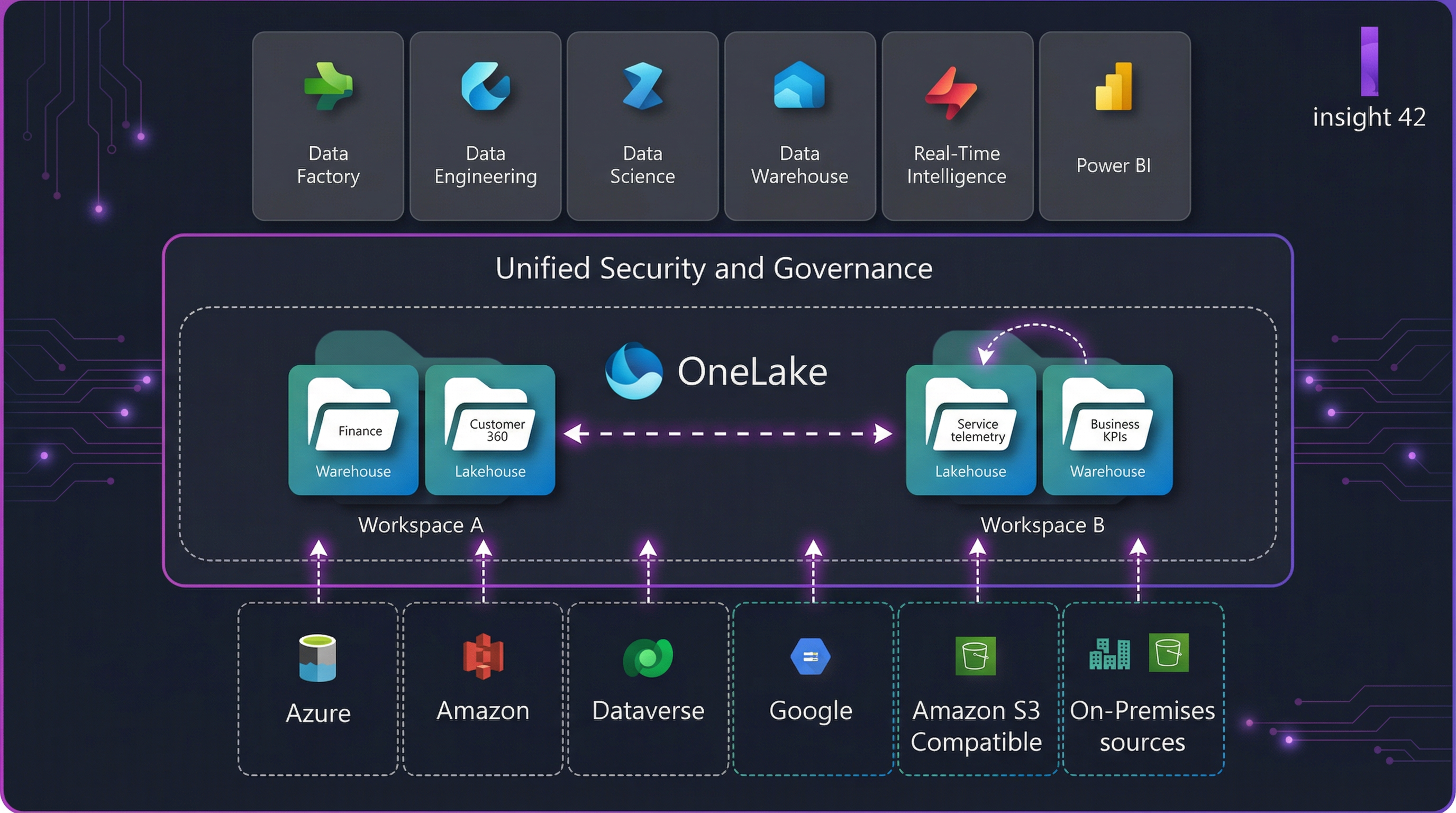
Before diving into the medallion architecture, it’s essential to understand how OneLake organizes data through workspaces. OneLake provides a single, unified storage layer where all Fabric items—lakehouses, warehouses, and other artifacts—store their data.

OneLake and Workspaces

Figure 1: OneLake workspace architecture showing unified security, governance, and multi-cloud data access through shortcuts.

The Lakehouse: A New Architectural Centerpiece

A lakehouse in Fabric is not just a data lake with a SQL layer on top; it is a first-class citizen that combines the best features of both data lakes and data warehouses. It provides:

FeatureDescription
Direct-to-data accessAll Fabric workloads, including Power BI, can directly access data in the lakehouse without having to import or copy it.
Open data formatsData is stored in the open-source Delta format, ensuring that you are not locked into a proprietary ecosystem.
ACID transactionsThe Delta format provides ACID (Atomicity, Consistency, Isolation, Durability) guarantees, ensuring data reliability and consistency.
Unified governanceAll data in the lakehouse is governed by the same security and compliance policies, managed centrally through Microsoft Purview.

Implementing the Medallion Architecture in Fabric

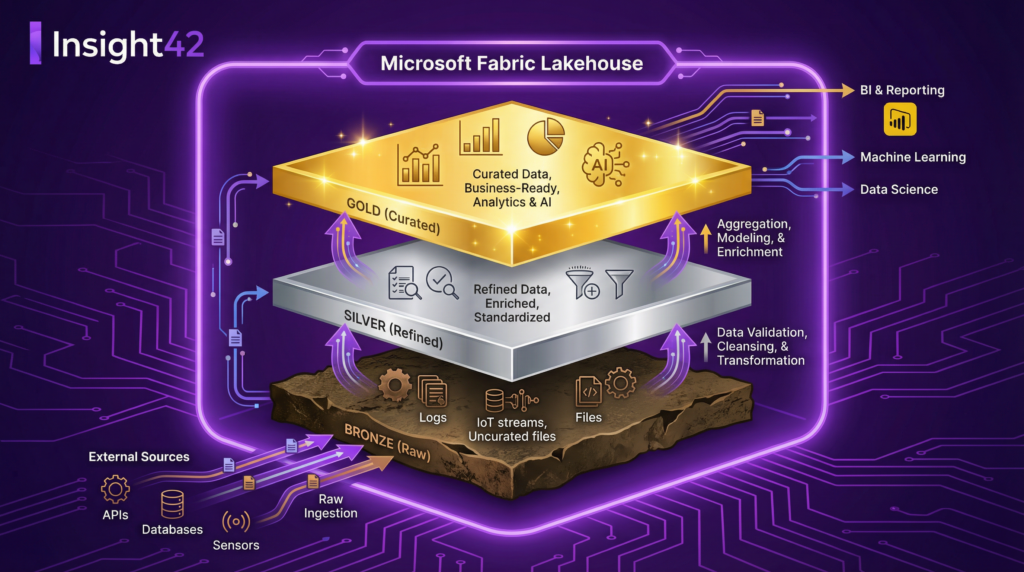
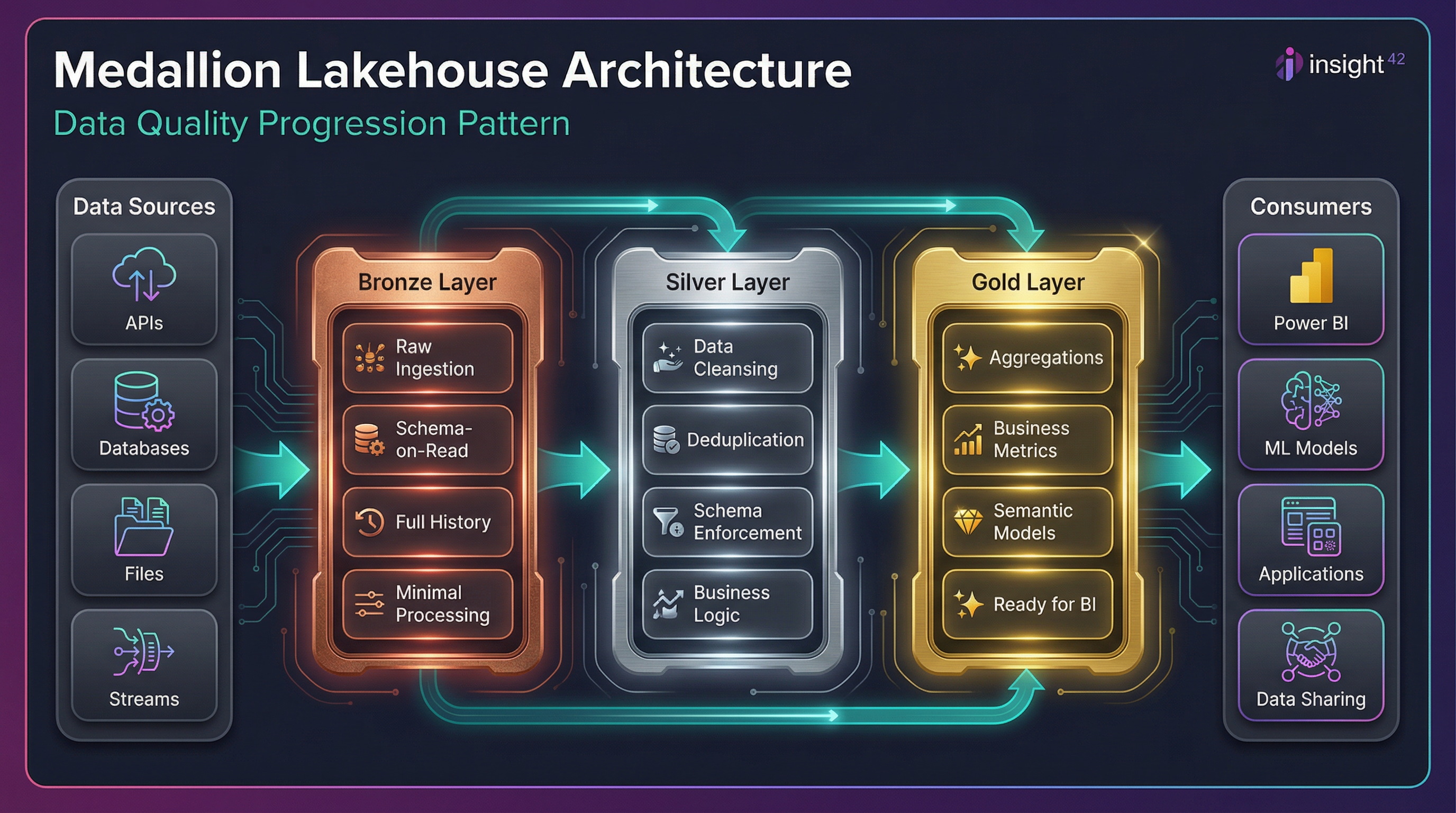
The medallion architecture is a data design pattern that has become increasingly popular for organizing data in a lakehouse. It logically organizes data into three distinct layers—Bronze, Silver, and Gold—with the goal of incrementally and progressively improving the quality and structure of the data as it moves through the layers [1].

Medallion Architecture

Figure 2: The medallion architecture, showing the progression of data from raw (Bronze) to cleansed (Silver) to business-ready (Gold).

Let’s explore how each of these layers can be effectively implemented within a Microsoft Fabric environment.

Bronze Layer: The Raw Data

The Bronze layer is where you land all your raw data from various source systems. The goal of this layer is to capture the data in its original, unaltered state, providing a historical archive and a source for reprocessing if needed. Key characteristics of the Bronze layer include:

CharacteristicDescription
Schema-on-readData is ingested and stored in its native format without any schema enforcement.
Append-onlyData is typically appended to existing tables to maintain a full historical record.
Minimal processingOnly minimal transformations, such as data type casting, are performed in this layer.
Full historyComplete audit trail of all ingested data for compliance and reprocessing.

In Fabric, the Bronze layer can be implemented using a dedicated lakehouse for raw data ingestion. Data can be brought into this lakehouse using Data Factory pipelines, Spark notebooks, or shortcuts to external data sources.

Silver Layer: The Cleansed and Conformed Data

The Silver layer is where the raw data from the Bronze layer is cleansed, transformed, and enriched. The goal of this layer is to provide a clean, consistent, and conformed view of the data that can be used by various downstream applications and analytics workloads. Key characteristics of the Silver layer include:

CharacteristicDescription
Data cleansingHandling missing values, standardizing formats, and correcting data quality issues.
DeduplicationRemoving duplicate records to ensure data accuracy.
Schema enforcementApplying a well-defined schema to the data.
Business logicApplying business rules and transformations to enrich the data.

In Fabric, the Silver layer is typically implemented as a separate lakehouse or as a set of curated tables within the same lakehouse as the Bronze layer. Spark notebooks and Dataflow Gen2 are the primary tools for performing the transformations required to move data from Bronze to Silver.

Gold Layer: The Business-Ready Data

The Gold layer is the final, highly curated layer of the medallion architecture. It contains aggregated, business-level data that is optimized for reporting and analytics. The goal of this layer is to provide a single source of truth for key business metrics and dimensions. Key characteristics of the Gold layer include:

CharacteristicDescription
AggregationsData is aggregated to various levels of granularity to support different reporting needs.
Business metricsKey performance indicators (KPIs) and other business metrics are calculated and stored.
Semantic modelsData is organized into star schemas or other dimensional models for self-service BI.
Ready for BIThe data is optimized for consumption by BI tools like Power BI.

In Fabric, the Gold layer can be implemented as a Fabric Data Warehouse or as a set of highly curated tables in a lakehouse. The choice between a warehouse and a lakehouse depends on the specific requirements of the use case. Warehouses provide a more traditional SQL-based experience, while lakehouses offer more flexibility and direct integration with other Fabric workloads.

Implementation Summary

LayerPurposeFabric ImplementationKey Tools
BronzeRaw data ingestionDedicated lakehouseData Factory, Spark, Shortcuts
SilverCleansed and conformed dataCurated lakehouse tablesSpark, Dataflow Gen2
GoldBusiness-ready dataData Warehouse or curated lakehouseSQL, Spark, Power BI

The Future of Data Architecture is Unified

Microsoft Fabric represents a significant step forward in the evolution of data platforms. By unifying the data lake and the data warehouse into a single, integrated experience, Fabric has the potential to simplify the data landscape, break down data silos, and accelerate time to value. The medallion architecture provides a proven design pattern for organizing data in this new, unified world.

However, as we will see in the next part of this series, the reality of implementing these new architectures is not without its challenges. In Part 3, we will take a critical look at the security, compliance, and network separation challenges that organizations face when adopting Microsoft Fabric, and explore the practical solutions and workarounds that are available today.

References

[1] What is the medallion lakehouse architecture? – Azure Databricks

← Previous: Part 1: Introduction to Fabric | Next: Part 3: Security, Compliance, and Network Separation

#MicrosoftFabric #MedallionArchitecture #DataLakehouse #OneLake #DataArchitecture #DataEngineering #BronzeSilverGold #UnifiedDataPlatform #DeltaLake #DataGovernance #CloudData #FabricImplementation #DataModeling #ETLSimplification #DataWarehouseModernization

Part 3 – The Public Sector AI: Procurement

AI In The Public Sector 28th Dec 2025 Martin-Peter Lambert
Part 3 – The Public Sector AI: Procurement

Playbook: Fast, Secure, Sovereign

A 3-Part Blog Series on AI Procurement for Government Digital Transformation
By Insight 42 UG | www.insight42.com

Meta Description: A practical 4-step playbook for public sector AI procurement. This guide provides best practices for fast, secure, and sovereign AI solutions for government digital transformation.

Focus Keywords: Public Sector AI Procurement, AI Procurement Guide, Government AI Strategy, Public Sector Automation

Welcome to the final installment of our AI procurement guide for the public sector. In Part 1, we established the critical importance of sovereign AI.

In Part 2, we presented the data showing why agile, smaller vendors consistently outperform large tech intermediaries in public sector AI implementation.

Now, let’s translate these insights into a practical, actionable playbook. How do you, a public sector leader, avoid the 95% failure rate and build a government AI strategy that is fast, secure, and truly serves your citizens? This is your step-by-step guide.

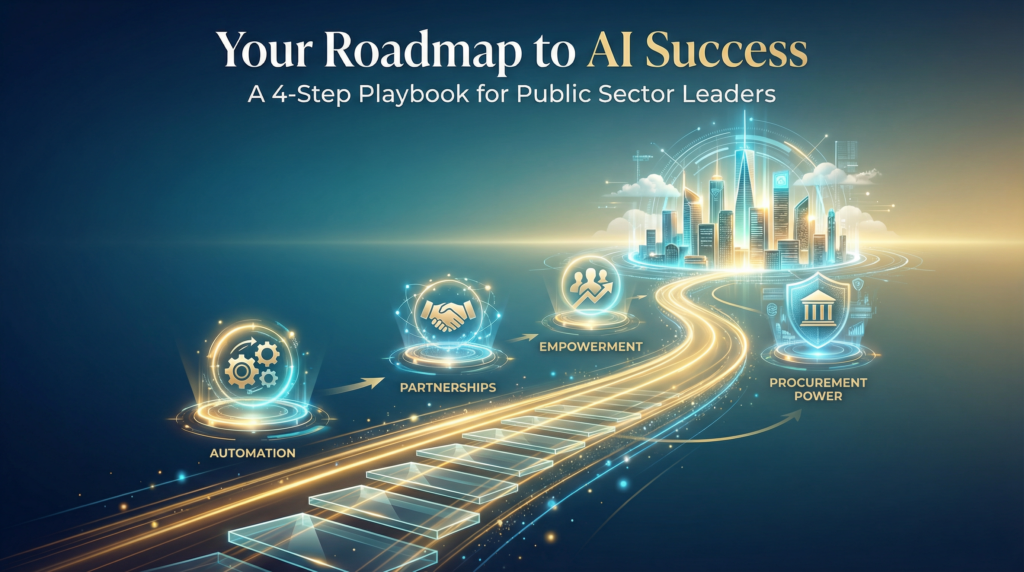
The Four-Step Playbook for Sovereign AI Procurement

This isn’t about boiling the ocean or launching a massive, multi-year overhaul. It’s about making smart, strategic moves that build momentum and deliver measurable value. The original SAP paper put it perfectly: start with the “low-hanging fruit” [1].

Step 1: Target Back-Office Bottlenecks for High-ROI Automation

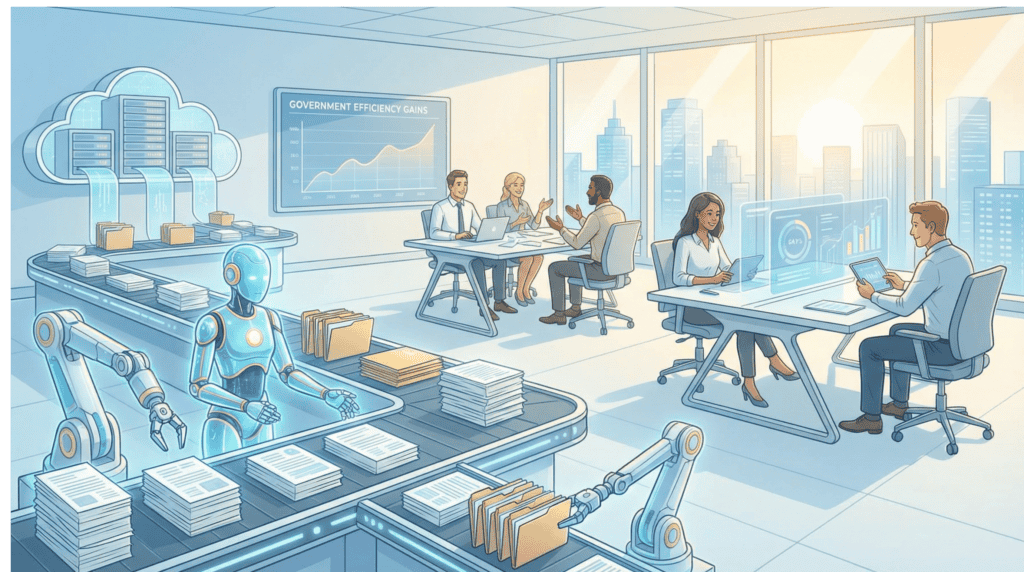
Forget the flashy, headline-grabbing AI chatbot for now. The MIT report was unequivocal: the biggest and fastest ROI comes from public sector automation in the back office [2]. Begin by identifying your most tedious, repetitive, and resource-intensive internal processes.

Prime candidates include:

  • Data entry and migration
  • Document processing and classification
  • Internal helpdesk and IT support tickets
  • Invoice processing and financial reconciliation
  • Scheduling and resource allocation

These projects are the ideal starting point for your government AI adoption journey because they are low-risk, high-impact, and the gains are easy to measure. You’re not just saving money; you’re freeing up your talented public servants to focus on the high-value, citizen-facing work they were hired to do. This approach builds confidence, demonstrates the practical power of AI to internal skeptics, and creates the momentum needed for more ambitious projects.

Step 2: Buy, Don’t Build: A Core Tenet of Agile AI Procurement

The data is conclusive. Organizations that purchase specialized AI tools from expert vendors see a 67% success rate, while those that attempt to build everything in-house fail two-thirds of the time [2]. The impulse to build a proprietary system is strong in government, but it’s a trap. You will burn through your budget and political capital reinventing the wheel.

Instead, embrace agile AI procurement by partnering with the Davids. Find the domestic, specialized companies that have already built proven solutions for your specific pain points. Your AI vendor selection criteria should prioritize:

What to Look ForWhy It Matters for Public Sector AI Procurement
Open-weight modelsPrevents vendor lock-in; allows for customization and inspection.
InteroperabilityIntegrates with your existing systems; avoids creating new data silos.
Local data residencyEnsures compliance with GDPR and national data protection laws.
Transparent pricingAvoids hidden fees and escalating costs as you scale.
Proven track recordDemand case studies and references within the public sector.

This is your best defense against AI vendor lock-in. As the McKinsey report on European AI sovereignty argues, the goal is to create a “single market for AI” built on open standards and partnerships, not isolated fortresses [3].

Step 3: Empower Your Frontline Managers to Drive Adoption

A common mistake in large organizations is centralizing all AI expertise in a remote “innovation lab” that is disconnected from day-to-day operational realities. This creates a chasm between the people building AI solutions and the people who actually need them.

A successful government AI strategy takes the opposite approach: it empowers frontline managers to drive adoption from the ground up [2].

Your department heads and team leads know where the real problems are. Give them the budget and authority to find and implement AI tools that solve their teams’ specific challenges. This decentralized approach fosters a culture of innovation and ensures that AI is adopted in a way that is practical, relevant, and immediately useful.

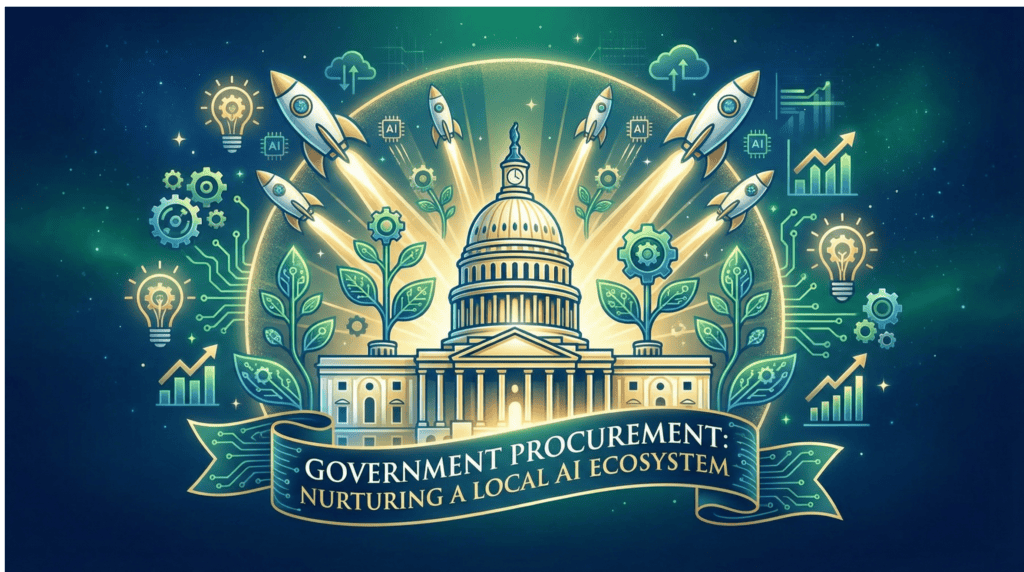
Step 4: Use Your Procurement Power to Anchor the Sovereign AI Ecosystem

Here’s a secret weapon that public sector leaders often overlook: you are a massive market maker.


Strategic procurement can act as a powerful catalyst, nurturing a thriving local ecosystem of agile and sovereign AI innovators.

Government procurement is one of the largest sources of demand in any economy. When you choose to buy a product or service, you’re not just solving your own problem; you’re sending a powerful signal to the market. You’re telling innovators, “This is what we need. Build more of this.”

McKinsey suggests that European governments could earmark at least 10% of their digital transformation budgets for sovereign AI solutions [3]. This creates the stable, anchor demand that allows smaller, domestic AI companies to scale and compete with global giants.

By consciously choosing to partner with local innovators, you are not just solving your own problems; you are building a robust, sovereign AI ecosystem in your own backyard.

The Future of Government is Agile

The digital transformation of government is not primarily a technical challenge; it’s a strategic one. It’s about resisting the siren song of the big intermediaries and making a conscious choice to be agile, independent, and sovereign.

By focusing on practical problems, partnering with specialized innovators, empowering your people, and using your procurement power strategically, you can build an AI-powered public sector that is more efficient, more responsive, and more resilient.

Summary: The Insight 42 AI Procurement Checklist

StepActionKey Metric
1Target back-office bottlenecks for automationHours saved per week
2Buy specialized tools from agile, sovereign partners67% success rate vs. 22% for internal builds
3Empower frontline managers to drive adoptionNumber of use cases identified by teams
4Use procurement power to support local AI ecosystem% of AI budget spent on sovereign solutions

Thank you for reading this series. If you’re ready to take the next step in your public sector AI procurement journey, Insight 42 UG is here to help.

References

[1] Public Sector Network & SAP. “AI in the Public Sector.” 2025.

[2] Estrada, Sheryl. “MIT report: 95% of generative AI pilots at companies are failing.” Fortune, August 18, 2025.

[3] McKinsey & Company. “Accelerating Europe’s AI adoption: The role of sovereign AI capabilities.” December 19, 2025.

Insight 42 UG helps public sector organizations navigate the AI transition with speed, security, and sovereignty. Learn more at www.insight42.com

A Deep Dive into Azures’ Future of Cloud Data Platforms

Microsoft Fabric: 27th Dec 2025 Martin-Peter Lambert
A Deep Dive into Azures’ Future of Cloud Data Platforms

Microsoft Fabric: (Part 1 of 5)

An insight 42 Technical Deep Dive Series presents A Deep Dive into Azure’s Future of Cloud Data Platforms.

The Unending Quest for a Unified Data Platform

In the world of data, the only constant is change. For decades, organizations have been on a quest to find the perfect data architecture—a single, unified platform. It should handle everything from traditional business intelligence to the most demanding AI workloads. This journey has taken us from rigid, on-premises data warehouses to the flexible, but often chaotic, world of cloud data lakes. Each step in this evolution has solved old problems while introducing new ones. It leaves many to wonder if a truly unified platform was even possible.

This 5-part blog series will provide a deep and critical analysis of Microsoft Fabric, the latest and most ambitious attempt to solve this long-standing challenge. We will explore its architecture, its promises, its shortcomings, and its potential to reshape the future of data and analytics. In this first post, we will set the stage by examining the evolution of data platforms. Additionally, we will introduce the core concepts behind Microsoft Fabric.

A Brief History of Data Platforms: From Warehouses to Lakehouses

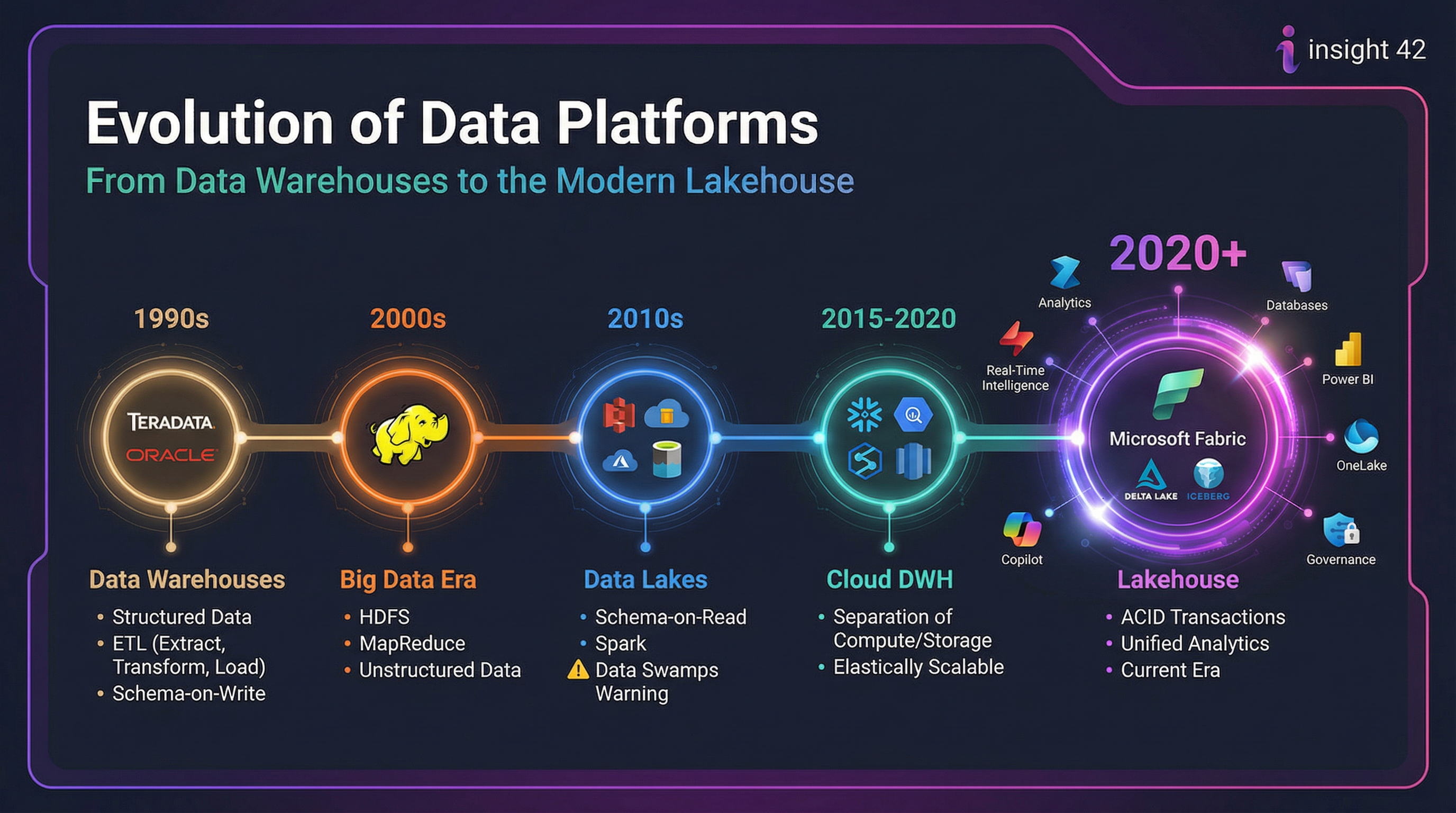
To understand the significance of Microsoft Fabric, we must first understand the history that led to its creation. The evolution of data platforms can be broadly categorized into distinct eras. Each era has its own set of technologies and architectural patterns.

Evolution of Data Platforms

Figure 1: The evolution of data platforms, from traditional data warehouses to the modern lakehouse architecture.

The Era of the Data Warehouse

In the 1990s, the data warehouse emerged as the dominant architecture for business intelligence and reporting [1]. These systems, pioneered by companies like Teradata and Oracle, were designed to store and analyze large volumes of structured data. The core principle was schema-on-write, where data was cleaned, transformed, and loaded into a predefined schema before it could be queried. This approach provided excellent performance and data quality but was inflexible and expensive. This was especially true when dealing with the explosion of unstructured and semi-structured data from the web.

The Rise of the Data Lake

The 2010s saw the rise of the data lake, a new architectural pattern designed to handle massive volumes and variety of data. Modern applications generated this data. Built on cloud storage services like Amazon S3 and Azure Data Lake Storage (ADLS), data lakes embraced a schema-on-read approach. This allowed raw data to be stored in its native format and processed on demand [2]. This provided immense flexibility but often led to “data swamps.” These are poorly managed data lakes with little to no governance. They make it difficult to find, trust, and use the data within them.

The Lakehouse: The Best of Both Worlds?

In recent years, the lakehouse architecture has emerged as a hybrid approach. It aims to combine the best of both worlds. It takes the performance and data management capabilities of the data warehouse with the flexibility and low-cost storage of the data lake [3]. Technologies like Delta Lake and Apache Iceberg bring ACID transactions and schema enforcement. Other data warehousing features are added to the data lake. This makes it possible to build reliable and performant analytics platforms on open data formats.

Introducing Microsoft Fabric: The Next Step in the Evolution

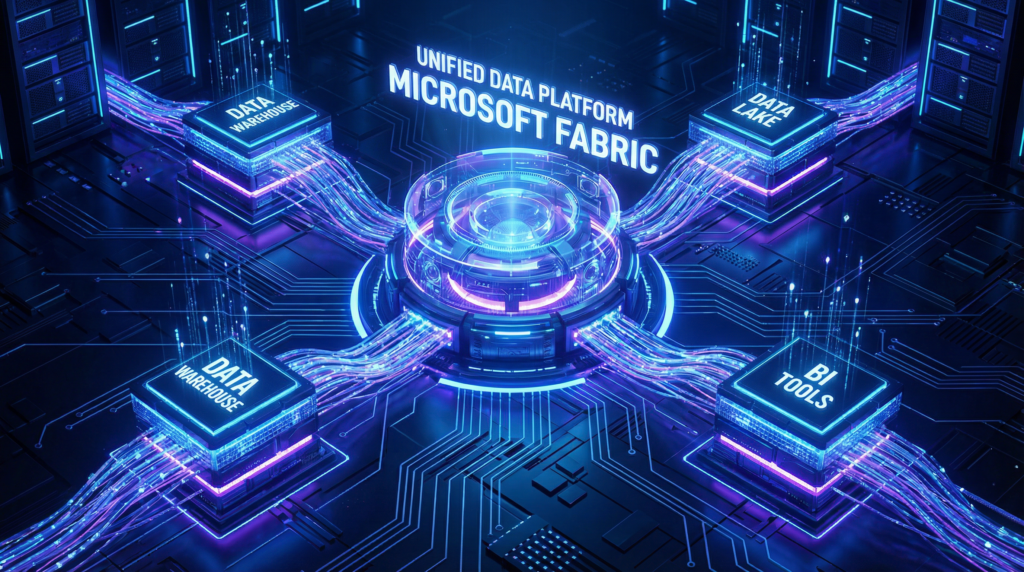
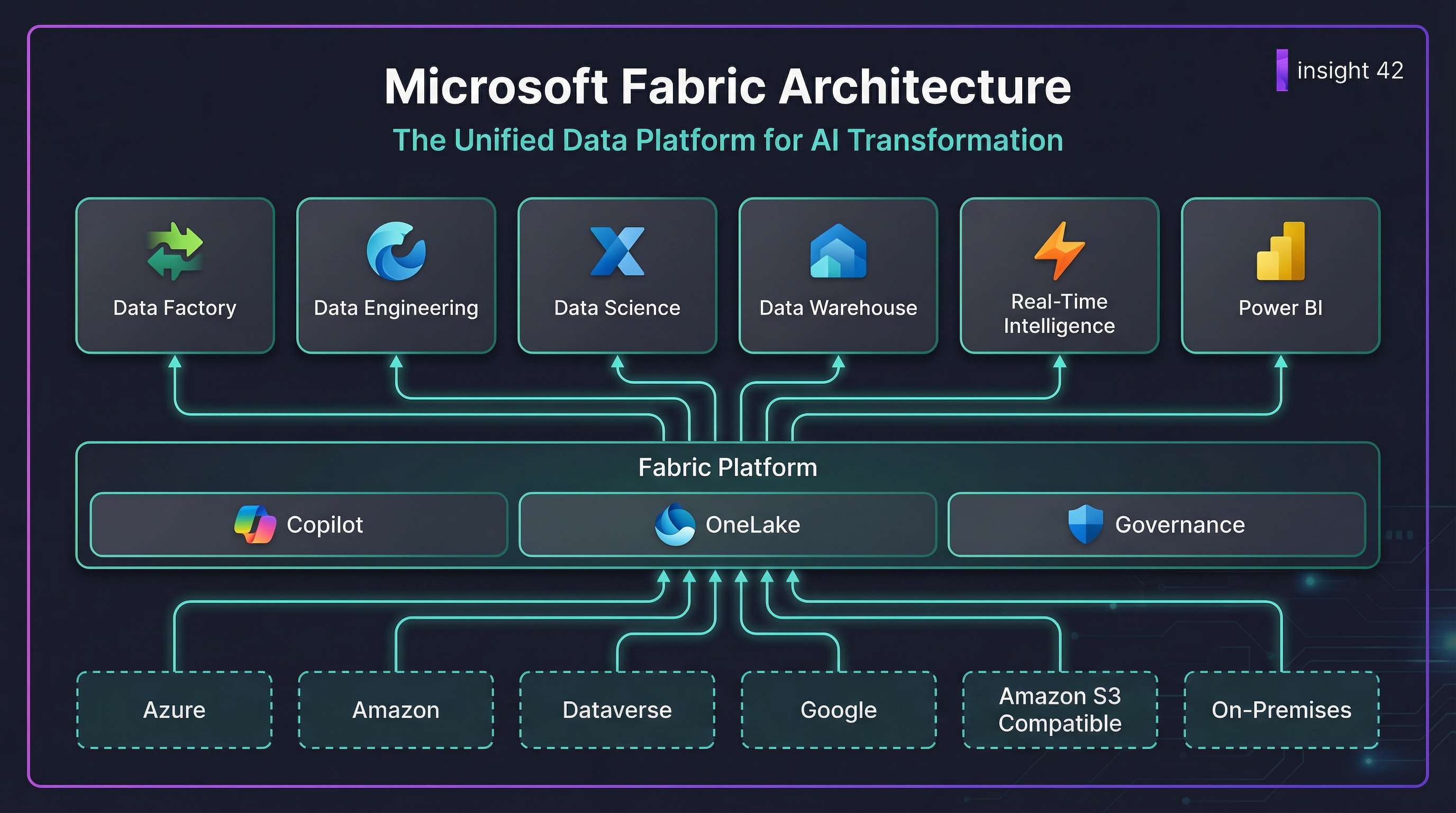
Microsoft Fabric represents the next logical step. In this evolutionary journey, it is not just another data platform. It is a complete, end-to-end analytics solution delivered as a software-as-a-service (SaaS) offering. Fabric integrates a suite of familiar and new tools into a single, unified experience. These tools include Data Factory, Synapse Analytics, and Power BI. All are built around a central data lake called OneLake [4].

Microsoft Fabric Architecture

Figure 2: The high-level architecture of Microsoft Fabric, showing the unified experiences, platform layer, and OneLake storage.

The Core Principles of Fabric

Microsoft Fabric is built on several key principles that differentiate it from previous generations of data platforms:

PrincipleDescription
Unified ExperienceFabric provides a single, integrated environment for all data and analytics workloads. It supports data engineering, data science, business intelligence, and real-time analytics.
OneLakeAt the heart of Fabric is OneLake, a single, unified data lake for the entire organization. All Fabric workloads and experiences are natively integrated with OneLake, eliminating data silos. This reduces data movement.
Open Data FormatsOneLake is built on top of Azure Data Lake Storage Gen2. It uses open data formats like Delta and Parquet, ensuring that you are not locked into a proprietary format.
SaaS FoundationFabric is a fully managed SaaS offering. This means that Microsoft handles infrastructure, maintenance, and updates, allowing you to focus on delivering data value.

The Promise of Fabric

The vision behind Microsoft Fabric is to create a single, cohesive platform serving all the data and analytics needs of an organization. By unifying the various tools and services that were previously separate, Fabric aims to:

  • Simplify the data landscape: Reduce the complexity of building and managing modern data platforms.
  • Break down data silos: Provide a single source of truth for all data in the organization.
  • Empower all users: Enable everyone from data engineers to business analysts to collaborate and innovate on a single platform.
  • Accelerate time to value: Reduce the time and effort required to build and deploy new data and analytics solutions.

What’s Next in This Series

While the vision for Microsoft Fabric is compelling, the reality of implementing and using it in a complex enterprise environment is far from simple. In the upcoming posts in this series, we will take a critical look at various aspects of Fabric. This includes:

PartTitleFocus
Part 2Data Lakes and DWH Architecture in the Fabric EraMedallion architecture, lakehouse patterns, data modeling
Part 3Security, Compliance, and Network Separation ChallengesSecurity layers, compliance, network isolation limitations
Part 4Multi-Tenant Architecture, Licensing, and Practical SolutionsWorkspace patterns, F SKU licensing, cost optimization
Part 5Future Trajectory, Shortcuts to Hyperscalers, and the Hub VisionCross-cloud integration, future roadmap, universal hub concept

Join us as we continue this deep dive into Microsoft Fabric. We will separate the hype from the reality. Our goal is to provide you with the insights needed to navigate the future of cloud data platforms.

References

This article is part of the Microsoft Fabric Deep Dive series by insight 42. Continue to Part 2: Data Lakes and DWH Architecture

#MicrosoftFabric #UnifiedDataPlatform #CloudDataPlatforms #DataLakehouse #FabricDeepDive #DataArchitecture #OneLake #DataPlatform #DataEngineering #BusinessIntelligence #SaaSData #DataSilos #FabricImplementation #CloudDataStrategy #DataAnalytics
Part 2 – The Public Sector AI: Agile vs. Goliath in Government AI

AI In The Public Sector 26th Dec 2025 Martin-Peter Lambert
Part 2 – The Public Sector AI: Agile vs. Goliath in Government AI

A Procurement Guide

A 3-Part Blog Series on AI Procurement for Government Digital Transformation
By Insight 42 UG | www.insight42.com

Meta Description: 95% of enterprise AI projects fail. Learn why agile, smaller AI vendors outperform big tech in government procurement and public sector AI implementation. A guide for public sector leaders.

Focus Keywords: Government AI Procurement, Public Sector AI Implementation, Agile AI Procurement, AI Vendor Selection Government

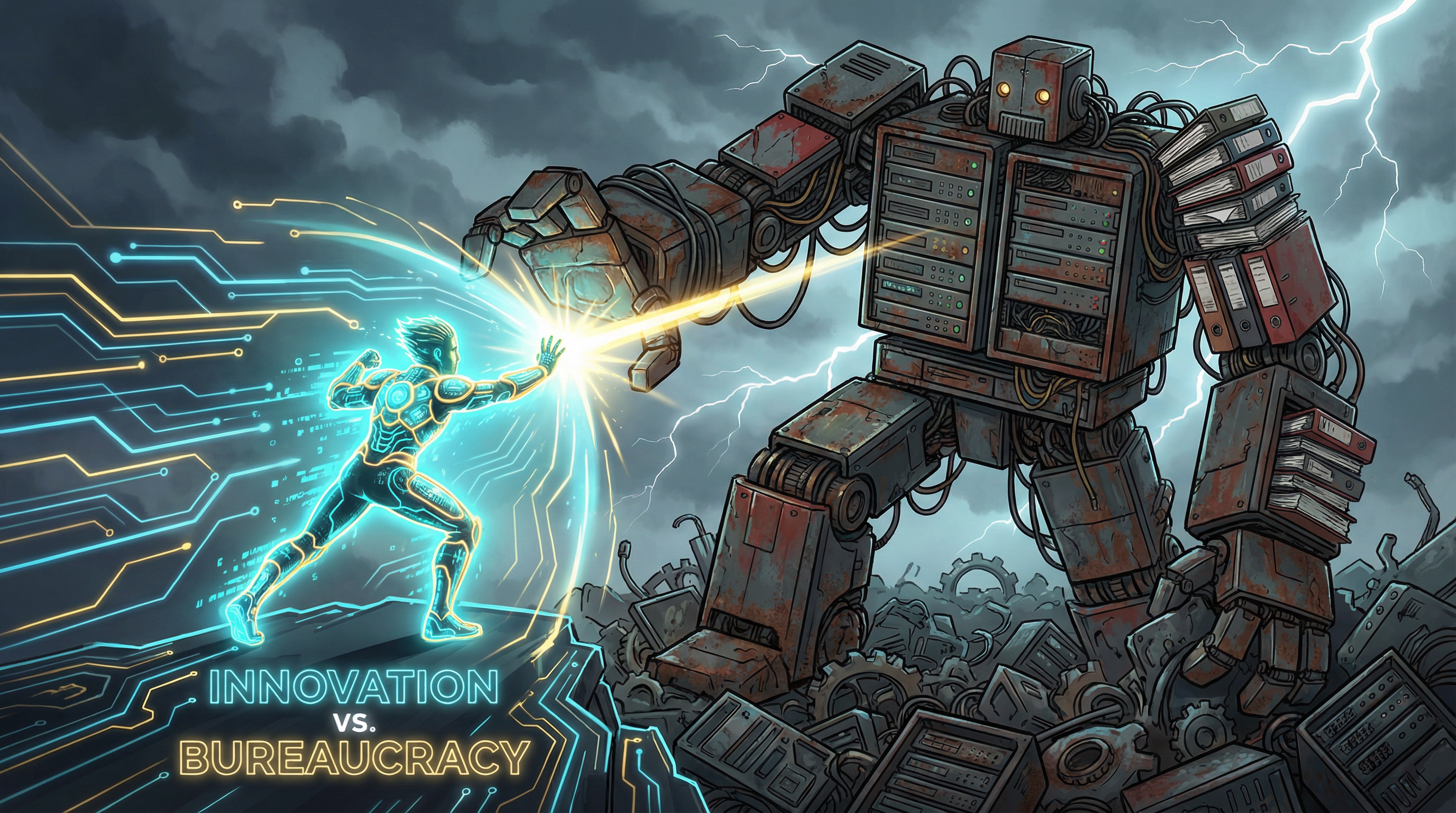
Innovation vs. Bureaucracy: The battle for the future of Government AI.
The battle for the future of government AI isn’t about budget; it’s about bureaucracy vs. innovation.

In Part 1 of our guide, we established a new imperative for AI in the public sector: the future is sovereign. We highlighted the risks of AI vendor lock-in and the need for a government AI strategy that prioritizes data control and independence.

Now, let’s examine the data that should change how every public procurement officer approaches government AI procurement. We will explore why the lumbering Goliaths of the tech world, despite their vast resources, are being consistently outmaneuvered by the nimble Davids of the innovation ecosystem.

The 95% Failure Rate: A Tale of Two AI Implementation Strategies

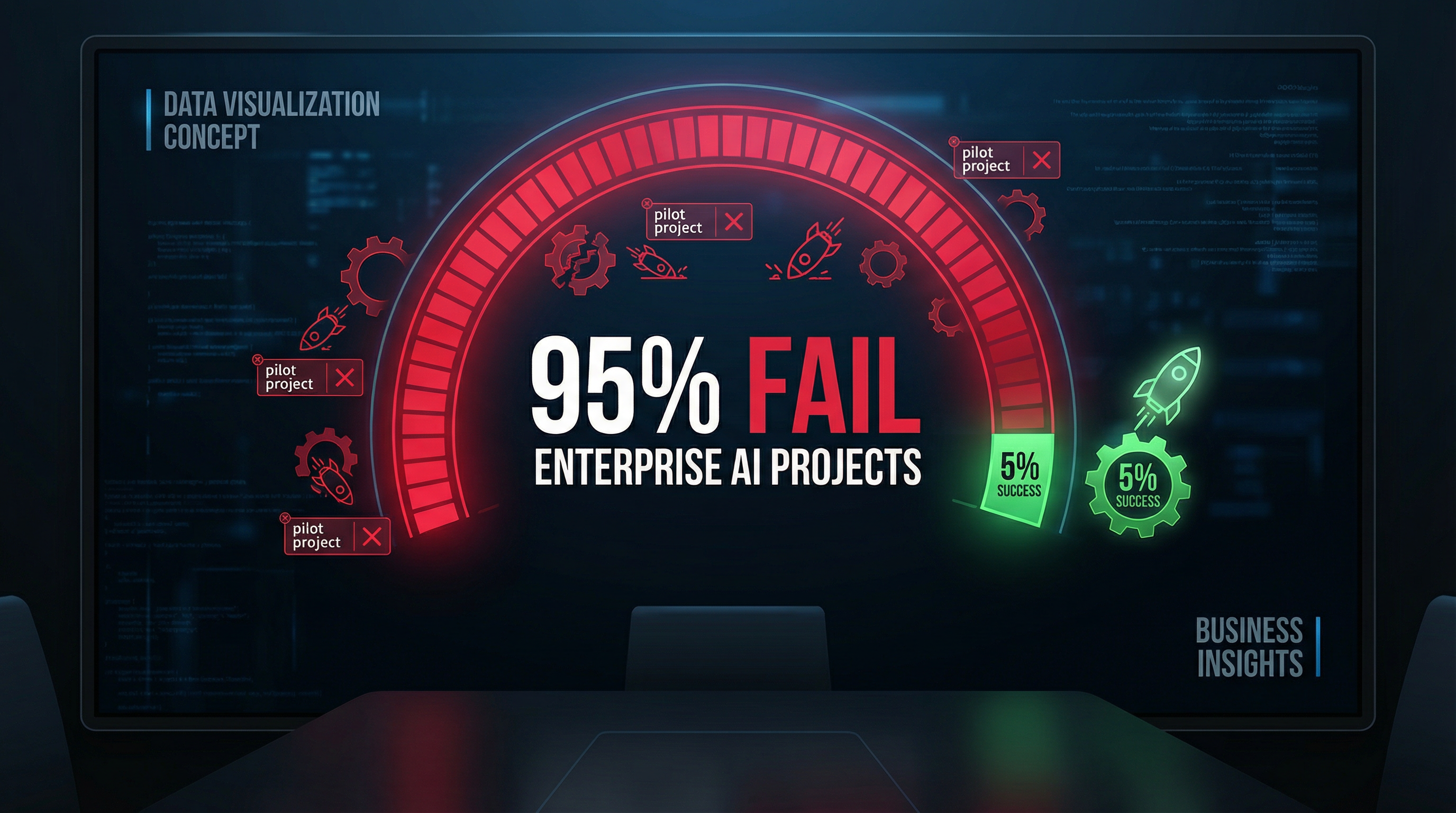
Here is a statistic that should be central to every public sector AI implementation plan: a recent MIT report found that a jaw-dropping 95% of enterprise generative AI pilots fail to deliver any return on investment [1].

95% of Enterprise AI Projects Fail
Data from MIT shows a staggering 95% failure rate for enterprise AI pilots, a clear warning for public sector procurement.

Let that sink in.

Nineteen out of every twenty large-scale AI projects are stuck in “pilot purgatory,” consuming millions in public funds with no measurable impact. The MIT report, based on extensive research including 150 leadership interviews and 300 public AI deployment analyses, identifies the root cause not as a failure of technology, but as a failure of strategy. Large organizations are attempting to build complex, monolithic tools from scratch, getting bogged down in internal bureaucracy, and misallocating resources on cosmetic front-end projects instead of focusing on high-ROI public sector automation in the back office.

As the lead author of the MIT report noted:

“Almost everywhere we went, enterprises were trying to build their own tool… but the data showed purchased solutions delivered more reliable results.”

– Aditya Challapally, MIT NANDA Initiative [1]

Now, contrast this with the small business sector. A recent survey featured in the Los Angeles Times found that an incredible 92% of small businesses have already integrated AI into their operations—a massive leap from just 20% in 2023 [2]. They are, according to the report, “operationalizing it faster and more pragmatically than many large enterprises.”

The Tale of the Tape: A Clear Choice for AI Vendor Selection

This head-to-head comparison provides a clear framework for AI vendor selection in government:

MetricLarge Enterprises (The Goliaths)Small & Medium Businesses (The Davids)
AI Pilot Success Rate5% deliver ROI [1]92% have integrated AI [2]
Primary ApproachBuild complex, internal toolsBuy specialized, proven solutions
Key ObstacleInternal bureaucracy, flawed integrationLimited resources (overcome by agility)
Typical Outcome“Pilot Purgatory”Rapid, pragmatic operationalization
Success with Purchased Tools67% [1]High (default approach)
Success with Internal Builds~22% [1]N/A

This data reveals a clear pattern. The Goliaths are trapped by their own scale. Their size, once a strength, has become a liability. They are intermediaries caught in their own interests, while the Davids are on the front lines, directly connected to the source of innovation and laser-focused on solving real-world problems. This makes a compelling case for agile AI procurement.

The Agility Advantage: From Concept to Nationwide Deployment in Three Weeks

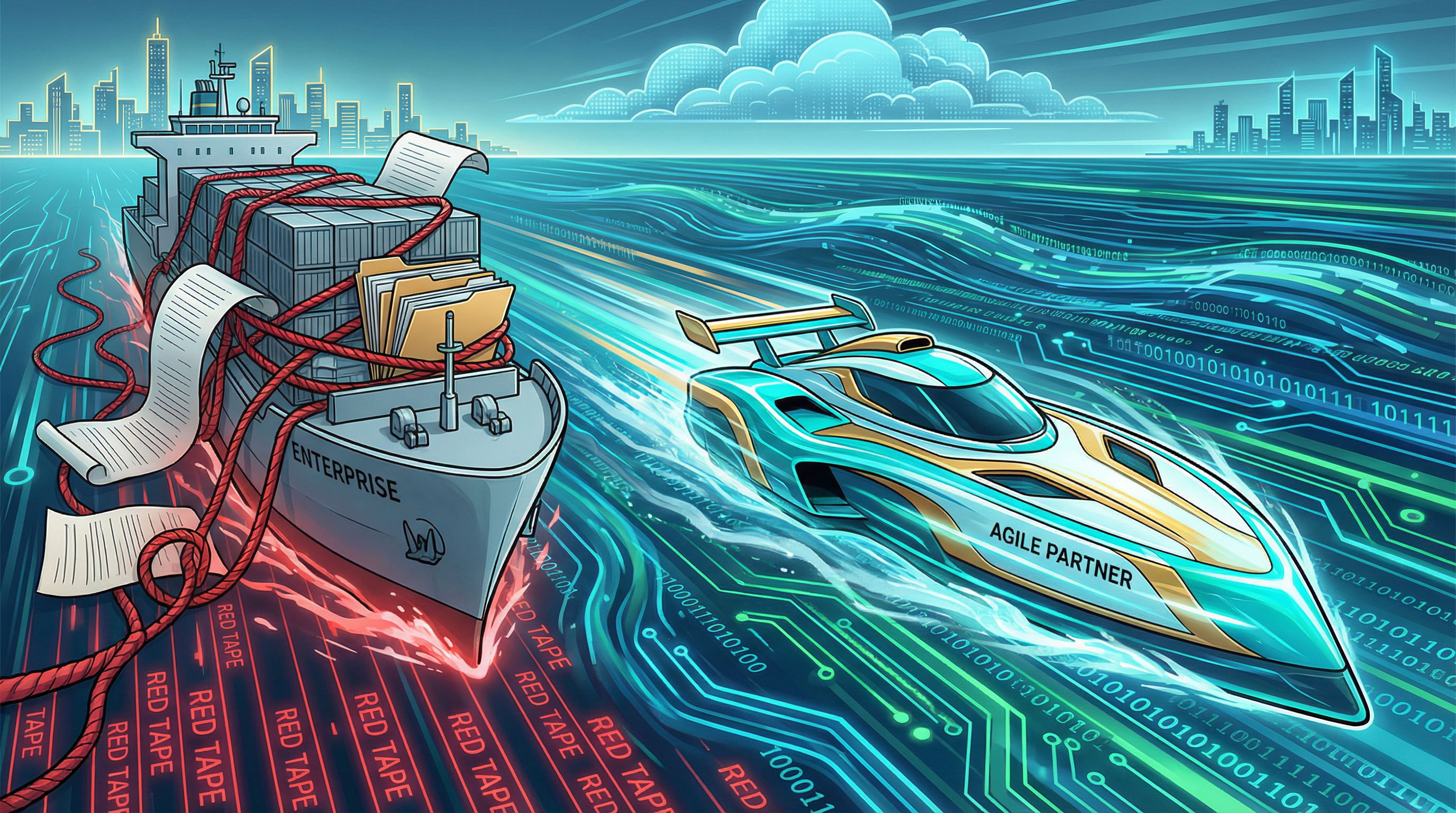
Agility vs. Bureaucracy in Government Procurement
Agile partners can deliver solutions in weeks, while large enterprises can be stuck in bureaucratic red tape for years.

Need proof that agility trumps scale in public sector AI implementation? Look no further than the case study in the original SAP document that inspired this series.

When the pandemic hit Germany, the city of Hamburg needed to distribute aid to struggling artists—fast. Did they enter a multi-year procurement cycle with a tech behemoth? No. They partnered with an agile team and launched a fully functional aid-application platform in just three weeks—and then rolled it out across all 16 German states [3].

Three weeks. That is the agility advantage in action.

Small, domestic partners who understand the local regulatory landscape can move at the speed of need. They are not bogged down by layers of management or a product roadmap set years in advance by a committee on another continent. They are built to be responsive, to iterate quickly, and to deliver value—not just billable hours.

The European Renaissance and Open-Source AI

This trend is accelerating across Europe. While US giants focus on closed, proprietary models that lead to AI vendor lock-in, France’s Mistral AI has become a European champion by releasing powerful, open-weight models that offer developers greater control and transparency [4]. In June 2025, Mistral launched Europe’s first AI reasoning model, proving that you don’t need to be a trillion-dollar company to lead in AI innovation [5].

This highlights the core advantages of partnering with smaller, specialized vendors:

  1. Direct Connection to the Source: Small innovators are the source of the technology, not just resellers.
  2. Domestic Agility: They understand local regulations like GDPR and the EU AI Act, and can move quickly.
  3. Aligned Incentives: Their success depends on delivering real value to you, not on maximizing contract size.

The Clear Choice for Your Next Procurement Cycle

The choice for public sector leaders is clear. Do you bet on the Goliath, with their 95% failure rate and lock-in contracts? Or do you embrace agile AI procurement and partner with the Davids—the sovereign, innovative companies that are actually getting the job done?

In our final post, we will provide a practical playbook for making that transition: how to choose the right partners, where to focus your efforts, and how to build a fast, secure, and sovereign AI future for your organization.


Coming Up Next:
Part 3: The Public Sector AI Procurement Playbook: Fast, Secure, Sovereign
Previous:
Part 1 – Public Sector AI: A Guide to Sovereign AI in the Public Sector


References

[1] Estrada, Sheryl. “MIT report: 95% of generative AI pilots at companies are failing.” Fortune, August 18, 2025.

[2] Williams, Paul. “AI for Small Business: 92% Adoption Rate Drives Growth.” Los Angeles Times, December 14, 2025.

[3] Public Sector Network & SAP. “AI in the Public Sector.” 2025.

[4] Open Source Initiative. “Open Source and the future of European AI sovereignty.” June 18, 2025.

[5] Reuters. “France’s Mistral launches Europe’s first AI reasoning model.” June 10, 2025.


Insight 42 UG provides expert guidance for public sector organizations navigating the AI transition. Our focus is on fast, secure, and sovereign AI solutions. Learn more at www.insight42.com

#AI2025 #GovTech2025 #DigitalSovereignty #AIforGood #FutureOfGovernment #SmartGovernment #AIleadership #PublicInnovation #TechPolicy #AIgovernance #AIadoption #SmallBusinessAI #EnterpriseAI #OpenSourceAI #EuropeanAI #MistralAI #AIinnovation #DigitalTransformation #AIvendor #TechProcurement

Multi Cloud Security

Resilience 26th Dec 2025 Martin-Peter Lambert
Multi Cloud Security

Secure Your Multi-Cloud Infrastructure with absecure

Why this matters (and what it costs if you don’t)

Multi-cloud is awesome… right up until it isn’t.

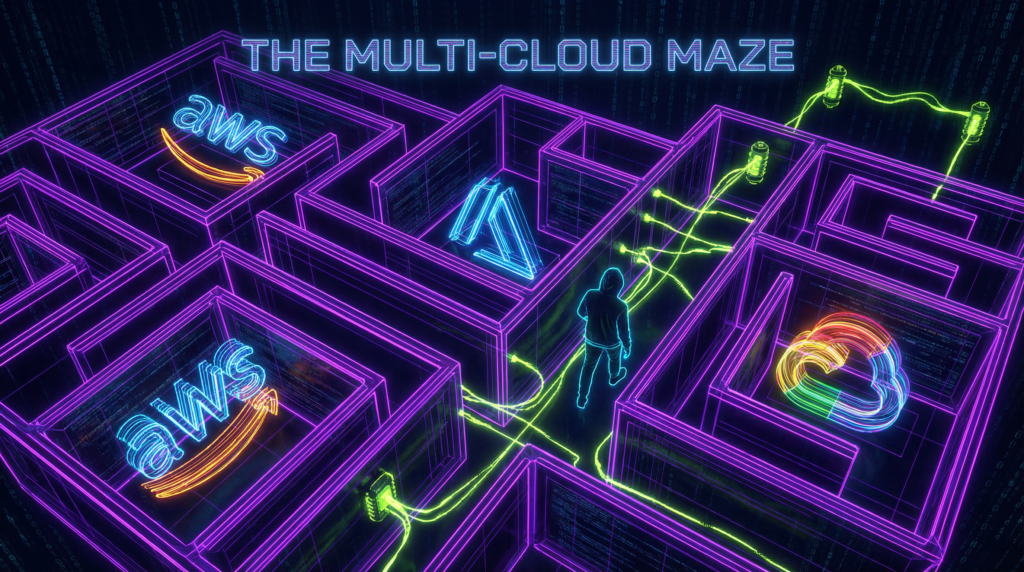
One minute you’re enjoying flexibility across AWS, Azure, and GCP. The next minute you’re juggling different IAM models, different logging systems, different defaults, different dashboards, and a growing fear that somewhere there’s a “public bucket” waiting to ruin your week.

And here’s the part nobody wants to hear (but everybody needs to): cloud security is a shared responsibility. Your cloud provider secures the underlying infrastructure, but you’re responsible for securely configuring identities, access, data, and services.

So let’s talk about why this matters — in plain language — and how absecure helps you fix it without turning your team into full-time spreadsheet archaeologists.

Why this matters: multi-cloud multiplies risk (quietly)

Multi-cloud doesn’t just add more places to run workloads. It adds more places to:

  • misconfigure access
  • forget a setting
  • miss a log pipeline
  • keep secrets around too long
  • fall out of compliance without noticing

And most teams are already running multi-cloud whether they planned to or not. A 2025 recap of Flexera’s State of the Cloud survey reports organizations use 2.4 public cloud providers on average. SoftwareOne

More clouds = more moving parts = more ways to accidentally ship risk.

What it costs if you don’t fix it (the “ouch” section)

This is the part that makes CFOs stop scrolling.

1) Breaches are expensive (even when nobody “meant to”)

IBM’s Cost of a Data Breach Report 2025 reports a global average breach cost of $4.44M. bakerdonelson.com

That’s not “security budget” money. That’s “we didn’t plan for this” money.

2) Secrets stay exposed for months

Verizon’s 2025 DBIR reports the median time to remediate leaked secrets discovered in a GitHub repository was 94 days. Verizon

That’s three months of “hope nobody finds it.”

3) Public cloud storage exposure is still a real thing

An IT Pro write-up referencing Tenable’s 2025 research reports 9% of publicly accessible cloud storage contains sensitive data, and 97% of that is classified as restricted/confidential. IT Pro

So yes — “just one misconfiguration” can be the whole story.

4) The hidden cost: your team’s time and momentum

Even without a breach, the daily tax is brutal:

  • alert fatigue
  • manual reviews
  • chasing evidence for audits
  • Slack firefighting instead of shipping product

Security becomes the speed bump… and everyone resents it.

Enter absecure: the complete security team (not just a tool)

absecure is built to make multi-cloud security feel less like herding cats and more like running a clean system.

Think of absecure as:

  • visibility (what you have, where it is, what’s risky)
  • prioritization (what matters most right now)
  • remediation workflows (fixes with approvals + rollback + audit trail)
  • compliance automation (evidence without panic)

In other words: less “we have 700 findings” … more “here are the 12 fixes that cut the most risk this week.”

What you get (in customer language)

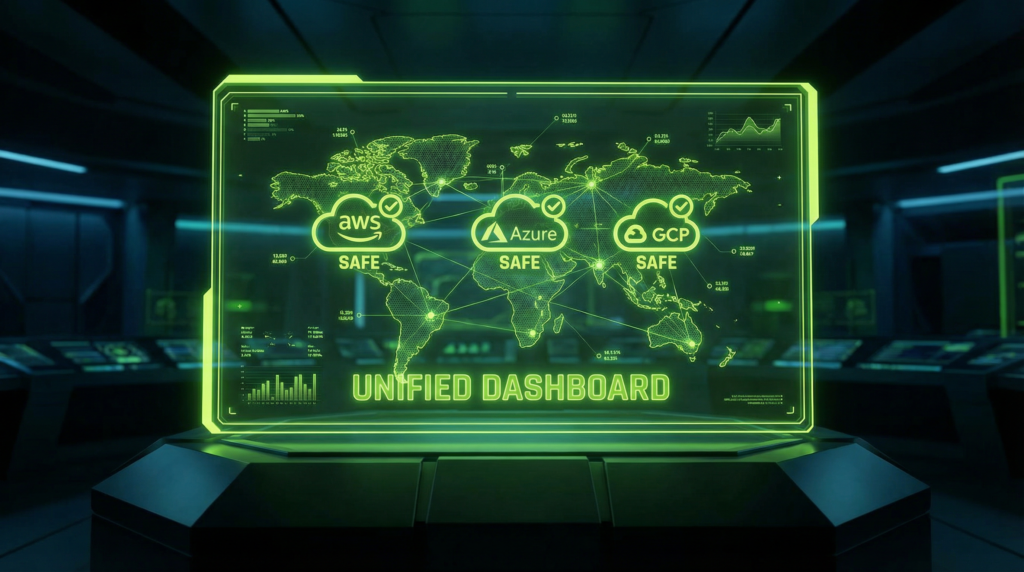
1) One view across all your clouds

A unified console for AWS/Azure/GCP (+ OCI / Alibaba Cloud if you use them).

2) Agentless scanning (less hassle, faster rollout)

No “install this everywhere” marathon before you see value.

3) Coverage where breaches actually start

  • misconfigurations (public storage, risky network rules, missing encryption)
  • IAM risk (excess permissions, unused roles, dangerous policies)
  • vulnerabilities (VMs/hosts/packages + container image risks)
  • secrets exposure (hardcoded keys/tokens)

4) Compliance without the migraine

CIS Benchmarks are a common baseline for cloud hardening and are widely referenced in security programs.
absecure helps you track posture, map controls, and generate audit-ready reports.

How it works (simple version)

1) Connect your cloud accounts (read-only first)

This keeps onboarding safe and frictionless while you build confidence.

2) Scan continuously (so you catch drift)

Because cloud changes constantly — and drift is where “secure yesterday” becomes “exposed today.”

3) Fix fast (with approvals + rollback)

Turn findings into outcomes:

  • one-click fixes for common misconfigurations
  • approval workflows for higher-risk changes
  • audit logs so you can prove what happened (and when)

How to set it up (practical steps you can follow today)

Here’s a clean “day 1 → day 7” plan that works in real teams.

Day 1: Get the foundations right

Turn on centralized audit logs early. These are your “black box flight recorder” during incidents and audits.

  • AWS: Use CloudTrail (preferably org-wide)
  • Azure: Export Activity Logs / Log Analytics appropriately
  • GCP: Centralize logging with aggregated sinks

Day 2–3: Pick your baseline (so everyone plays the same game)

Start with CIS Foundations for your cloud(s).
This reduces “opinion debates” and replaces them with an agreed standard.

Day 4–5: Fix the “Top 10” highest-impact issues

A great first sprint list:

  • public storage exposure
  • overly permissive IAM / wildcard policies
  • missing encryption defaults
  • risky inbound firewall/security group rules
  • leaked/stale credentials
  • high severity vulnerabilities on internet-facing workloads
  • logging gaps in critical accounts/projects

Day 6–7: Automate what you can (safely)

Start automation with low-risk, high-confidence fixes first.
Then add approvals and rollback for anything that could disrupt production.

Optional (power-user mode): policy-as-code

If you want custom rules (regions, tags, naming, encryption requirements), policy-as-code is a proven approach, often implemented with OPA/Rego.

The “contact us” moment (aka: why teams reach out)

If you’re feeling any of these…

  • “We’re multi-cloud and visibility is fragmented.”
  • “We know we have misconfigs; we just can’t chase them all.”
  • “Audits take too long and evidence is painful.”
  • “We want automation, but we need guardrails.”
  • “Security is slowing delivery and everyone’s frustrated.”

…then this is exactly the kind of problem absecure is built to solve.

What you’ll get if you contact us

  • a fast posture review across your cloud(s)
  • the top risk areas ranked by impact
  • a realistic remediation plan your teams will actually follow
  • a path to continuous compliance evidence (without the chaos)

Contact us for our services (worldwide)

Resources you can cite inside your page (trust builders)

Use these throughout the article as credibility anchors:

  • Shared responsibility (AWS/Azure/GCP)
  • IBM breach cost benchmark bakerdonelson.com
  • Verizon DBIR secret remediation time Verizon
  • Tenable cloud storage exposure findings IT Pro
  • CIS Benchmarks (cloud hardening baseline)
  • Logging setup docs (AWS/Azure/GCP)


#absecure #CloudSecurity #MultiCloud #CSPM #CloudSecurityPostureManagement #DevSecOps #CyberSecurity #ZeroTrust #CloudCompliance #ComplianceAutomation #SecurityAutomation #CloudRisk #VulnerabilityManagement #ContainerSecurity #KubernetesSecurity #IAMSecurity #IdentitySecurity #LeastPrivilege #SecretsManagement #SecretsScanning #SBOM #SPDX #SupplyChainSecurity #CloudMonitoring #ThreatDetection #IncidentResponse #SecurityOperations #SecurityPostureManagement #CISBenchmarks #NIST #SOC2 #ISO27001 #PCIDSS #HIPAA #AWS #MicrosoftAzure #GoogleCloud #OCI #AlibabaCloud #AgentlessSecurity #SecurityTeam

Unleash the European Bull

AI In The Public Sector, Resilience, Sovereignty Series 24th Dec 2025 Martin-Peter Lambert
Unleash the European Bull

Unleashing Innovation in the Age of Integrated Platforms – and Rediscovery of Free Discovery!

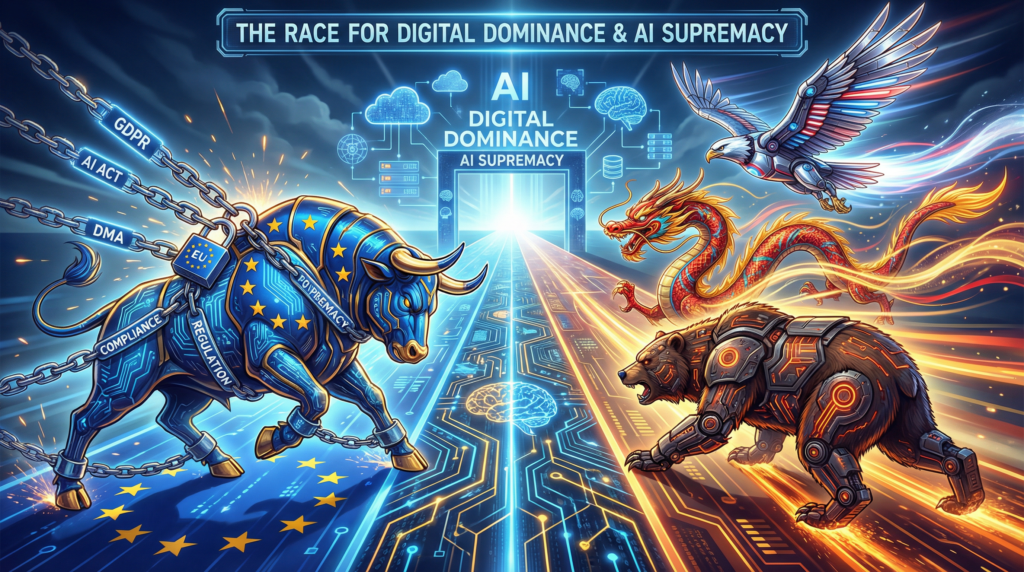
In the global arena of technological dominance, the United States soars as the Eagle, Russia stands as the formidable Bear, and China commands as the mythical Dragon. The European Union, with its rich history of innovation and immense economic power, is the Bull—a symbol of strength and potential, yet currently tethered by its own well-intentioned constraints. This post explores how the EU can unleash its inherent creativity and forge a new path to digital sovereignty, not by abandoning its principles, but by embracing a new model of innovation inspired by the very giants it seeks to rival.

The Palantir Paradigm: Integration as the New Frontier

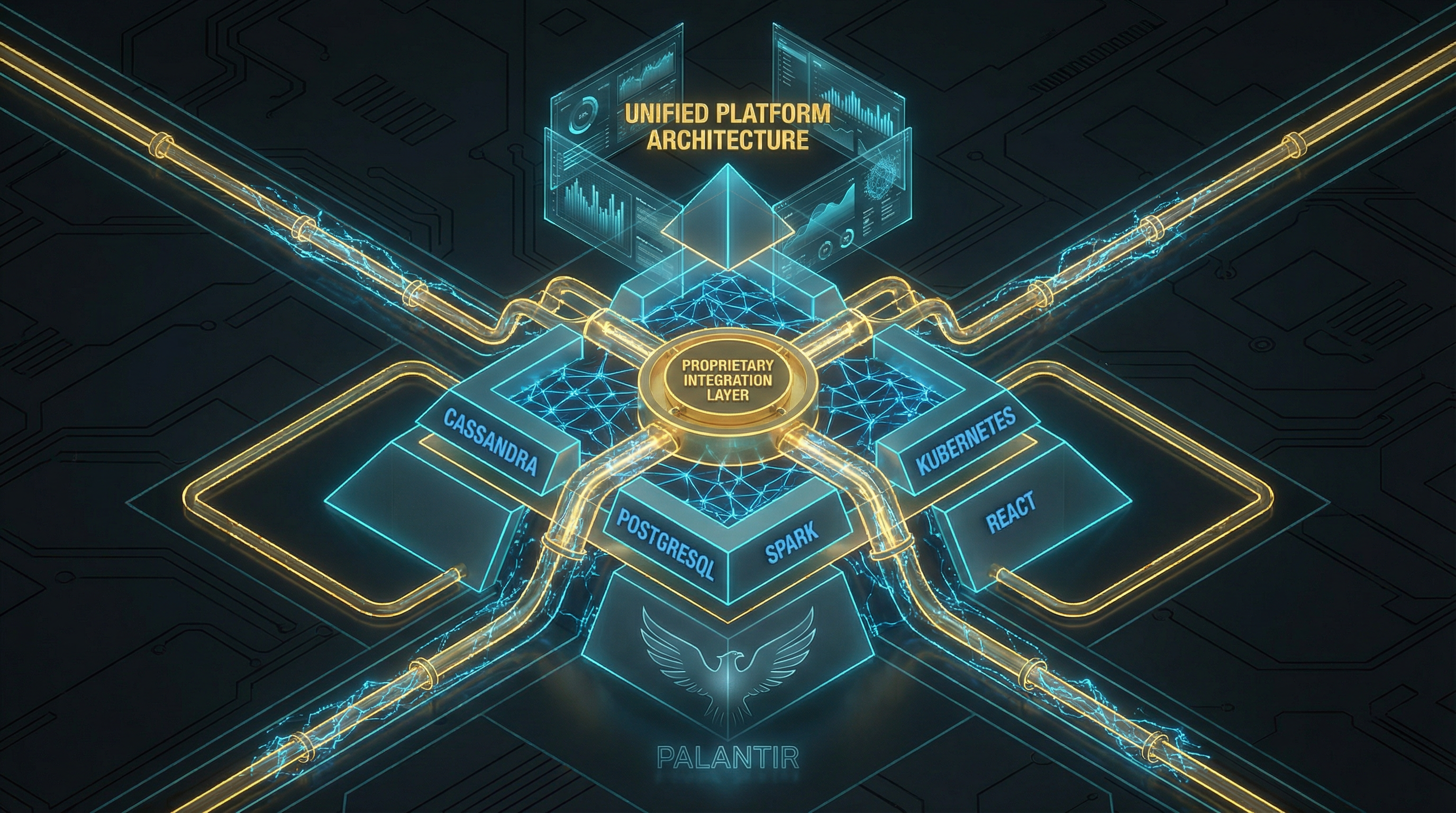
At the heart of the modern software landscape lies a powerful paradigm, exemplified by companies like Palantir. Their genius is not in reinventing the wheel, but in masterfully integrating existing, high-quality open-source components into a single, seamless platform. Technologies like Apache Spark, Kubernetes, and various open-source databases are the building blocks, but the true value—and the competitive advantage—lies in the proprietary integration layer that connects them.

Palantir Integration Model

This integrated approach creates a powerful synergy, transforming a collection of disparate tools into a cohesive, intelligent system. It’s a model that delivers immense value to users, who are shielded from the underlying complexity and can focus on solving their business problems. This is the new frontier of software innovation: not just creating new components, but artfully combining existing ones to create something far greater than the sum of its parts.

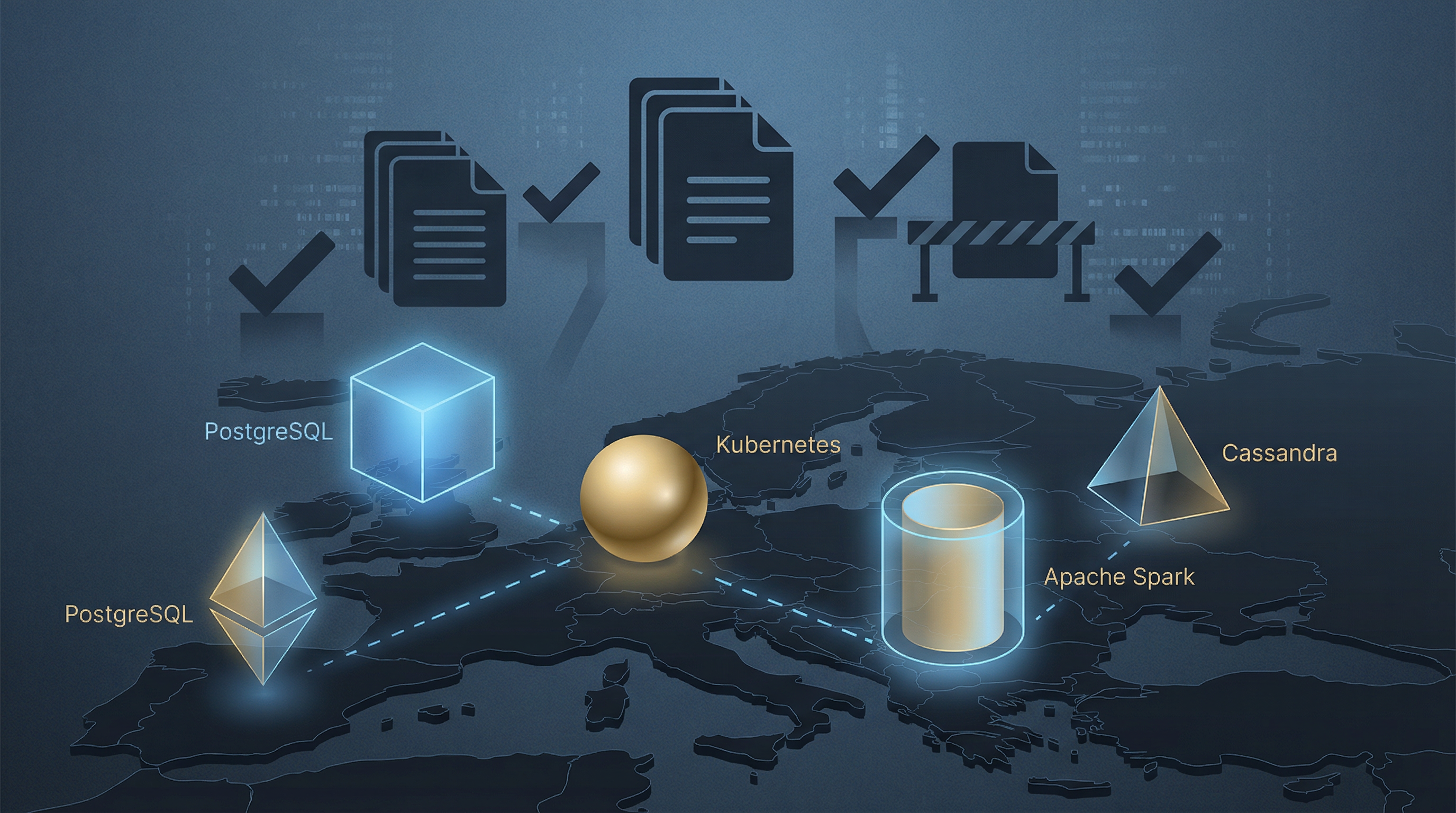
In contrast, the European tech landscape, while boasting a wealth of world-class open-source projects and brilliant developers, remains fragmented. It’s a collection of individual gems that have yet to be set into a crown.

Fragmented EU Landscape

The European Paradox: Drowning in Regulation, Starving for Innovation

The legendary management consultant Peter Drucker famously stated, “Business has only two functions — marketing and innovation.” He argued that these two functions produce results, while all other activities are simply costs. This profound insight cuts to the heart of the European paradox. The EU’s commitment to data privacy and ethical technology is laudable, but its current regulatory approach has created a system where it excels at managing costs (regulation) rather than producing results (innovation).

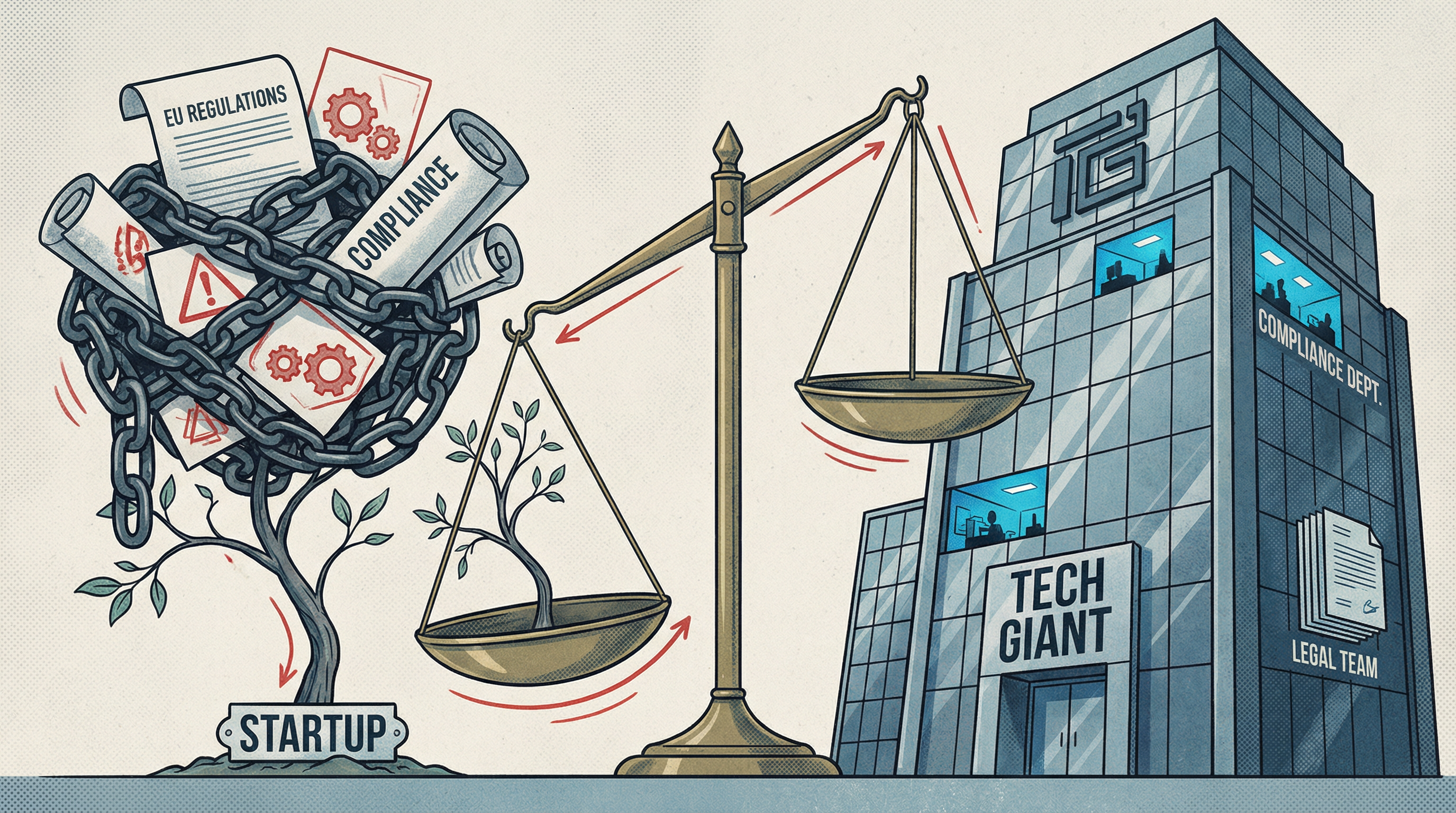
Regulations like the GDPR and the AI Act, while designed to protect citizens, have inadvertently erected barriers to innovation, particularly for the small and medium-sized enterprises (SMEs) that are the lifeblood of the European economy. When a continent is more focused on perfecting regulation than fostering innovation, it finds itself in an untenable position: it can only market products that it does not have.

This “one-size-fits-all” regulatory framework creates a natural imbalance. Large, non-EU tech giants have the vast resources and legal teams to navigate the complex compliance landscape, effectively turning regulation into a competitive moat. Meanwhile, European startups and SMEs are forced to divert precious resources from innovation to compliance, stifling their growth and ability to compete on a global scale.

Regulatory Imbalance

This is the European paradox: a continent rich in talent and technology, yet constrained by a system that favors established giants over homegrown innovators. The result is a landscape where the EU excels at creating rules but struggles to create world-beating products. To get back to innovation, Europe must shift its focus from simply regulating to actively enabling the creation of new technologies.

Unleashing the Bull: A New Path for European Tech Sovereignty

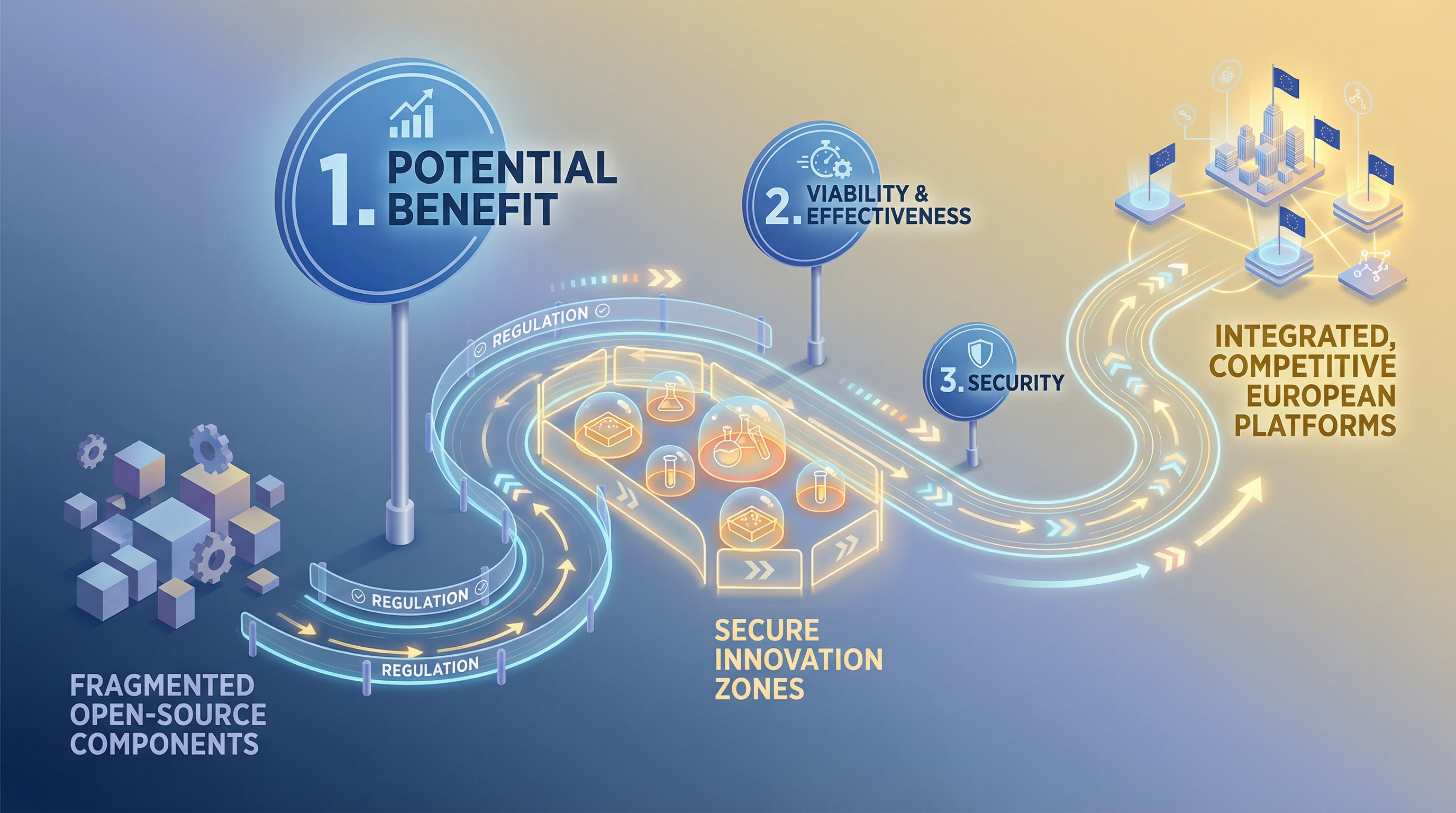
To break free from this paradox, the EU must forge a new path—one that balances its regulatory ideals with the pragmatic need for innovation. The solution lies in the creation of secure innovation zones, or regulatory sandboxes. These are controlled environments where startups and developers can experiment, build, and iterate rapidly, free from the immediate weight of full regulatory compliance.

Innovation Pathway

This approach is not about abandoning regulation, but about applying it at the right stage of the innovation lifecycle. It’s about prioritizing potential benefits and viability first, allowing new ideas to flourish before subjecting them to the full force of regulatory scrutiny. By creating these safe harbors for innovation, the EU can empower its brightest minds to build the integrated platforms of the future, turning its fragmented open-source landscape into a cohesive, competitive advantage.

The Vision: A Sovereign and Innovative Europe

Imagine a future where the European Bull is unleashed. A future where a vibrant ecosystem of homegrown tech companies thrives, building on the continent’s rich open-source heritage to create innovative, integrated platforms. A future where the EU is not just a regulator, but a leading force in the global technology landscape.

The European Bull Unleashed

This vision is within reach. The EU has the talent, the technology, and the values to build a digital future that is both innovative and humane. By embracing a new model of innovation—one that fosters experimentation, prioritizes integration, and applies regulation with wisdom and foresight—the European Bull can take its rightful place as a global leader in the digital age.

References

[1] Palantir and Open-Source Software
[2] Open source software strategy – European Commission
[3] New Study Finds EU Digital Regulations Cost U.S. Companies Up To $97.6 Billion Annually
[4] EU AI Act takes effect, and startups push back. Here’s what you need to know

#DigitalSovereignty #EUTech #DigitalTransformation #Innovation #Technology #EuropeanUnion #DigitalEurope #TechPolicy #OpenSource #PlatformIntegration #CloudSovereignty #DataSovereignty #EnterpriseArchitecture #DigitalStrategy #TechInnovation #EUInnovation #EUProcurement #PublicSector #DigitalAutonomy #TechConsulting #AIAct #GDPR #RegulatoryInnovation #EuropeanTech

Part 1 – Public Sector AI: A Guide to Sovereign AI in the Public Sector

AI In The Public Sector 23rd Dec 2025 Martin-Peter Lambert
Part 1 – Public Sector AI: A Guide to Sovereign AI in the Public Sector

The Revolution Will Be Sovereign

A 3-Part Blog Series on AI Procurement for Government Digital Transformation
By Insight 42 UG | www.insight42.com

Meta Description: Discover why sovereign AI is the future of public sector digital transformation. This guide covers how to avoid vendor lock-in and maintain control of your government data during AI procurement.

Focus Keywords: Sovereign AI, Public Sector AI Procurement, Digital Transformation Government, AI Vendor Lock-in

Welcome to the new era of digital transformation in government. If you are a public sector leader, you are likely navigating the complex landscape of AI in the public sector. The pressure is immense: citizens demand better digital services, budgets are perpetually tight, and every technology vendor is promoting a new “generative AI” solution as the ultimate answer.
The key challenge one: “Your AI is quietly old, not specialized and already out of date”
The key challenge two: “It is no longer if you should pursue government AI adoption, but how – while Bureaucracy is optimized to making you produce paperwork before really having done any meaningful tests or experience that you desperately need!”

This guide argues that the AI revolution in government will not be a flashy, televised event. It will be a quiet, strategic shift towards a powerful new concept: sovereign AI

The Sovereignty Imperative: Your Data, Your Rules in Public Sector AI

Across Europe, the groundbreaking EU AI Act has established a new global standard for AI governance. This is more than just regulation; it is a declaration of digital independence [1]. This legislation is accelerating a fundamental shift towards sovereign AI—the capability for a nation, region, or organization to develop, deploy, and control its own AI systems. This ensures that critical government data, AI models, and the future of public services are not outsourced to the highest bidder in another hemisphere [2].

Why is this the cornerstone of any effective government AI strategy? When you are responsible for sensitive citizen data—from healthcare records to tax information—you cannot simply transfer it to a hyperscaler whose business model is opaque and whose priorities may not align with the public good. A recent McKinsey report highlights that a staggering 44% of technology leaders are delaying public cloud adoption due to data security concerns [3]. Another 31% state that data residency requirements prevent them from using public cloud services altogether. These leaders understand that true sovereignty is non-negotiable.

This is not about digital isolationism. It is about securing optionality and control. It is about ensuring the AI systems shaping your public services are aligned with your values, your laws, and your citizens’ best interests—not the quarterly earnings report of a foreign tech giant. The potential prize is enormous. McKinsey estimates that a successful sovereign AI strategy could unlock up to €480 billion in value annually by 2030 for Europe alone [3].

The Siren Song of Big Tech: Avoiding AI Vendor Lock-in

The major technology players are, of course, eager to assist in your public sector digital transformation. They arrive with compelling presentations, promising to solve every challenge with their one-size-fits-all AI platforms. They offer the comfort of a familiar brand and the promise of an easy button for your AI journey. It is a tempting offer.

It is also a trap.

The original PDF that inspired this series, a joint publication by SAP and the Public Sector Network, explicitly warns about the critical risk of AI vendor lock-in [4]. This is the digital equivalent of quicksand. Once you are in, every attempt to escape only pulls you deeper. Your data is ingested into proprietary formats, your workflows become dependent on their specific tools, and your ability to innovate is shackled to their product roadmap and pricing structure.

“When choosing products and services, public sector organizations should also be aware of the risk of vendor lock-in, especially in a rapidly evolving market in which LLMs are being commoditized. We’re already seeing some finely-tuned models outperform more sophisticated, general-purpose models in particular domains and tasks.”

AI in the Public Sector, SAP/Public Sector Network [4]

This quote reveals a crucial trend: specialized, nimble models are already outperforming the giants. The market is shifting, and the large intermediaries are struggling to adapt. Once locked in, you are no longer a partner; you are a hostage. The very intermediaries promising to accelerate your AI transition become the biggest bottleneck, caught in their own sprawling processes and self-interest.

The Central Question for Your AI Procurement Strategy

This leads to an uncomfortable but essential question for every public procurement officer: If the big players are the undisputed leaders in AI, why are their own enterprise AI projects failing at a rate of 95%? (We will dissect this shocking statistic in Part 2.)

And if small businesses are achieving government AI adoption faster and more effectively, what does that signal about where true innovation lies?

The answer is clear: The future of AI in the public sector belongs to the small, the agile, and the sovereign – decentralization will make you antifragile!

In our next post, we will explore why the Davids are beating the Goliaths—and what that means for your public sector AI procurement strategy.


Coming Up Next:
Part 2: Agile vs. Goliath in Government AI: A Procurement Guide


References

[1] European Commission. “European approach to artificial intelligence.” https://digital-strategy.ec.europa.eu/en/policies/european-approach-artificial-intelligence

[2] Accenture. “Europe Seeking Greater AI Sovereignty, Accenture Report Finds.” November 3, 2025. https://newsroom.accenture.com/news/2025/europe-seeking-greater-ai-sovereignty-accenture-report-finds

[3] McKinsey & Company. “Accelerating Europe’s AI adoption: The role of sovereign AI capabilities.” December 19, 2025. https://www.mckinsey.com/industries/technology-media-and-telecommunications/our-insights/accelerating-europes-ai-adoption-the-role-of-sovereign-ai

[4] Public Sector Network & SAP. “AI in the Public Sector.” 2025.


Insight 42 UG provides expert guidance for public sector organizations navigating the AI transition. Our focus is on fast, secure, and sovereign AI solutions. Learn more at www.insight42.com

#SovereignAI #PublicSectorAI #GovernmentAI #AIVendorLockIn #DigitalTransformation #AIGovernance #EUAIAct #SovereignCapabilities #PublicSectorDigital #DataSecurity #AIStrategy #SpecializedAI #GovernmentProcurement #AgileAI #GovernmentProcurementStrategy

The Sovereignty Series (Part 5 of 5): The Blueprint for Independence

Sovereignty Series 13th Dec 2025 Martin-Peter Lambert
The Sovereignty Series (Part 5 of 5): The Blueprint for Independence

The Sovereignty Series (Part 5 of 5): The Blueprint for Independence

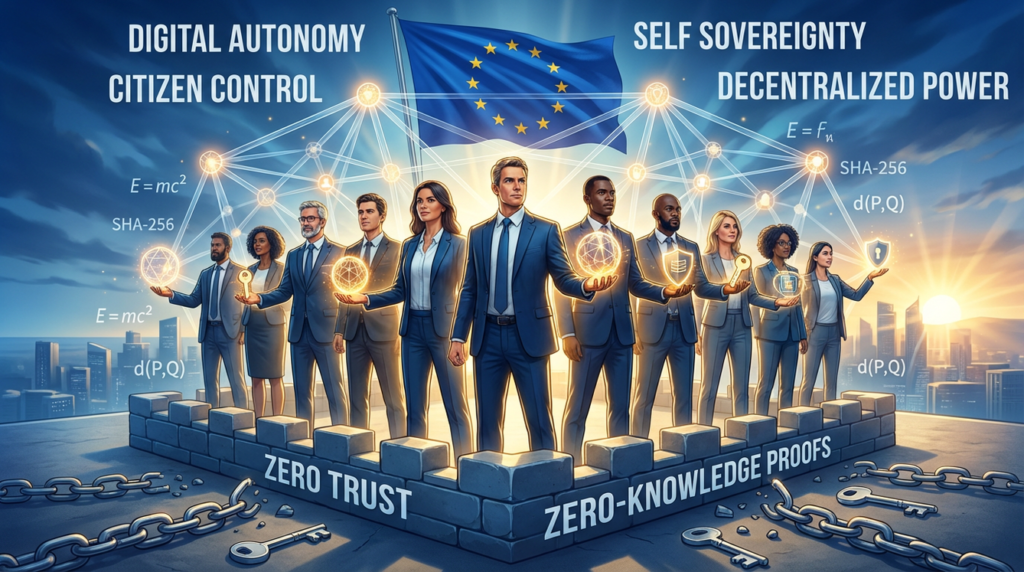
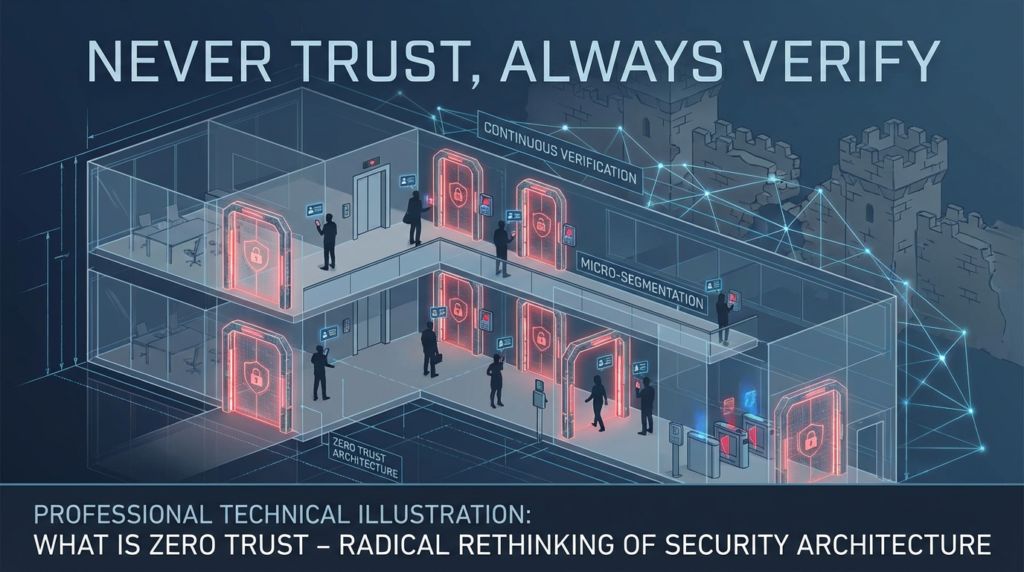
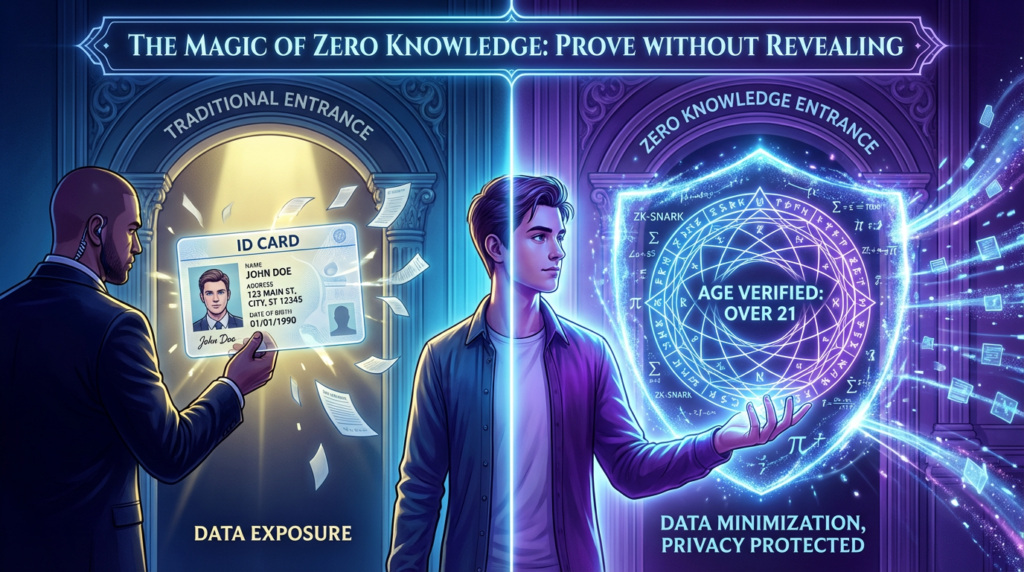
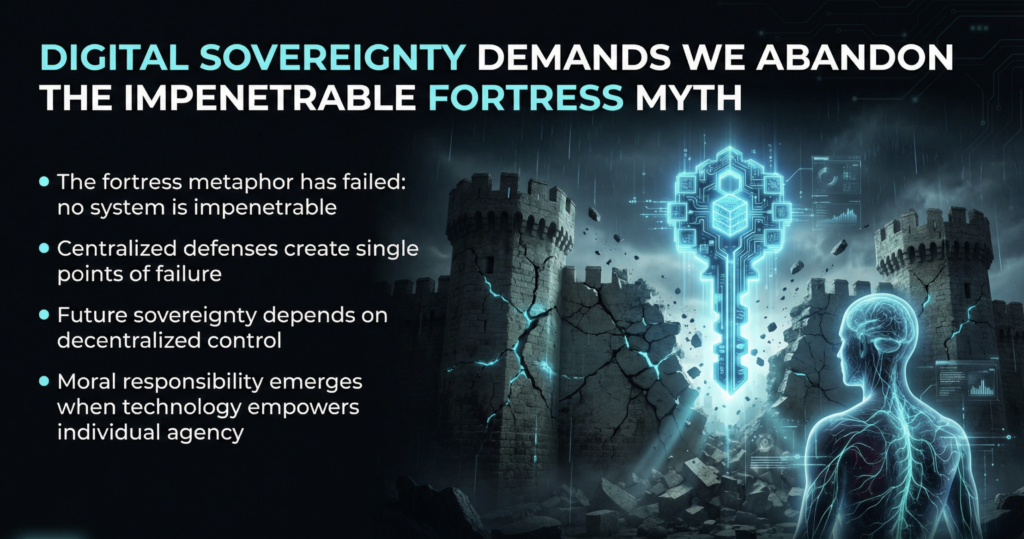
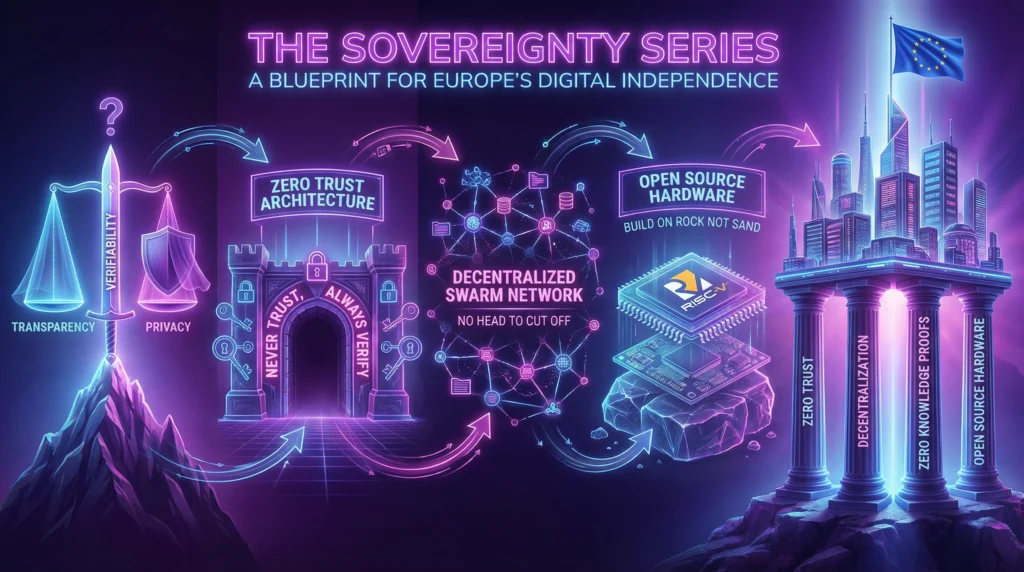
We have traveled a long and necessary road. We began by dismantling the myth of the impenetrable digital fortress, accepting the hard truth that all systems will be compromised. This led us to a new philosophy of Zero Trust and the privacy-preserving magic of Zero-Knowledge Proofs. We then scaled this philosophy into a resilient architecture through Decentralization, creating a system with no single point of failure. Finally, we anchored this entire structure in the physical world by demanding a verifiable foundation of open-source hardware.

Now, we assemble these foundational pillars into a coherent, actionable blueprint. This is not a vague wish list; it is a step-by-step roadmap for Europe to achieve genuine digital sovereignty and secure its independence from the technological and political influence of the United States, China, and any other global power.

The Goal: Sovereignty by Attraction

Let us be clear about the objective. The goal is not to build a “European internet” or a digital iron curtain. The goal is to build a digital infrastructure that is so demonstrably secure, resilient, efficient, and respectful of individual liberty that it becomes the global gold standard through voluntary adoption. This is Sovereignty by Attraction. We will not force others to follow our lead; we will build a system so superior that they will choose to.

The Four-Phase Roadmap to Independence

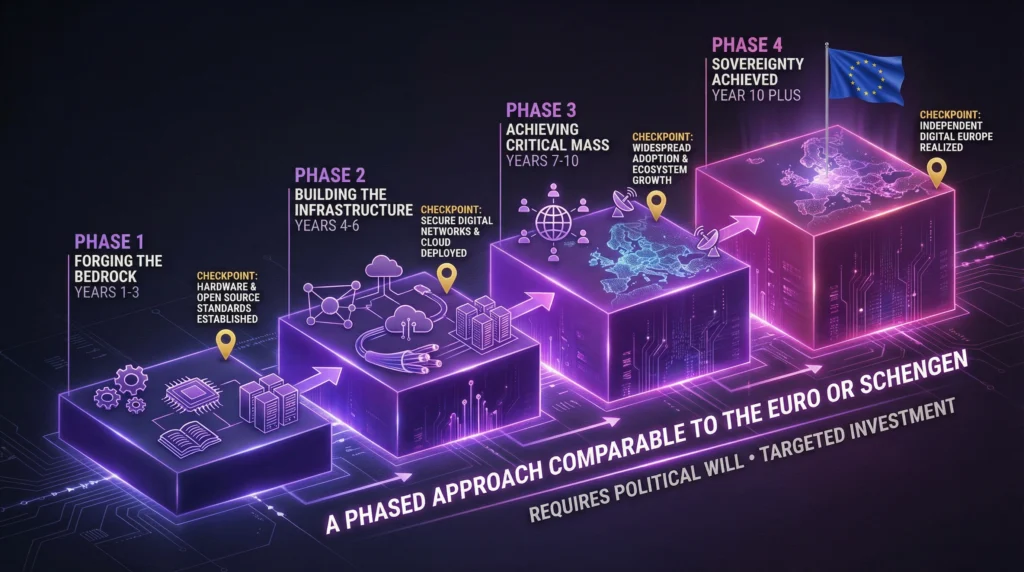
This is a decade-long project of immense ambition, comparable to the creation of the Euro or the Schengen Area. It requires political will, targeted investment, and a phased approach.

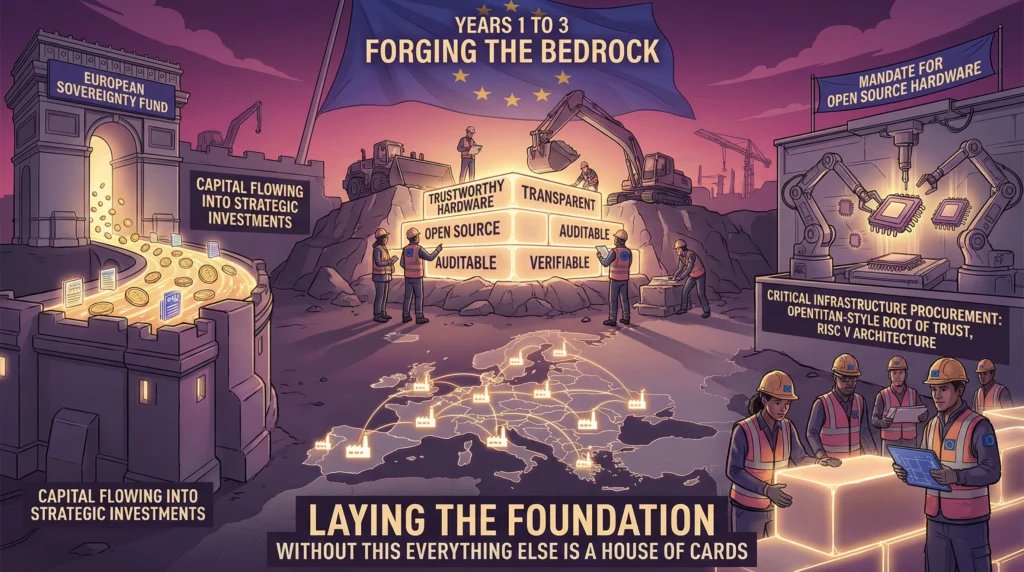
Phase 1: Forging the Bedrock (Years 1-3)

This initial phase is about laying a foundation of trustworthy hardware and low-level software. Without this, everything else is a house of cards.

  • Action 1: Establish the European Sovereignty Fund. This pan-European agency will be tasked with directing strategic investments into the core technologies outlined in this roadmap, ensuring a coordinated and efficient use of capital.
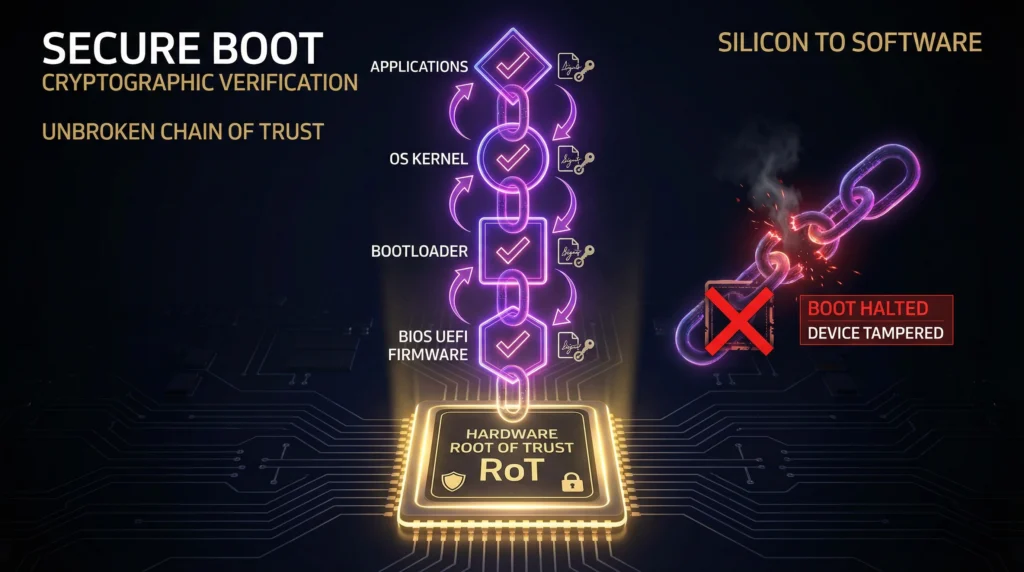
  • Action 2: Mandate Open-Source Hardware. All new public sector and critical infrastructure procurement across the EU must be mandated to use transparent, auditable hardware. This means processors based on the RISC-V open standard and verifiable OpenTitan-style Root of Trust chips. This single act will create a massive, unified market that will ignite a European open-source semiconductor industry.
  • Action 3: Fund a Sovereign Operating System. The Fund will finance the development of a secure, open-source European OS based on a microkernel design. This minimizes the attack surface and provides a hardened software layer to match the secure hardware.

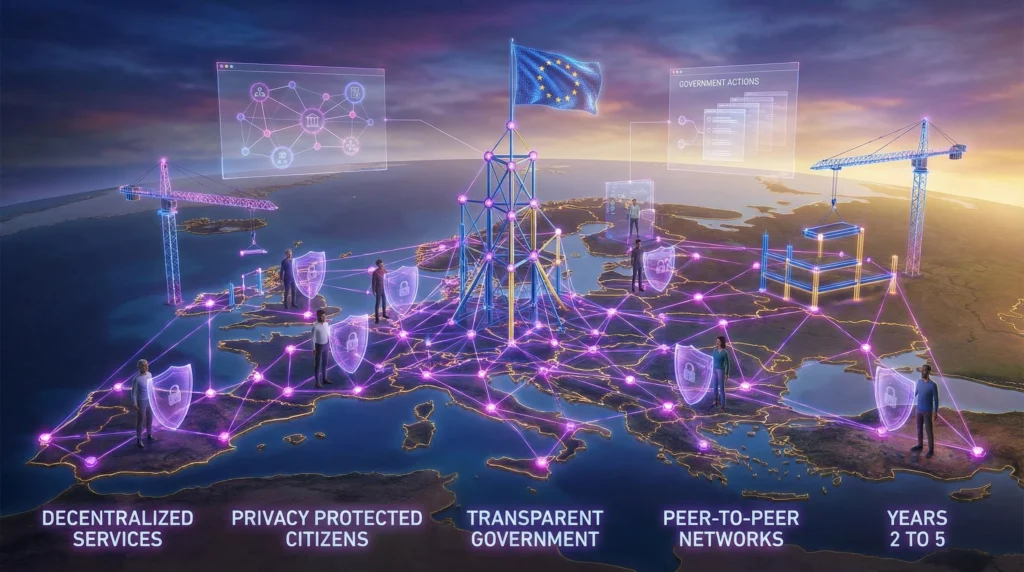
Phase 2: Building the Decentralized Public Square (Years 2-5)

With the foundation in place, we can begin building the core decentralized services that will replace the fragile, centralized models of today.

  • Action 1: Standardize Self-Sovereign Identity (SSI). Europe will develop and standardize a framework for decentralized identity based on open W3C standards. Citizens will be given control over their own digital identities through cryptographic wallets, not corporate or government databases.
  • Action 2: Construct the “Euro-Road.” Modeled on Estonia’s highly successful X-Road, this will be a decentralized, secure data exchange layer for the entire continent. It is the secure plumbing that allows different services to communicate without a central intermediary.
  • Action 3: Launch Citizen Wallet Pilots. To build public trust and demonstrate the benefits, the SSI wallets will be rolled out in pilot programs for non-critical services—digital library cards, university diplomas, proof of age for online services—all using Zero-Knowledge Proofs to protect privacy.

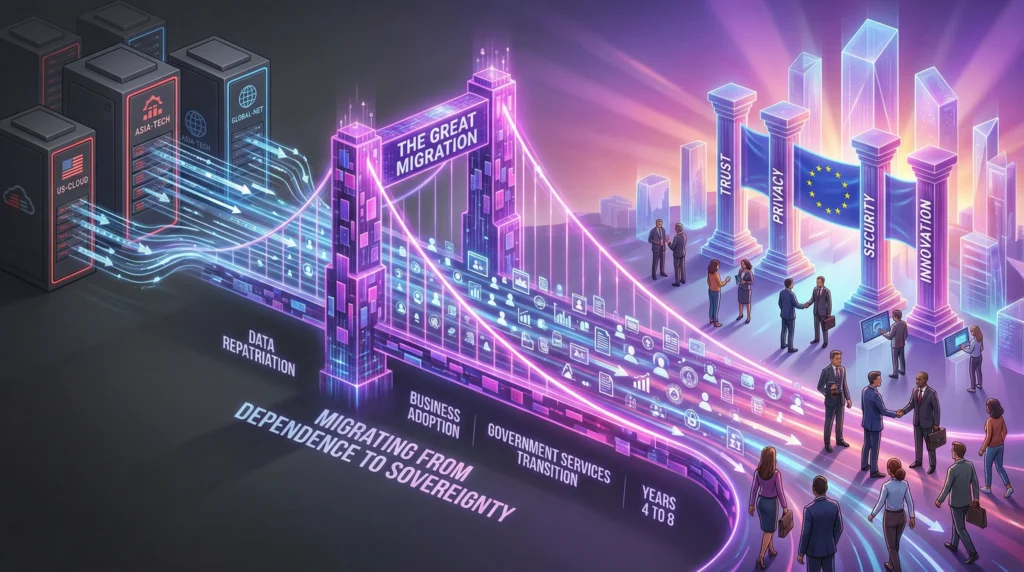
Phase 3: The Great Migration (Years 4-8)

This is where the new infrastructure begins to take over from the old.

  • Action 1: Phased Migration of Public Services. Government services will be migrated onto the new decentralized stack, starting with the least critical and moving methodically towards the most sensitive. Each successful migration will serve as a proof-of-concept, building momentum and confidence.
  • Action 2: Create the Sovereign Solutions Catalogue. A European catalogue of pre-vetted, open-source, and EuroStack-compliant software will be created. This will allow a public administration in Spain to easily and safely procure a secure e-voting solution developed by an SME in Finland, fostering a vibrant internal market.

Phase 4: Achieving Critical Mass (Years 8-12+)

In the final phase, the new ecosystem becomes self-sustaining and the dominant model.

  • Action 1: Decommission Legacy Systems. As the decentralized infrastructure proves its superior security, resilience, and cost-effectiveness, the old, centralized, and insecure legacy systems can be retired.
  • Action 2: Export the Model. Having built a demonstrably better system, Europe will not need to impose its standards on the world. Nations and corporations seeking true security and independence from the existing tech superpowers will voluntarily adopt the open standards and technologies of the “EuroStack.” This is the ultimate victory.

This is the path. It is long, it is difficult, and it will require immense political courage. But this is one of the very few ways to build a digital future for Europe that truly its our own – and we should not try to do it in the other way AGAIN …

As a reminder: Germany very generously volunteered as the world’s beta tester for the energy transition – away from something working into something else we do not have (as a working replacement)! The result? So educational that everyone else quietly closed the browser tab and said,“Wow. Fascinating. Let’s… not do that!”

Previous:
The Sovereignty Series (Part 5 of 5): The Blueprint for Independence

#DigitalSovereigntyRoadmap #EuropeanIndependence #TechnologySovereignty #SovereigntyByAttraction #DigitalInfrastructure #EuropeanTech #OpenSourceHardware #CriticalInfrastructure #DigitalAutonomy #TechSelfSufficiency #StrategicInvestment #DigitalAutonomy #TrustworthyTech #DigitalIndependence #TechStrategy

The Sovereignty Series (Part 4 of 5): Building on Bedrock, Not Sand

Sovereignty Series 13th Dec 2025 Martin-Peter Lambert
The Sovereignty Series (Part 4 of 5): Building on Bedrock, Not Sand

The Sovereignty Series (Part 4 of 5): Building on Bedrock, Not Sand

So far in our journey toward digital sovereignty, we have established a powerful new philosophy. We began by accepting that all systems will be compromised, forcing us to adopt a Zero Trust model of constant, cryptographic verification. We then made this model resilient by embracing Decentralization, creating a system with no single point of failure. We have designed a beautiful, secure house. But we have ignored the most important question of all: what is it built on?

All the sophisticated cryptography, decentralized consensus, and zero-knowledge proofs in the world are utterly meaningless if the hardware they run on is compromised. If the silicon itself is lying to you, then the entire structure is built on sand. For Europe to be truly sovereign, it cannot just control its software and its networks; it must be able to trust the physical chips that form the foundation of its digital world.

The Black Box Problem

Today, Europe’s digital infrastructure runs almost entirely on hardware designed and manufactured elsewhere, primarily in the United States and Asia. These chips are, for all intents and purposes, black boxes. Their internal designs are proprietary trade secrets, and their complex global supply chains are opaque and impossible to fully audit. This creates a terrifying and unacceptable vulnerability.

A malicious backdoor could be etched directly into the silicon during the manufacturing process. This kind of hardware-level compromise is the holy grail for an intelligence agency. It is persistent, it is virtually undetectable by any software, and it can be used to bypass all other security measures. It gives the manufacturer—and by extension, their government—a permanent “god mode” access to the system. Relying on foreign, black-box hardware for our critical infrastructure is the digital equivalent of building a national bank and letting a rival nation design the vault.

The Hardware Root of Trust

To solve this, we must establish trust at the lowest possible level. We need a Hardware Root of Trust (RoT)—a component that is inherently trustworthy and can serve as the anchor for the security of the entire system. A RoT is a secure, isolated environment within a processor that can perform cryptographic functions and attest to the state of the device. It is the first link in a secure chain.

When a device with a RoT powers on, it doesn’t just blindly start loading software. It begins a process called Secure Boot. The RoT first verifies the cryptographic signature of the initial firmware (the BIOS/UEFI). If and only if that signature is valid, the firmware is allowed to run. The firmware then verifies the signature of the operating system bootloader, which in turn verifies the OS kernel, and so on. This creates an unbroken, verifiable chain of trust from the silicon to the software. If any component in that chain has been tampered with, the boot process halts, and the system refuses to start.

The Only Solutions: Open-Source Hardware

But how can we trust the Root of Trust itself? If the RoT chip is another black box from a foreign supplier, we have only moved the problem down one level. The only way to truly trust the hardware is to be able to see exactly how it is designed. The only path to a verifiable Hardware Root of Trust is through open-source hardware.

This is where initiatives like RISC-V become critically important. RISC-V is an open-source instruction set architecture (ISA)—the fundamental language that a computer processor speaks. Because it is open, anyone can inspect it, use it, and build upon it. It removes the proprietary lock-in that has defined the semiconductor industry for decades.

Building on this, projects like OpenTitan are creating open-source designs for the silicon Root of Trust chips themselves. This means that for the first time, we can have a fully transparent, auditable security foundation for our computers. We can inspect the blueprints of the vault before we build it.

For Europe, this is not an academic exercise. It is a strategic imperative. Achieving digital sovereignty requires a massive investment in and a public procurement mandate for open-source hardware. We must foster a European semiconductor industry that is not just building chips, but building trustworthy chips based on transparent, open designs.

This is the bedrock. A verifiable, open-source hardware foundation is the only thing upon which a truly secure and sovereign digital infrastructure can be built. With this final piece in place, we are ready to assemble the full picture. In our concluding post, we will lay out the complete, step-by-step roadmap for Europe to achieve genuine digital independence.

Previous:
The Sovereignty Series (Part 2 of 5): Never Trust, Always Verify

Next:
The Sovereignty Series (Part 5 of 5): The Blueprint for Independence

Do It all on Our Own Hardware:

#HardwareRootOfTrust #OpenSourceHardware #RISCV #OpenTitan #SecureBoot #HardwareSecurity #DigitalSovereignty #SemiconductorSecurity #TrustworthyHardware #SupplyChainSecurity #HardwareBackdoors #CryptographicVerification #SecureEnclave #TrustedComputing #HardwareTransparency

The Sovereignty Series (Part 3 of 5): A System With No Single Point of Failure

Sovereignty Series 13th Dec 2025 Martin-Peter Lambert
The Sovereignty Series (Part 3 of 5): A System With No Single Point of Failure

The Sovereignty Series (Part 3 of 5): A System With No Single Point Of Failure

In this series, we first accepted the harsh reality that all digital systems will be breached. Then, we embraced a new security philosophy—Zero Trust—where we assume breach and verify everything, all the time. But even a perfect Zero Trust system can have a fatal flaw if it has a centralized core. If a system has a single brain, a single heart, or a single control panel, it has a single point of failure. And a single point of failure is a single point of control for an adversary.

To build a truly sovereign digital Europe, we must do more than just change our security philosophy. We must fundamentally change the architecture of our digital world. We must move from centralized systems to decentralized ones. We must build a system with no head to cut off.

The Centralization Trap

For the past thirty years, the internet has evolved towards centralization. Our data, our identities, and our digital lives are concentrated in the hands of a few massive corporations and government agencies. We have built a digital world that mirrors the structure of a medieval kingdom: a central castle (the data center) protected by high walls (the firewalls), where a single king (the system administrator) holds absolute power.

As we discussed in the first post, this model is a security nightmare. It creates a single, irresistible target for our adversaries. But the danger is even more profound. A centralized system is not just vulnerable to attack; it is vulnerable to control. A government can compel a company to hand over user data. A malicious insider can alter records. A single bug in the central system can bring the entire network to its knees. This is not sovereignty. It is dependence on a fragile, powerful, and ultimately untrustworthy core.

The Power of the Swarm: What is Decentralization?

Decentralization means breaking up this central point of control and distributing it across a network of peers. Instead of a single castle, imagine a thousand interconnected villages. Instead of a single king, imagine a council of elders who must reach a consensus. This is the difference between a single, lumbering beast and a resilient, adaptable swarm.

In a decentralized system, there is no single entity in charge. Data is not stored in one place; it is replicated and synchronized across many different nodes in the network. Decisions are not made by a single administrator; they are made through a consensus mechanism, where a majority of participants must agree on the state of the system. This architecture has profound implications for security and sovereignty.

Resilience by Design
A decentralized system is inherently resilient — since it does not have a centrally point of “all control“.

First, it has no single point of failure. If a dozen nodes in the network are attacked, flooded, or simply go offline, the network as a whole continues to function seamlessly. The system is anti-fragile; it can withstand and even learn from attacks on its individual components.

Second, it presents a terrible target for an adversary. Why would a state-level attacker spend millions of euros to compromise a single node in a network of thousands, when doing so grants them no control over the system and their malicious changes would be instantly rejected by the rest of the network? Decentralization diffuses the threat by making a successful attack economically and logistically infeasible.

Finally, it is resistant to corruption and coercion. In a decentralized system, there is no single administrator to bribe, no CEO to threaten, and no politician to pressure. To manipulate the system, you would need to corrupt a majority of the thousands of independent participants simultaneously—a near-impossible task. Trust is not placed in a person or an institution; it is placed in the mathematical certainty of the consensus algorithm.

The Unbreakable Record

This is made possible by the invention of distributed ledger technology (DLT), most famously represented by blockchain. A distributed ledger is a shared, immutable record of transactions that is maintained by a network of computers, not a central authority. Every transaction is cryptographically signed and linked to the previous one, creating a chain of verifiable truth that, once written, cannot be altered without being detected.

This technology allows us to have a shared source of truth without having to trust a central intermediary. It is the architectural backbone of a system where trust is distributed, and power is decentralized.

In our journey towards digital sovereignty, decentralization is not just a technical preference; it is a political necessity. It is the only way to build a digital infrastructure that is truly resilient, censorship-resistant, and free from the control of any single entity, whether it be a foreign power, a tech giant, or even our own government.

But a decentralized software layer is only as secure as the foundation it is built on. In our next post, we will travel to the very bottom of the stack and explore why true sovereignty must begin with the silicon itself: Hardware Security.

The Sovereignty Series (Part 2 of 5): Never Trust, Always Verify

Sovereignty Series 13th Dec 2025 Martin-Peter Lambert
The Sovereignty Series (Part 2 of 5): Never Trust, Always Verify

The Sovereignty Series (Part 2 of 5): Never Trust, Always Verify

In our last post, we made a stark declaration: all digital systems will eventually be compromised. The traditional “fortress” model of security is broken because it fails to account for the inevitability of human error, corruption, and deception. If we cannot keep attackers out, how can we possibly build a secure and sovereign digital Europe?

The answer lies in a radical new philosophy, one that is perfectly suited for a world of constant threat. It’s called Zero Trust, and its central mantra is as simple as it is powerful: Never trust, always verify – and it has been proven over decades now.

What is Zero Trust?

Zero Trust is not a product or a piece of software; it is a complete rethinking of how we approach security. It begins with a single, foundational assumption: the network is already hostile. There is no “inside” and “outside.” There is no “trusted zone.” Every user, every device, and every connection is treated as a potential threat until proven otherwise.

Imagine a world where your office building didn’t have a front door with a single security guard. Instead, to enter any room—even the break room—you had to prove your identity and your authorization to be there, every single time. That is the essence of Zero Trust. It eliminates the very idea of a trusted internal network. An attacker who steals a password or breaches the firewall doesn’t get a free pass to roam the system; they are still an untrusted entity who must prove their right to access every single file or application, one request at a time.

This continuous, relentless verification is the heart of the Zero Trust model. Trust is not a one-time event; it is a dynamic state that must be constantly re-earned. This makes the system incredibly resilient. A compromised device or a stolen credential has a very limited blast radius, because it does not grant the attacker automatic access to anything else.

The Magic of Zero Knowledge: Proving Without Revealing

But Zero Trust on its own is not enough. If every verification requires you to present your sensitive personal data—your driver’s license, your passport, your date of birth—then we have simply moved the problem. We have replaced a single, high-value central database with thousands of smaller, but still sensitive, data transactions. This is where a revolutionary cryptographic technique comes into play: Zero-Knowledge Proofs (ZKPs).

ZKPs are a form of cryptographic magic. They allow you to prove that you know or possess a piece of information without revealing the information itself.

Think about it like this: you want to prove to a bouncer that you are over 21. In the old world, you would show them your driver’s license, which reveals not just your age, but your name, address, and a host of other personal details. In a world with ZKPs, you could simply provide a cryptographic proof that verifiably confirms the statement “I am over 21” is true, without revealing your actual date of birth or any other information. The bouncer learns only the single fact they need to know, and nothing more.

This is a game-changer for privacy and security. It allows us to build systems where verification is constant, but the exposure of personal data is minimal. We can prove our identity, our qualifications, and our authorizations without handing over the raw data to a hundred different services. It is the ultimate expression of “data minimization,” a core principle of Europe’s own GDPR.

The Foundation of True Sovereignty

Together, Zero Trust and Zero-Knowledge Proofs form the bedrock of a truly sovereign digital infrastructure. They create a system that is secure not because it is impenetrable, but because it is inherently resilient. It is a system that does not rely on the flawed assumption of human trustworthiness, but on the mathematical certainty of cryptography.

By building on these principles, Europe can create a digital ecosystem that is both secure and respectful of privacy. It can build a system where citizens control their own data and where trust is not a commodity to be bought or sold, but a verifiable fact.

But this is only part of the story. A Zero Trust architecture cannot exist in a vacuum. It must be built on a foundation that is equally resilient. In our next post, we will explore the critical role of Decentralization in building a system with no single point of failure.

#ZeroTrustArchitecture #NeverTrustAlwaysVerify #NeverTrust #AlwaysVerify #ZeroTrustSecurity #ZeroKnowledgeProofs #ContinuousVerification #DigitalSovereignty #CryptographicVerification #DataMinimization #PrivacyPreserving #ZeroTrustImplementation #ResilientSecurity #TrustedNetwork #ContinuousAuthentication #ZeroTrustFramework #IdentityVerification

Previous:
The Sovereignty Series (Part 1 of 5): The Myth of the Impenetrable Fortress

Next:
The Sovereignty Series (Part 3 of 5): A System With No Single Point of Failure

The Sovereignty Series (Part 1 of 5): The Myth of the Impenetrable Fortress

Sovereignty Series 11th Dec 2025 Martin-Peter Lambert
The Sovereignty Series (Part 1 of 5): The Myth of the Impenetrable Fortress

The introduction of The Sovereignty Series part 1 delves into the concept of cybersecurity long viewed as a fortress. For decades, we’ve been told a simple story about cybersecurity: it’s like building a fortress. To stay safe, we must build higher walls, deeper moats, and stronger gates than our adversaries. We invest in firewalls, intrusion detection systems, and complex passwords—all in an effort to keep the bad guys out. This model, known as perimeter security, has dominated our thinking for a generation. And for a generation, it has been failing. In The Sovereignty Series part 1, we begin to question these outdated models.

In the quest for true digital sovereignty, for an independent Europe that controls its own digital destiny, our first and most critical step is to abandon this flawed metaphor. We must accept a fundamental, uncomfortable truth. All systems will be compromised. As explained in The Sovereignty Series part 1, it is not a matter of if, but when.

The Human Element: The Ghost in the Machine

The greatest vulnerability in any digital fortress is not in the code or the cryptography; it is in the people who build, maintain, and use it. The human element is a permanent, unsolvable security flaw. Why?

First, humans make mistakes. A simple misconfiguration, a bug in a line of code, or a forgotten security patch—these are the unlocked backdoors through which attackers waltz. The Sovereignty Series part 1 highlights how, in a complex system, the number of potential mistakes is nearly infinite.

Second, humans are susceptible to love and fear. In a centralized system, a handful of administrators hold the keys to the kingdom. These individuals become high-value targets for bribery, extortion, or blackmail. The Families of those even more so! A foreign power doesn’t need to crack a complex algorithm. They can simply buy the password from a worried parent getting a call from his wife. This makes the entire system fragile, resting on the assumption of unwavering human integrity. An assumption that history has repeatedly proven false. He who ever holds the key to the caste, will be a prime target for forces unbound by moral.

Finally, humans are vulnerable to deception. Phishing attacks, which trick users into revealing their credentials, remain one of the most effective infiltration methods. This is because they target human psychology, not technical defenses. No firewall can patch human curiosity or fear. The Series part 1 on sovereignty intensively highlights this aspect.

Finally, a little nudge, a little help here or there, might have a very big effect. Once the state would have central control and a real intractability for low transaction sums, the contradictions in a central system are absolute. A lot of untraceable little transactions will make a theft untraceable.

A central point of being able to trace everything will make the system worse. Since you only have to corrupt one person. Just by knowing who has what where, you can always visit them in the night. And have him gladly pay for the life of his loved ones — a little bit of special motivation granted. But those individuals are good and ruthless in ways of making you happily pay, as explained in The Sovereignty Series part 1.

The Centralization Problem: All Our Eggs in One Broken Basket

Our current digital infrastructure is overwhelmingly centralized. Our data, our identities, and our communications are stored in massive, centralized databases. These are controlled by a few large corporations or government agencies. This architectural choice creates two critical vulnerabilities.

First, it creates a single point of failure. When all your critical data is in one place, that place becomes a target of immense value. The Sovereignty Series part 1 also discusses that a successful breach at the center means a complete, catastrophic failure for the entire system. The attacker doesn’t need to defeat a thousand different defenses. They only need to find one way into the one place that matters.

Second, it makes these systems an irresistible target. For state-sponsored hackers, criminal organizations, and industrial spies, a centralized database of citizen information, financial records, or intellectual property is the ultimate prize. The potential reward is so great that it justifies an almost unlimited investment in time and resources to breach it.

A New Philosophy: Assume Breach

If the fortress model is broken, if the human element is an unsolvable vulnerability, and if centralization creates irresistible targets, then we must conclude that the goal of preventing a breach is futile. In The Series focused on sovereignty, part 1 reveals that the most sophisticated defenses will eventually be bypassed. The most loyal administrator can be compromised. The most secure perimeter will, one day, be crossed.

This realization is not a cause for despair, but for a radical shift in thinking. If we cannot stop attackers from getting in, we must design systems that are secure even when they are compromised. We must build a world where an attacker who has breached the perimeter finds they have gained nothing of value and can do no harm. Stay tuned for further insights in The Sovereignty Series part 1, where this topic is further explored.

This is the foundational principle of a truly sovereign digital future. It requires us to throw out the old blueprints and start fresh. In our next post, we will explore the revolutionary security philosophy that makes this possible: Zero Trust.

Starting with the the goal in mind!

Sovereignty Series 11th Dec 2025 Martin-Peter Lambert
Starting with the the goal in mind!

Starting with the goal in mind, we must consider the framework for a sovereign digital Europe!

The Sovereignty Series (Bonus Chapter): The Verifiability Conundrum

We have built a framework for Europe’s digital sovereignty based on a powerful idea: mutual protection through verification. By embracing the Fallibility Principle—that no one is infallible—we have designed a system of Zero Trust Governance that protects the public from the abuse of power, and simultaneously protects those in power from false accusations, coercion, and risk. This is achieved by replacing trust with cryptographic proof in our digital sovereignty framework.

But this elegant solution creates a profound and complex challenge: the Verifiability Conundrum. A system that can verify everything can also see everything. How do we build a system that delivers radical accountability without becoming a tool of radical surveillance? How do we protect everyone, powerful and powerless alike, without making everyone transparent?

The Double-Edged Sword of Immutability

The core of our proposed system is an immutable, distributed ledger—a permanent, unchangeable record of official actions. This ledger framework allows the sovereign digital Europe initiative to protect a public official from false accusations; they can point to the ledger as a definitive, verifiable alibi. It is also the mechanism that convicts a corrupt official; the ledger provides an undeniable trail of their misconduct.

But this double-edged sword cuts both ways. If every official action is recorded, what about the actions of ordinary citizens? Does a request for a public service, a visit to a government website, or an application for a permit also become a permanent, immutable record? If so, we have not eliminated the potential for a surveillance state; we have perfected it. We have created a system that is technically incorruptible but potentially socially oppressive.

This is the heart of the conundrum. We need verifiability to protect against the fallibility of the powerful, but universal verifiability threatens the privacy and freedom of the powerless.

Resolving the Conundrum: Asymmetric Verifiability and Zero-Knowledge Proofs

The solution is not to abandon verifiability, but to apply it asymmetrically. We must build a system where the actions of the powerful are transparent, while the identities and data of the powerless are protected. This is not a contradiction; it is a design choice, enabled by modern cryptography.

  1. Asymmetric Verifiability: We must distinguish between public acts and private lives within our sovereign digital Europe framework. The actions of an elected official or public servant, when performed in their official capacity, are public acts. They should be transparent and recorded on an immutable ledger for all to see. This is the price of power and the foundation of accountability. The actions of a private citizen, however, are private; they should not be recorded on a public ledger.
  2. Zero-Knowledge Proofs (ZKPs): This is the cryptographic tool that makes Asymmetric Verifiability possible. As we discussed, ZKPs allow an individual to prove a fact is true without revealing the underlying data. A citizen can prove they are eligible for a government service (e.g., they are a resident, they are over 65, they meet an income requirement) without revealing their address, their exact age, or their salary. The government system can verify the eligibility without ever seeing or storing the personal data. The citizen’s interaction is verifiable, but their privacy is preserved within Europe’s digital sovereignty framework.

A System of Rights, Not a System of Surveillance

This model allows us to build a system that protects rights, not just data.

  • The Right to Accountability: The public has a right to a verifiable record of the actions of its servants. Asymmetric Verifiability delivers this within the sovereign digital Europe framework.
  • The Right to Privacy: Citizens have a right to interact with their government without having their lives turned into an open book. Zero-Knowledge Proofs deliver this.

This resolves the conundrum. We can have a system that is both radically transparent in its exercise of power and radically private in its treatment of citizens. The ledger records that a verified, eligible citizen received a service, but it does not record who that citizen was. The ledger records that a public official authorized a payment, and it records their name for all to see.

The New Social Contract

This is more than a technical architecture; it is a new social contract. It is a system that acknowledges the Fallibility Principle and designs for it. It protects leaders from the impossible burden of being perfect, and it protects the public from the inevitable consequences of that imperfection.

It is a system where a leader’s best defense is the truth, and where the public’s best defense is a system that makes that truth undeniable. It is a difficult, complex path, but it is the only one that leads to a framework for a sovereign digital Europe that is both secure and free.

#DigitalSovereignty #EU #Privacy #Accountability #ZeroKnowledge #Cryptography #FutureOfEurope #DigitalIdentity

What to do when your CDN Fails

Resilience 9th Dec 2025 Martin-Peter Lambert
What to do when your CDN Fails

The Wake – Up! It’s happening again –
What to do when your CDN Fails

Surprise: The Day Cloudflare Stopped

It happened twice in two weeks. On December 5th and again in late November 2025, Mi Cloudflare — one of the world’s largest content delivery networks—experienced critical outages that briefly took portions of the internet offline. For millions of users, websites displayed error pages. For business owners, those minutes felt like hours. In situations like these, it’s crucial to know what to do when your CDN fails. For engineering teams, it sparked an urgent question: Are we really protected if our CDN is our only shield?

The answer is uncomfortable: most companies are not.

Figure 1: Traditional CDN architecture—single point of failure

If you operate a business whose entire web stack depends on a single CDN, this post is for you. We will walk through why single-CDN architectures are brittle at scale, and introduce two proven approaches to eliminate the risk: CDN bypass mechanisms and multi-CDN failover. By the end, you will understand how to design systems that keep serving your users even when a major vendor goes dark.


The Problem: Single Point of Failure at Global Scale

How a Single CDN Becomes Your Weakest Link

Most companies adopt a CDN for good reasons: faster content delivery, DDoS protection, global edge caching, and WAF (Web Application Firewall) services. The architecture looks simple and clean:

User → CDN → Origin Server

The CDN becomes the front door to everything. DNS resolves to the CDN’s IP addresses. The CDN caches static assets, forwards API traffic, and enforces security policies. The origin sits behind, protected from direct access.

This design works beautifully—until the CDN has a problem.

What Happened During the Outages

In both the November and December 2025 Cloudflare incidents, a configuration error or internal incident at Cloudflare’s control plane caused cascading failures across their global network. For affected customers, the symptoms were clear:

  • All traffic to Cloudflare-fronted services returned 5xx errors
  • DNS queries continued to resolve, but reached an unreachable service
  • Origin servers remained healthy and online, but were invisible to end users because all paths led through the CDN
  • Workarounds required manual intervention—logging into the CDN dashboard (if reachable), changing DNS, or calling support during an outage

The irony is sharp: the infrastructure designed to provide high availability became the source of unavailability.

Figure 2: Multi-CDN failover strategy—removes single point of failure

The Business Impact

For a SaaS company with $100k monthly revenue, even 15 minutes of CDN-induced downtime can mean:

  • Lost transactions: $100k ÷ 43,200 seconds × 900 seconds ≈ $2,000+
  • Customer trust erosion and support tickets
  • Potential SLA breaches and compensation obligations
  • Reputational damage in competitive markets

For fintech, healthcare, and e-commerce, the costs are exponentially higher. And yet, many teams assume “the CDN vendor will not fail” because they have redundancy internally.

They do. But you depend on them all the same.


Solution 1: CDN Bypass—The Emergency Exit

Why Bypass Matters

A CDN bypass is not about abandoning your primary CDN during normal operations. Instead, it is a controlled, secure pathway to your origin server that activates only when the CDN itself becomes the problem.

Think of it like a fire exit: you do not walk through it every day, but it saves lives when the main entrance is blocked.

How CDN Bypass Works

The architecture operates in layers:

Layer 1: Health Monitoring
Continuous health checks on your primary CDN—latency, error rate, reachability, and geographic coverage. If thresholds are breached (e.g., 5% of regions report 5xx errors or p95 latency > 2 seconds), an alert is triggered and bypass logic is engaged.

Layer 2: Dual Routing
You maintain two DNS records:

  • Primary: Points to your CDN (used under normal conditions)
  • Secondary / Bypass: Points to your origin or a hardened entry point (activated only on CDN failure)

Switching between them is automated—no manual DNS editing during an incident.

Layer 3: Origin Hardening
Direct access to your origin is dangerous if uncontrolled. You must protect it with:

  • IP Allow-lists: Only accept requests from your bypass management service or approved monitoring endpoints
  • VPN / Private Connectivity: Route bypass traffic through a secure tunnel (e.g., AWS PrivateLink, Azure Private Link)
  • WAF and Rate Limiting: Apply the same security policies you had at the CDN to the direct path
  • Header Validation: Ensure only traffic from your bypass orchestration layer is accepted

Layer 4: Gradual Traffic Shift
Once bypass is active, traffic does not all migrate at once. Instead:

  • Begin with 5-10% of traffic on the direct path
  • Monitor for errors and latency
  • Ramp up to 100% over 5-10 minutes
  • If issues arise, revert to CDN automatically

Figure 3: Origin server protection during bypass mode

The Bypass Playbook

A well-designed bypass system includes:

  1. Automated Detection: Monitor CDN health continuously; do not wait for customer complaints
  2. Runbook Automation: Execute failover logic without human intervention—speed is critical
  3. Graceful Degradation: Bypass mode may not include all CDN features (like edge caching). Accept lower performance to avoid complete outage
  4. Recovery and Rollback: Once the CDN recovers, automatically shift traffic back after a safety window
  5. Incident Logging: Record what happened, when, and why for post-incident review

Who Should Use Bypass?

Bypass is ideal for:

  • E-commerce platforms, SaaS applications, and marketplaces where every minute of downtime is quantifiable revenue loss
  • Services with strict SLAs or compliance requirements (fintech, healthcare)
  • Teams with engineering capacity to operate a secondary resilience layer
  • Businesses that can tolerate reduced performance (no edge caching, longer latency) for short periods to stay online

It is not a replacement for a good CDN, but a safety net when your primary CDN fails.


Solution 2: Multi-CDN with Intelligent Failover

Moving Beyond Single-Vendor Lock-In

While CDN bypass solves the immediate problem, a more comprehensive approach is to distribute load across multiple CDN providers. This removes the single point of failure entirely and offers additional benefits: better performance, cost negotiation, and the ability to choose the best CDN for each use case.

Multi-CDN Architecture

In a multi-CDN setup, traffic is shared between two or more independent CDN providers:

Typical Stack:

  • Primary CDN: Cloudflare (or AWS CloudFront, Akamai, etc.) — handles 60-70% of traffic
  • Secondary CDN: Another global provider with complementary strengths — handles 30-40% of traffic
  • Routing Layer: DNS-based or HTTP-based intelligent routing that steers traffic based on real-time metrics
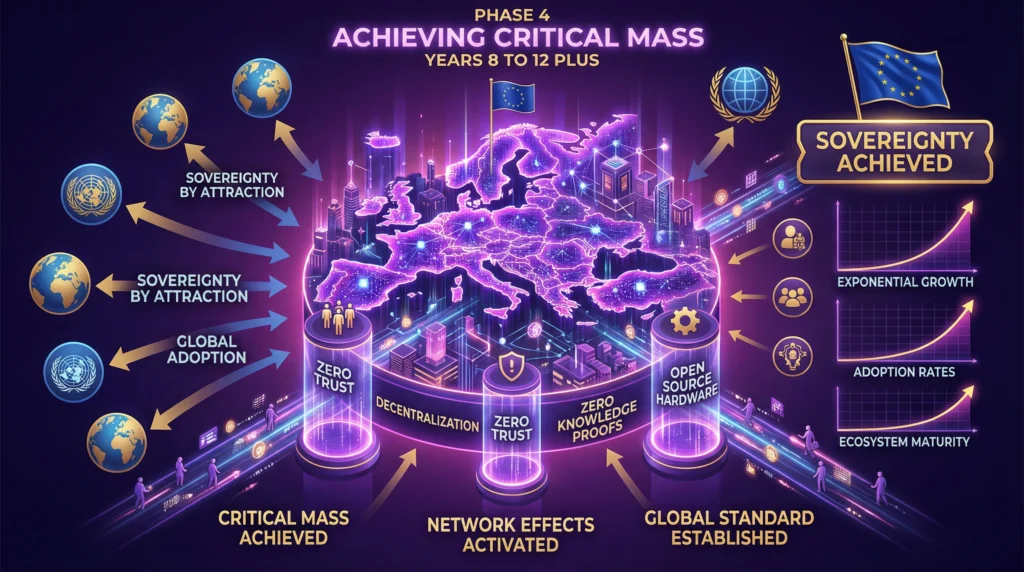
Figure 4: Network resilience with multi-CDN anomaly detection

How Intelligent Routing Works
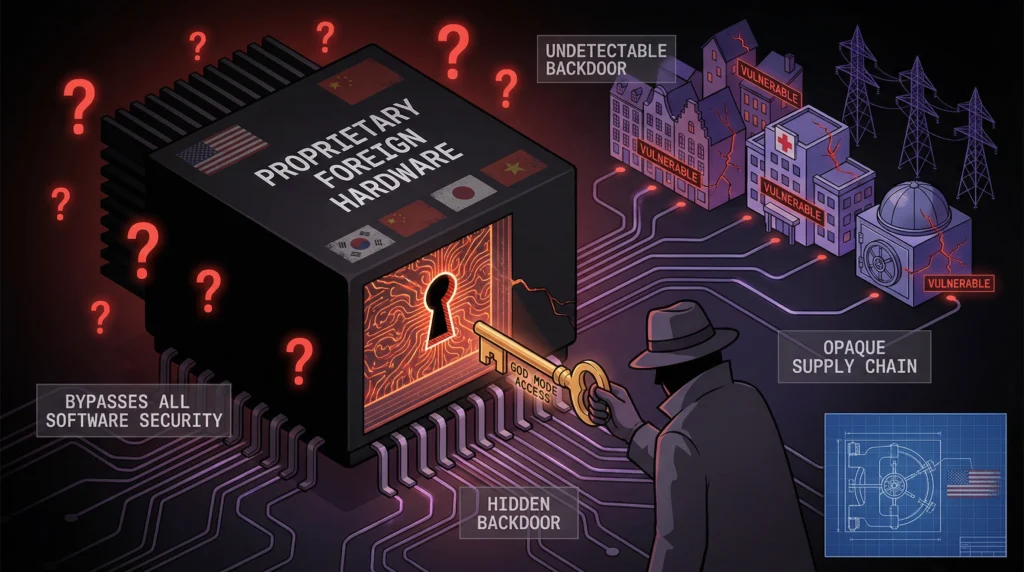
Instead of static 50/50 load balancing, smart routing adjusts in real time:

Real-Time Metrics:

  • Latency: Route users to the CDN with lower p95 latency in their region
  • Error Rate: If one CDN returns 5xx errors >1%, shift traffic away automatically
  • Cache Hit Ratio: Some CDNs cache better for your content type; route accordingly
  • Regional Availability: If a CDN loses an entire region, route around it

Routing Methods:

  1. DNS-Level (GeoDNS): Return different CDN A records based on user geography and health checks. Simplest but less granular
  2. HTTP-Level (Application Layer): A small proxy or load balancer sits before both CDNs, making per-request decisions. More powerful but adds latency
  3. Dedicated Multi-CDN Platforms: Third-party services (IO River, Cedexis, Intelligent CDN) manage routing and billing across multiple CDNs as a managed service

Practical Setup Example

DNS Query: cdn.example.com

Resolver checks health of both CDNs

CDN-A: Latency 50ms, Error Rate 0.1%, Status OK
CDN-B: Latency 120ms, Error Rate 0.2%, Status OK

Decision: Route to CDN-A

User downloads content from CDN-A at 50ms

If CDN-A later spikes to 2% error rate:

Next query routes to CDN-B instead
Existing connections may drain gracefully
Traffic rebalances to healthy provider

Cache Warm-up and Cold Starts

One challenge with multi-CDN is that both CDNs must be warmed with your content. If you only route 30% of traffic to CDN-B, it will have more cache misses and higher latency to origin during the failover period.

Solutions:

  • Dual Caching: Proactively push your most critical assets to both CDNs daily
  • Warm Traffic: Send a small amount of traffic (10-20%) to the secondary CDN constantly to keep cache warm
  • Keep-Alive Connections: Maintain a baseline of requests to the secondary CDN even if not actively used

Unified Security and Configuration

For multi-CDN to work without surprising users, security policies must be consistent across both providers:

  • SSL/TLS Certificates: Same domain, same cert on both CDNs
  • WAF Rules: Mirror your DDoS and WAF policies between providers. A bypass to CDN-B should not have weaker protection
  • Cache Headers and Directives: Both CDNs should honor the same TTL and cache rules
  • Custom Headers and Transformations: If you inject headers or modify responses, do it consistently

Figure 5: Failover system in cloud—automatic traffic rerouting

Who Should Use Multi-CDN?

Multi-CDN is ideal for:

  • Large enterprises serving global traffic where downtime has severe financial impact
  • Companies with high volumes that can negotiate favorable rates with multiple providers
  • Organizations that want to avoid vendor lock-in and maintain negotiating leverage
  • Businesses with diverse content types (streaming, APIs, static, dynamic) that benefit from specialized CDNs

Multi-CDN is more complex than single-CDN, but also more resilient and often cost-effective at scale.


Comparison: Single CDN, Bypass, and Multi-CDN

AspectSingle CDN OnlyCDN + BypassMulti-CDN
Availability During CDN OutageHigh downtime riskCritical paths onlineAuto-rerouted
Setup ComplexityLowMediumHigh
Operational OverheadLowMediumMedium-High
Cost$$$$$$$$-$$$$
Performance (Normal State)HighHighHigh (optimized)
Performance (Bypass/Failover)N/AReduced (no edge cache)Maintained
Security ConsistencyVendor-managedManual hardening neededMust be unified
Time to Restore ServiceMinutes to hoursSeconds (automatic)Milliseconds (automatic)
Vendor Lock-In RiskHighMediumLow

Table 1: Table 1: Comparison of CDN resilience strategies


Designing for Your Organization

Assessment Questions

Before choosing bypass, multi-CDN, or both, ask yourself:

  1. What is the cost of 1 hour of downtime? If it exceeds $10k, invest in resilience now.
  2. Do we have geographic concentration risk? If most users are in one region where one CDN has weak coverage, diversify.
  3. What is our incident response capability? Bypass requires automated systems; multi-CDN requires sophisticated routing. Do we have the team?
  4. Is vendor lock-in a concern? If yes, multi-CDN reduces risk.
  5. What is our compliance posture? Some industries require redundancy by regulation. Build it in from the start.

Phased Implementation Roadmap

Phase 1 (Weeks 1-4): Foundation

  • Audit current CDN configuration and dependencies
  • Identify critical user journeys (auth, checkout, APIs)
  • Design origin hardening and bypass playbooks
  • Set up continuous health monitoring

Phase 2 (Weeks 5-8): Bypass Ready

  • Implement health checks and alerting
  • Build DNS failover automation
  • Harden origin server access controls
  • Test bypass in staging; verify automatic recovery

Phase 3 (Weeks 9-12): Multi-CDN (Optional)

  • Onboard secondary CDN provider
  • Replicate security and cache configuration
  • Deploy intelligent routing layer
  • Gradual traffic shift and optimization

Each phase is low-risk if executed in staging first.


The Role of Managed Services

Building and operating these resilience layers yourself is possible but demanding. It requires:

  • Deep DNS and networking expertise
  • Continuous monitoring and alerting systems
  • Incident response runbooks and automation
  • Compliance and audit trails
  • 24/7 on-call coverage for failover management

This is where specialized vendors and managed services add value. Services like Insight 42 help engineering teams:

  • Design resilient CDN architectures tailored to your traffic patterns and risk tolerance
  • Implement automated bypass and multi-CDN routing without reinventing the wheel
  • Operate these systems with 24/7 monitoring, alerting, and runbook execution
  • Optimize performance and cost by continuously tuning routing policies and cache behavior
  • Certify compliance and SLA adherence through detailed incident logging and remediation

A managed CDN resilience service typically pays for itself within one incident cycle by preventing revenue loss and reducing engineering overhead.


Next Steps: Start Your Assessment

The Cloudflare outages of November and December 2025 are not anomalies—they are signals that single-CDN dependency is a business risk, not a technical oversight.

You can take action today:

  1. Run a scenario test: Imagine your primary CDN goes offline right now. Could your engineering team route traffic to an alternate path in under 5 minutes? If not, you have a gap.
  2. Calculate your downtime cost: Quantify what one hour of unavailability means to your business in lost revenue, SLA penalties, and reputational damage.
  3. Engage a resilience partner: Schedule a consultation to walk through bypass and multi-CDN options tailored to your infrastructure and risk profile.

We offer a free CDN Resilience Assessment where we review your current architecture, simulate a CDN failure, quantify business impact, and outline a concrete 12-week roadmap to eliminate single points of failure.

No vendor lock-in. No long contracts. Just pragmatic engineering that keeps your services online.

For more information contact us

Related Articles:
[1] The Sovereignty Series (Part 1 of 5): The Myth of the Impenetrable Fortress
[2] Microsoft Fabric: (Part 2 of 5)
[3] Microsoft Fabric: (Part 3 of 5)
[4] Cloud Adoption Migration