
Part 2 of 5 in “Cloud Adoption Framework in Practice”. Previous: Wave 1: Align · Next: Wave 3: Prepare.
With the strategic foundation set in Wave 1, it’s time to translate your “why” into a concrete “how.” Wave 2 is where the high-level vision transforms into an actionable blueprint. This is the master plan for your migration, detailing the partners, skills, and architecture required for a successful journey. Skipping this wave is like starting a cross-country road trip with no map, no driver, and no car.
This wave is about making critical decisions that will shape the technical and financial realities of your cloud environment for years to come. It ensures you have the right team, the right partners, and the right design before you begin the heavy lifting of migration.
Step 1: Select Cloud Vendors & Partners
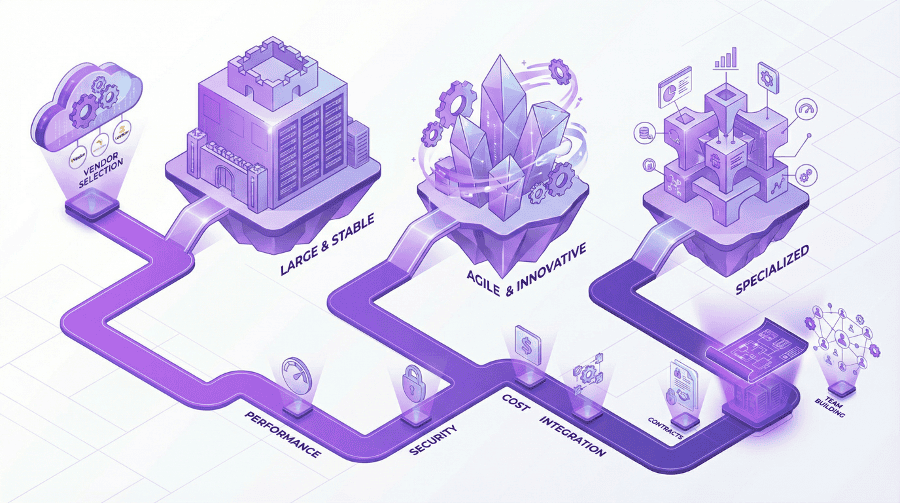
Choosing a cloud provider is one of the most significant decisions in the entire process. This step leverages the Decision Matrix from Wave 1 to objectively evaluate the major cloud platforms (AWS, Azure, Google Cloud) and, where sovereignty requires it, European platforms such as the AWS European Sovereign Cloud, STACKIT or IONOS against your specific business and technical requirements. Key evaluation criteria include:
- Service Offerings: Do their services match your needs for compute, data, AI/ML, etc.?
- Cost Model: How does their pricing structure align with your financial projections?
- Compliance & Security: Can they meet your industry-specific regulatory requirements (BSI C5, NIS2, GDPR)?
- Ecosystem & Support: How strong is their partner network and enterprise support?
- Exit: How realistic is leaving, and what would it cost?
The output is a Vendor Selection Document that justifies your choice and outlines the partnership model. For the sovereignty dimension of this decision see sovereign cloud consulting.
Step 2: Build a Cloud Center of Excellence (CCoE)
A successful cloud programme is not an IT-only initiative; it’s a company-wide transformation. The Cloud Center of Excellence (CCoE) is the cross-functional team responsible for leading this change. This is your core team of cloud champions, comprised of individuals from:
- IT/Operations: To manage infrastructure and reliability.
- Security: To embed security into every stage.
- Finance (FinOps): To ensure financial accountability and cost optimisation.
- Application Development: To guide cloud-native development practices.
This team will create the CCoE Charter, defining their roles, responsibilities, and governance model.
Step 3: Design the Target Architecture
This is where the architectural vision comes to life. Based on the application portfolio analysis and vendor selection, your team will design the high-level Target Architecture. This blueprint defines how your applications will run in the cloud. It includes designing the landing zone—a pre-configured, secure, and scalable environment where you can deploy your workloads. This design must account for networking, identity and access management, security controls, key management and operational monitoring.
Step 4: Develop the Migration Roadmap
With the architecture defined, you can now create a detailed Migration Roadmap. This isn’t a simple list of applications; it’s a strategic plan that sequences the migration in logical waves or phases. The roadmap prioritises applications based on business impact, technical feasibility, and dependencies. It outlines which applications will be migrated when, using which of the 5Rs strategies, and defines the expected timeline and resource requirements for each phase.
Step 5: Create the Skills Development Plan
Your existing team may not have all the skills required to operate effectively in the cloud. This step involves conducting a skills gap analysis and creating a comprehensive Skills Development Plan. This plan outlines the training, certification, and hiring strategies needed to build the necessary cloud competencies within your organisation. Investing in your people is just as critical as investing in the technology.
By the end of Wave 2, you have a complete flight plan. You know who your partners are, who is on the team, what the destination looks like, how you’re going to get there, and that your crew is trained for the journey. This detailed preparation is what separates a smooth, predictable migration from a turbulent, costly one.
Next: Wave 3: Prepare for Execution – De-Risking the Migration · Service: cloud migration consulting