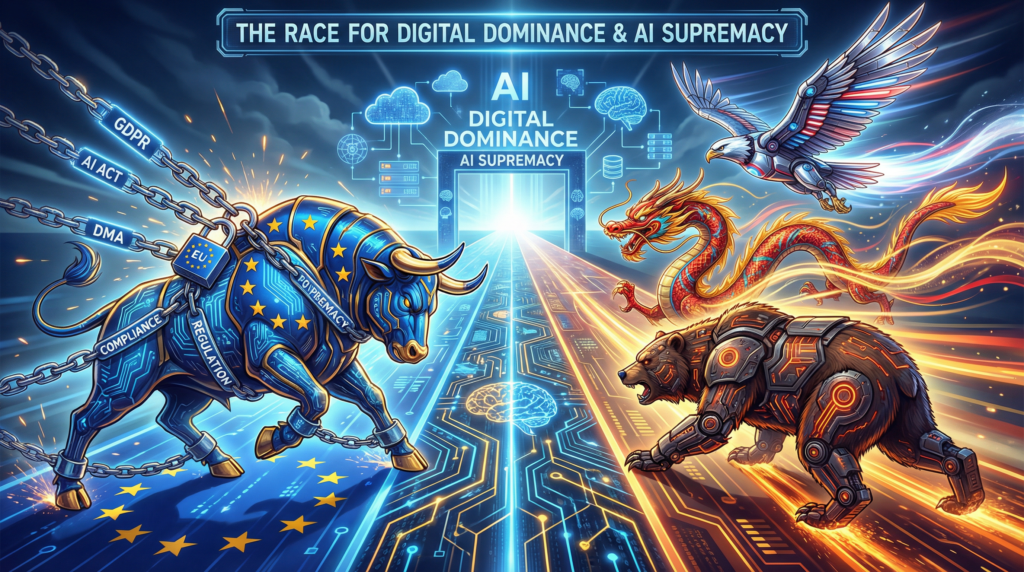
Unleashing Innovation in the Age of Integrated Platforms – and Rediscovery of Free Discovery!
In the global arena of technological dominance, the United States soars as the Eagle, Russia stands as the formidable Bear, and China commands as the mythical Dragon. The European Union, with its rich history of innovation and immense economic power, is the Bull—a symbol of strength and potential, yet currently tethered by its own well-intentioned constraints. This post explores how the EU can unleash its inherent creativity and forge a new path to digital sovereignty, not by abandoning its principles, but by embracing a new model of innovation inspired by the very giants it seeks to rival.
The Palantir Paradigm: Integration as the New Frontier
At the heart of the modern software landscape lies a powerful paradigm, exemplified by companies like Palantir. Their genius is not in reinventing the wheel, but in masterfully integrating existing, high-quality open-source components into a single, seamless platform. Technologies like Apache Spark, Kubernetes, and various open-source databases are the building blocks, but the true value—and the competitive advantage—lies in the proprietary integration layer that connects them.
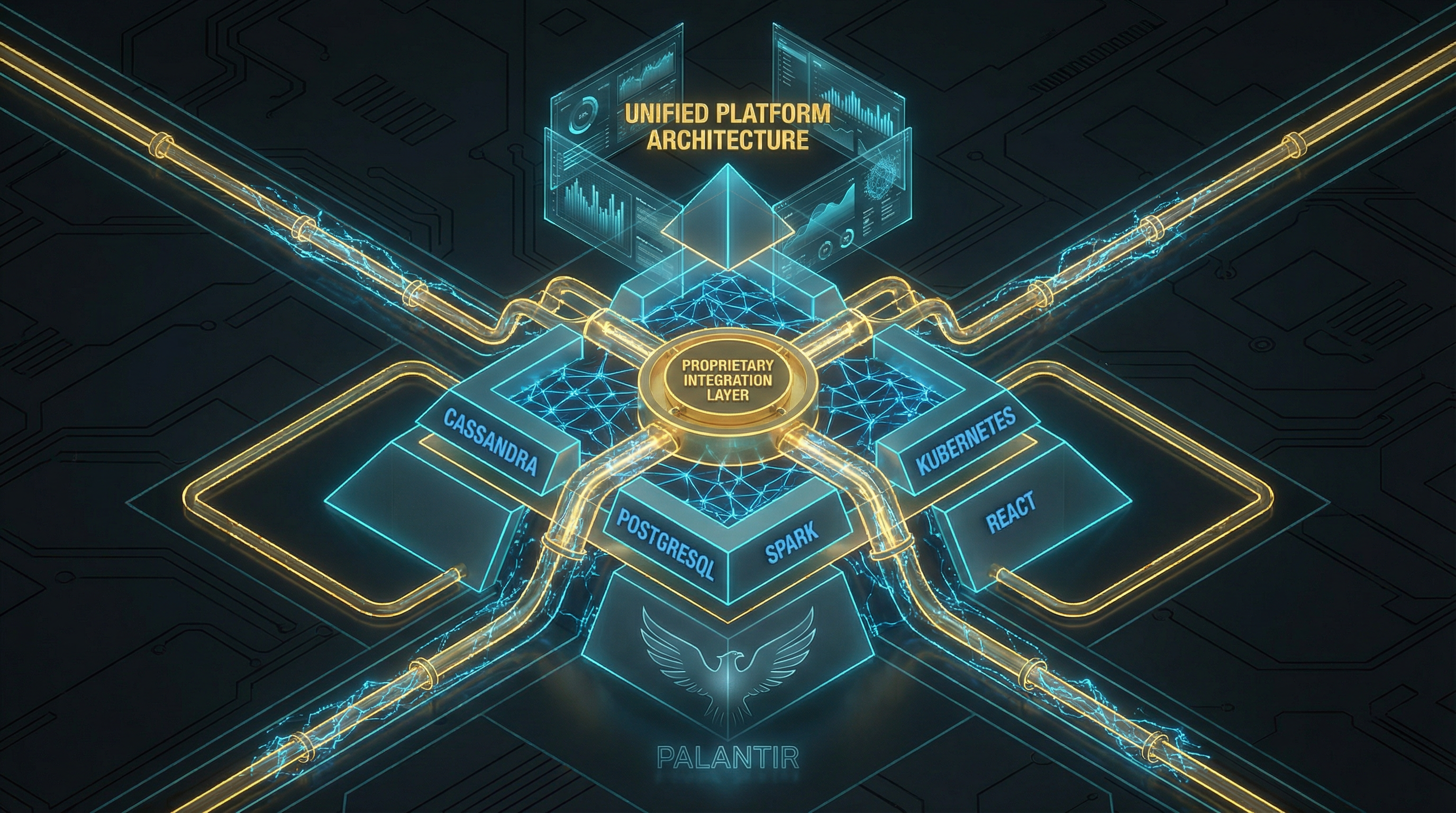
This integrated approach creates a powerful synergy, transforming a collection of disparate tools into a cohesive, intelligent system. It’s a model that delivers immense value to users, who are shielded from the underlying complexity and can focus on solving their business problems. This is the new frontier of software innovation: not just creating new components, but artfully combining existing ones to create something far greater than the sum of its parts.
In contrast, the European tech landscape, while boasting a wealth of world-class open-source projects and brilliant developers, remains fragmented. It’s a collection of individual gems that have yet to be set into a crown.
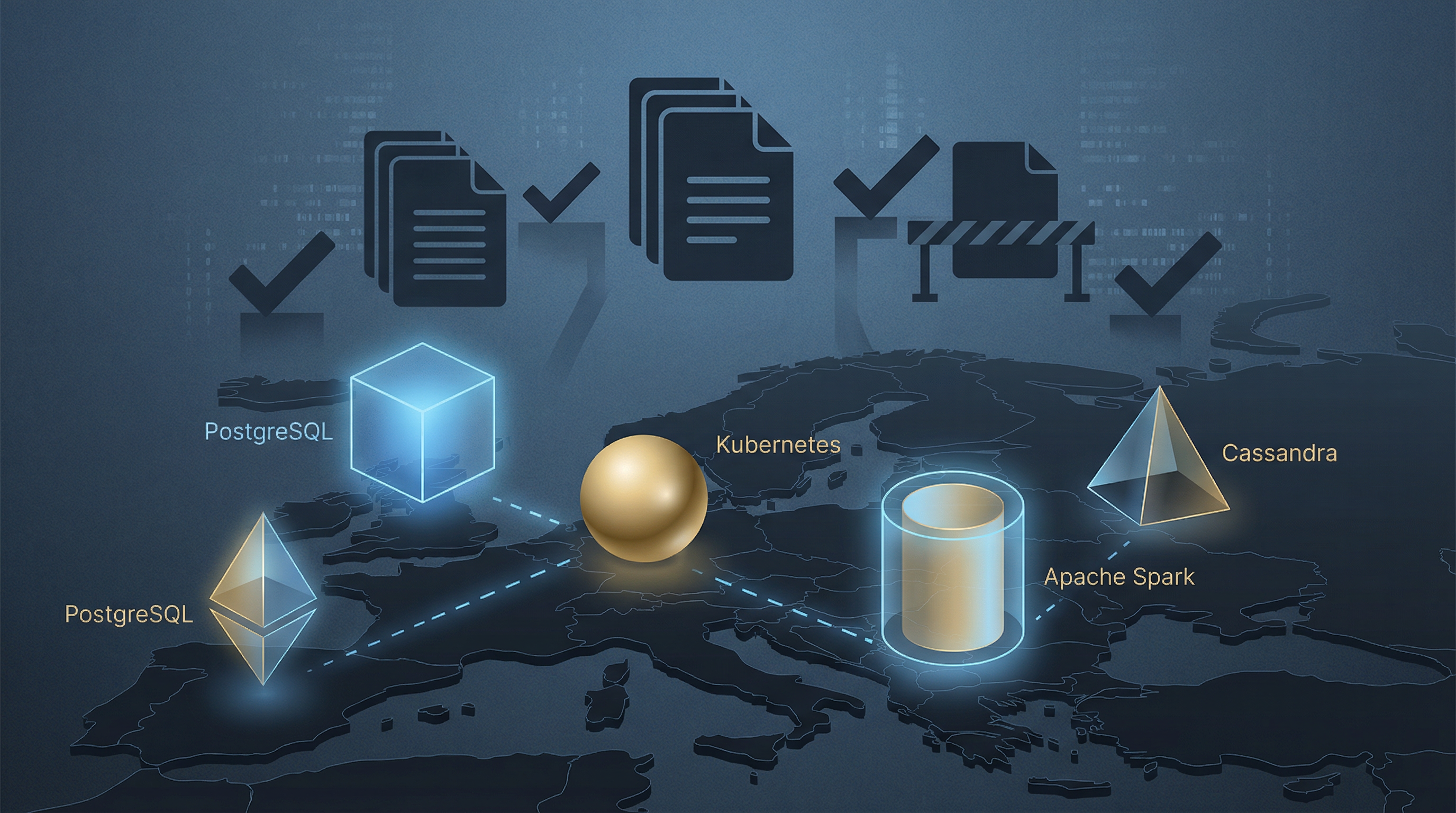
The European Paradox: Drowning in Regulation, Starving for Innovation
The legendary management consultant Peter Drucker famously stated, “Business has only two functions — marketing and innovation.” He argued that these two functions produce results, while all other activities are simply costs. This profound insight cuts to the heart of the European paradox. The EU’s commitment to data privacy and ethical technology is laudable, but its current regulatory approach has created a system where it excels at managing costs (regulation) rather than producing results (innovation).
Regulations like the GDPR and the AI Act, while designed to protect citizens, have inadvertently erected barriers to innovation, particularly for the small and medium-sized enterprises (SMEs) that are the lifeblood of the European economy. When a continent is more focused on perfecting regulation than fostering innovation, it finds itself in an untenable position: it can only market products that it does not have.
This “one-size-fits-all” regulatory framework creates a natural imbalance. Large, non-EU tech giants have the vast resources and legal teams to navigate the complex compliance landscape, effectively turning regulation into a competitive moat. Meanwhile, European startups and SMEs are forced to divert precious resources from innovation to compliance, stifling their growth and ability to compete on a global scale.
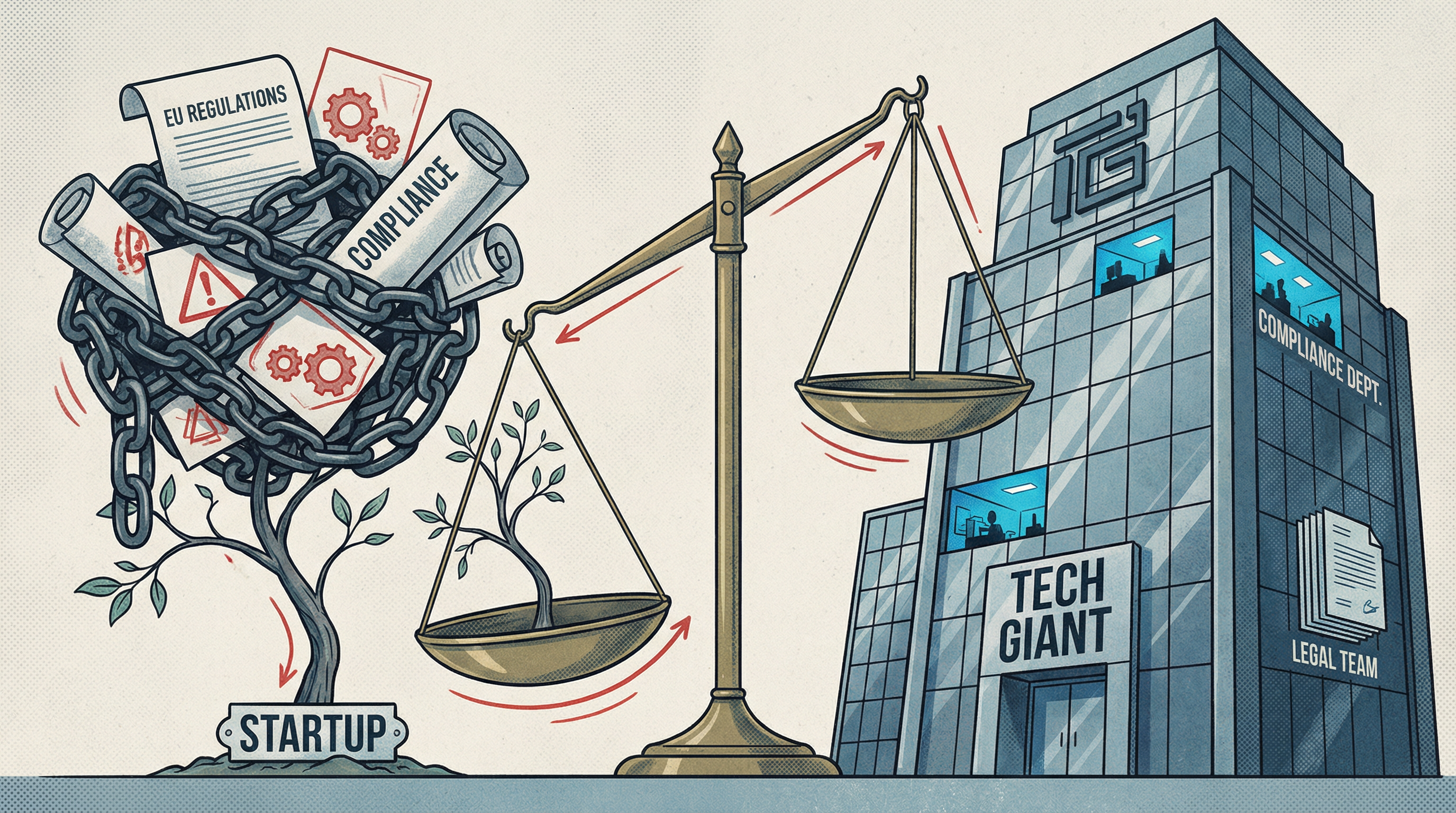
This is the European paradox: a continent rich in talent and technology, yet constrained by a system that favors established giants over homegrown innovators. The result is a landscape where the EU excels at creating rules but struggles to create world-beating products. To get back to innovation, Europe must shift its focus from simply regulating to actively enabling the creation of new technologies.
Unleashing the Bull: A New Path for European Tech Sovereignty
To break free from this paradox, the EU must forge a new path—one that balances its regulatory ideals with the pragmatic need for innovation. The solution lies in the creation of secure innovation zones, or regulatory sandboxes. These are controlled environments where startups and developers can experiment, build, and iterate rapidly, free from the immediate weight of full regulatory compliance.
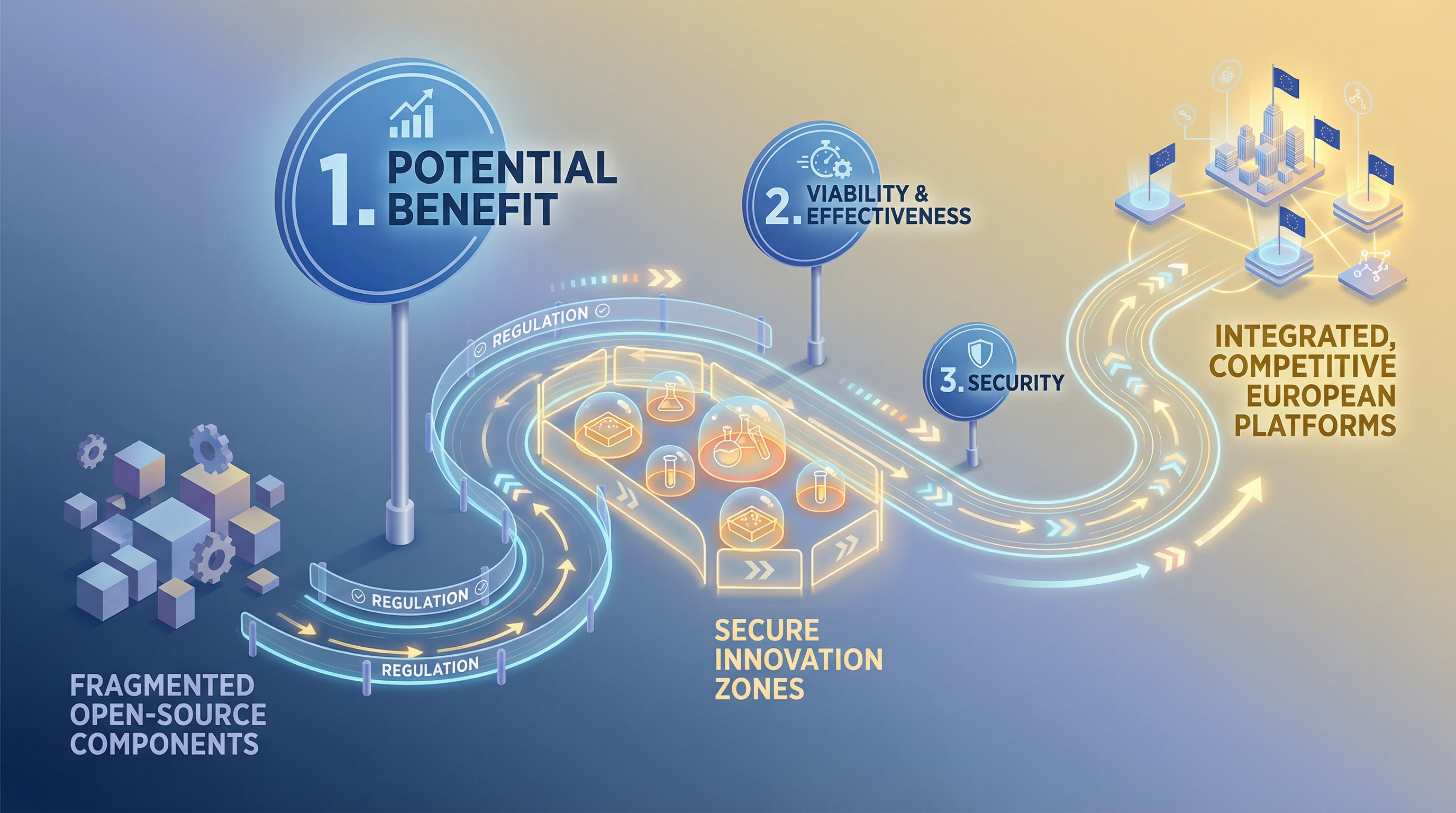
This approach is not about abandoning regulation, but about applying it at the right stage of the innovation lifecycle. It’s about prioritizing potential benefits and viability first, allowing new ideas to flourish before subjecting them to the full force of regulatory scrutiny. By creating these safe harbors for innovation, the EU can empower its brightest minds to build the integrated platforms of the future, turning its fragmented open-source landscape into a cohesive, competitive advantage.
The Vision: A Sovereign and Innovative Europe
Imagine a future where the European Bull is unleashed. A future where a vibrant ecosystem of homegrown tech companies thrives, building on the continent’s rich open-source heritage to create innovative, integrated platforms. A future where the EU is not just a regulator, but a leading force in the global technology landscape.

This vision is within reach. The EU has the talent, the technology, and the values to build a digital future that is both innovative and humane. By embracing a new model of innovation—one that fosters experimentation, prioritizes integration, and applies regulation with wisdom and foresight—the European Bull can take its rightful place as a global leader in the digital age.
References
[1] Palantir and Open-Source Software
[2] Open source software strategy – European Commission
[3] New Study Finds EU Digital Regulations Cost U.S. Companies Up To $97.6 Billion Annually
[4] EU AI Act takes effect, and startups push back. Here’s what you need to know
#DigitalSovereignty #EUTech #DigitalTransformation #Innovation #Technology #EuropeanUnion #DigitalEurope #TechPolicy #OpenSource #PlatformIntegration #CloudSovereignty #DataSovereignty #EnterpriseArchitecture #DigitalStrategy #TechInnovation #EUInnovation #EUProcurement #PublicSector #DigitalAutonomy #TechConsulting #AIAct #GDPR #RegulatoryInnovation #EuropeanTech