Part 4 of 5 in “Cloud Adoption Framework in Practice”. Previous: Wave 3: Prepare · Next: Wave 5: Optimise.
As you begin to scale your cloud presence, the complexity of managing it grows exponentially. Without a strong governance framework, organisations often face a difficult choice: move fast and break things, or move slow and miss opportunities. Wave 4 is designed to eliminate this trade-off. It’s about creating a system of automated controls and clear policies that allow your teams to innovate with speed, while ensuring the entire environment remains secure, compliant, and cost-effective.
Effective governance is not about restricting access; it’s about providing a safe and efficient path forward. It’s the digital guardrails that keep your cloud journey on track.
Step 1: Implement Automated Guardrails
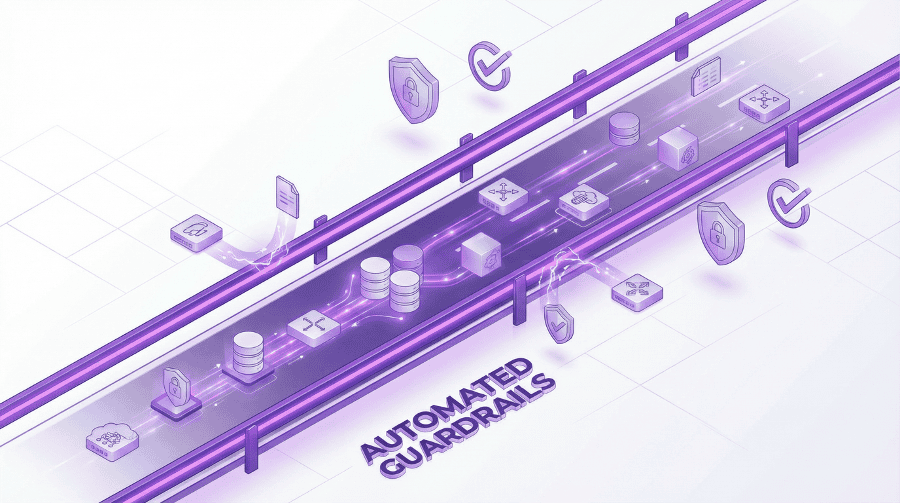
The cornerstone of modern cloud governance is automation. Instead of relying on manual reviews and approvals, you can codify your policies and enforce them automatically. These Automated Guardrails, implemented using Infrastructure as Code (IaC) tools like Terraform or native services such as Azure Policy and AWS Control Tower, can:
- Prevent the creation of non-compliant resources (e.g., publicly exposed storage buckets or resources outside EU regions).
- Ensure all resources are tagged correctly for cost allocation.
- Automatically remediate common security misconfigurations.
This approach is known as Governance as Code — and it is also how BSI C5 and NIS2 controls become reproducible evidence rather than one-off documentation.
Step 2: Define and Enforce Security Policies
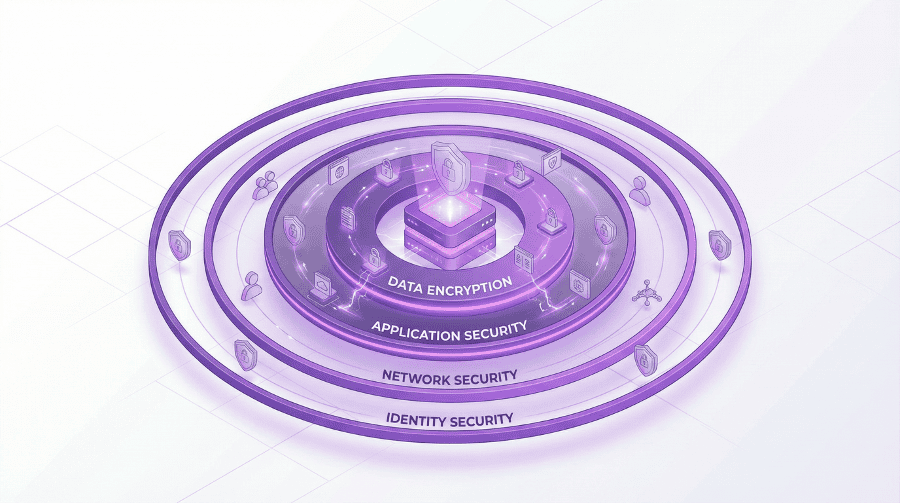
Your security posture is only as strong as the policies that define it. This step involves creating a comprehensive set of Cloud Security Policies that cover every layer of the environment. This is not a one-size-fits-all exercise; policies must be tailored to your organisation’s risk appetite and regulatory requirements. Key areas to cover include:
- Identity and Access Management (IAM): Who can access what, and under what conditions? See Conditional Access and MFA.
- Data Encryption: Ensuring data is encrypted both at rest and in transit, with keys you control.
- Network Security: Defining firewall rules, network segmentation, and threat detection.
- Incident Response: A clear plan for how to respond to a security event — including NIS2 reporting timelines.
These policies should be centrally managed and automatically enforced by the guardrails you’ve built.
Step 3: Establish Financial Governance (FinOps)
Cloud costs can spiral out of control without disciplined financial management. FinOps, or Cloud Financial Operations, is the practice of bringing financial accountability to the variable spend model of the cloud. This involves:
- Cost Visibility: Creating dashboards that give teams real-time insight into their cloud spend.
- Cost Allocation: Using a robust tagging strategy to allocate costs back to the appropriate business units or projects.
- Cost Optimisation: Continuously identifying and eliminating waste, such as idle resources or oversized instances.
A mature FinOps practice ensures that your cloud investment delivers maximum business value.
Step 4: Automate Compliance and Auditing
For many organisations, especially those in regulated industries, proving compliance is a constant challenge. The cloud offers the opportunity to automate much of this process. By using specialised tools, you can continuously monitor your environment against hundreds of compliance controls (CIS, BSI C5, ISO 27001, NIS2, DORA). This Automated Compliance Auditing provides real-time visibility into your compliance posture and dramatically simplifies the audit process, turning a weeks-long manual effort into an on-demand report.
By the end of Wave 4, you have built a well-governed cloud factory. You have the systems in place to manage risk, control costs, and ensure compliance without slowing down your developers.
Next: Wave 5: Optimise & Scale – The Journey to Continuous Value · Service: NIS2 & Cloud Security Beratung