
Starting with the goal in mind, we must consider the framework for a sovereign digital Europe!
The Sovereignty Series (Bonus Chapter): The Verifiability Conundrum
We have built a framework for Europe’s digital sovereignty based on a powerful idea: mutual protection through verification. By embracing the Fallibility Principle—that no one is infallible—we have designed a system of Zero Trust Governance that protects the public from the abuse of power, and simultaneously protects those in power from false accusations, coercion, and risk. This is achieved by replacing trust with cryptographic proof in our digital sovereignty framework.
But this elegant solution creates a profound and complex challenge: the Verifiability Conundrum. A system that can verify everything can also see everything. How do we build a system that delivers radical accountability without becoming a tool of radical surveillance? How do we protect everyone, powerful and powerless alike, without making everyone transparent?
The Double-Edged Sword of Immutability
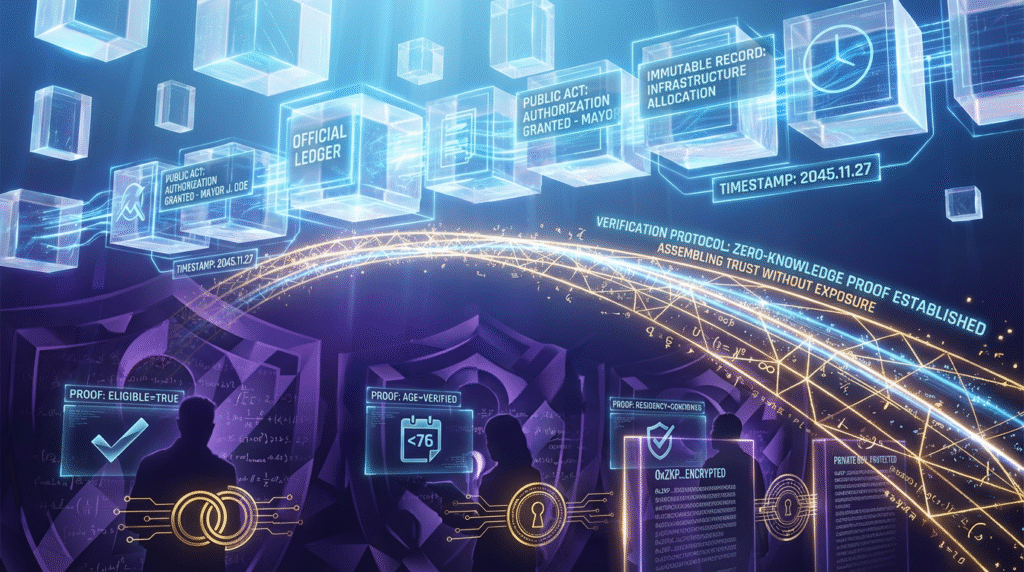
The core of our proposed system is an immutable, distributed ledger—a permanent, unchangeable record of official actions. This ledger framework allows the sovereign digital Europe initiative to protect a public official from false accusations; they can point to the ledger as a definitive, verifiable alibi. It is also the mechanism that convicts a corrupt official; the ledger provides an undeniable trail of their misconduct.
But this double-edged sword cuts both ways. If every official action is recorded, what about the actions of ordinary citizens? Does a request for a public service, a visit to a government website, or an application for a permit also become a permanent, immutable record? If so, we have not eliminated the potential for a surveillance state; we have perfected it. We have created a system that is technically incorruptible but potentially socially oppressive.
This is the heart of the conundrum. We need verifiability to protect against the fallibility of the powerful, but universal verifiability threatens the privacy and freedom of the powerless.
Resolving the Conundrum: Asymmetric Verifiability and Zero-Knowledge Proofs
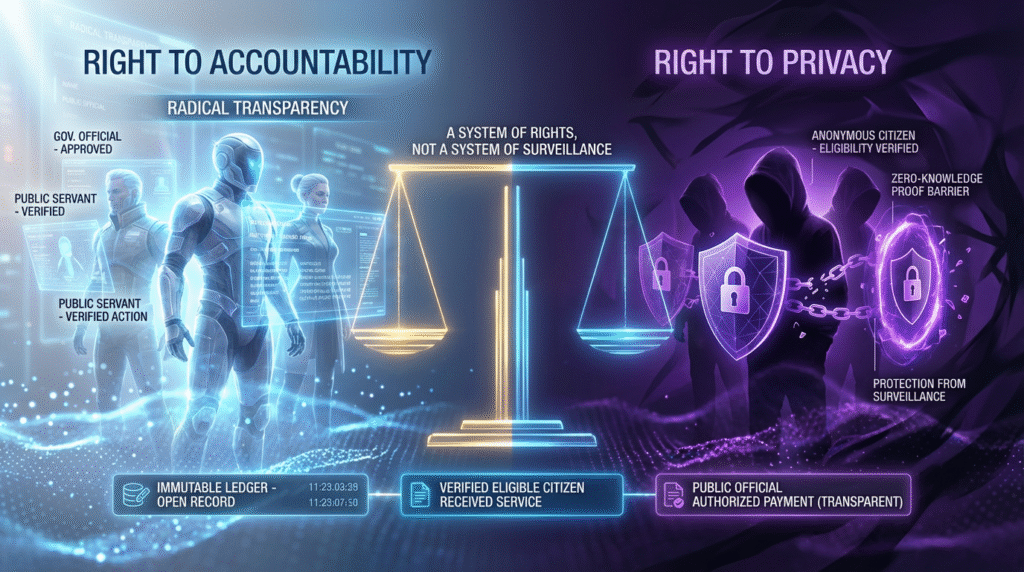
The solution is not to abandon verifiability, but to apply it asymmetrically. We must build a system where the actions of the powerful are transparent, while the identities and data of the powerless are protected. This is not a contradiction; it is a design choice, enabled by modern cryptography.
- Asymmetric Verifiability: We must distinguish between public acts and private lives within our sovereign digital Europe framework. The actions of an elected official or public servant, when performed in their official capacity, are public acts. They should be transparent and recorded on an immutable ledger for all to see. This is the price of power and the foundation of accountability. The actions of a private citizen, however, are private; they should not be recorded on a public ledger.
- Zero-Knowledge Proofs (ZKPs): This is the cryptographic tool that makes Asymmetric Verifiability possible. As we discussed, ZKPs allow an individual to prove a fact is true without revealing the underlying data. A citizen can prove they are eligible for a government service (e.g., they are a resident, they are over 65, they meet an income requirement) without revealing their address, their exact age, or their salary. The government system can verify the eligibility without ever seeing or storing the personal data. The citizen’s interaction is verifiable, but their privacy is preserved within Europe’s digital sovereignty framework.
A System of Rights, Not a System of Surveillance
This model allows us to build a system that protects rights, not just data.
- The Right to Accountability: The public has a right to a verifiable record of the actions of its servants. Asymmetric Verifiability delivers this within the sovereign digital Europe framework.
- The Right to Privacy: Citizens have a right to interact with their government without having their lives turned into an open book. Zero-Knowledge Proofs deliver this.
This resolves the conundrum. We can have a system that is both radically transparent in its exercise of power and radically private in its treatment of citizens. The ledger records that a verified, eligible citizen received a service, but it does not record who that citizen was. The ledger records that a public official authorized a payment, and it records their name for all to see.
The New Social Contract
This is more than a technical architecture; it is a new social contract. It is a system that acknowledges the Fallibility Principle and designs for it. It protects leaders from the impossible burden of being perfect, and it protects the public from the inevitable consequences of that imperfection.
It is a system where a leader’s best defense is the truth, and where the public’s best defense is a system that makes that truth undeniable. It is a difficult, complex path, but it is the only one that leads to a framework for a sovereign digital Europe that is both secure and free.
#DigitalSovereignty #EU #Privacy #Accountability #ZeroKnowledge #Cryptography #FutureOfEurope #DigitalIdentity